
Guide
15 Famous Van Gogh Paintings and Where to See Each One
The pictures everyone knows, the museum and city where each one hangs, and how it got famous
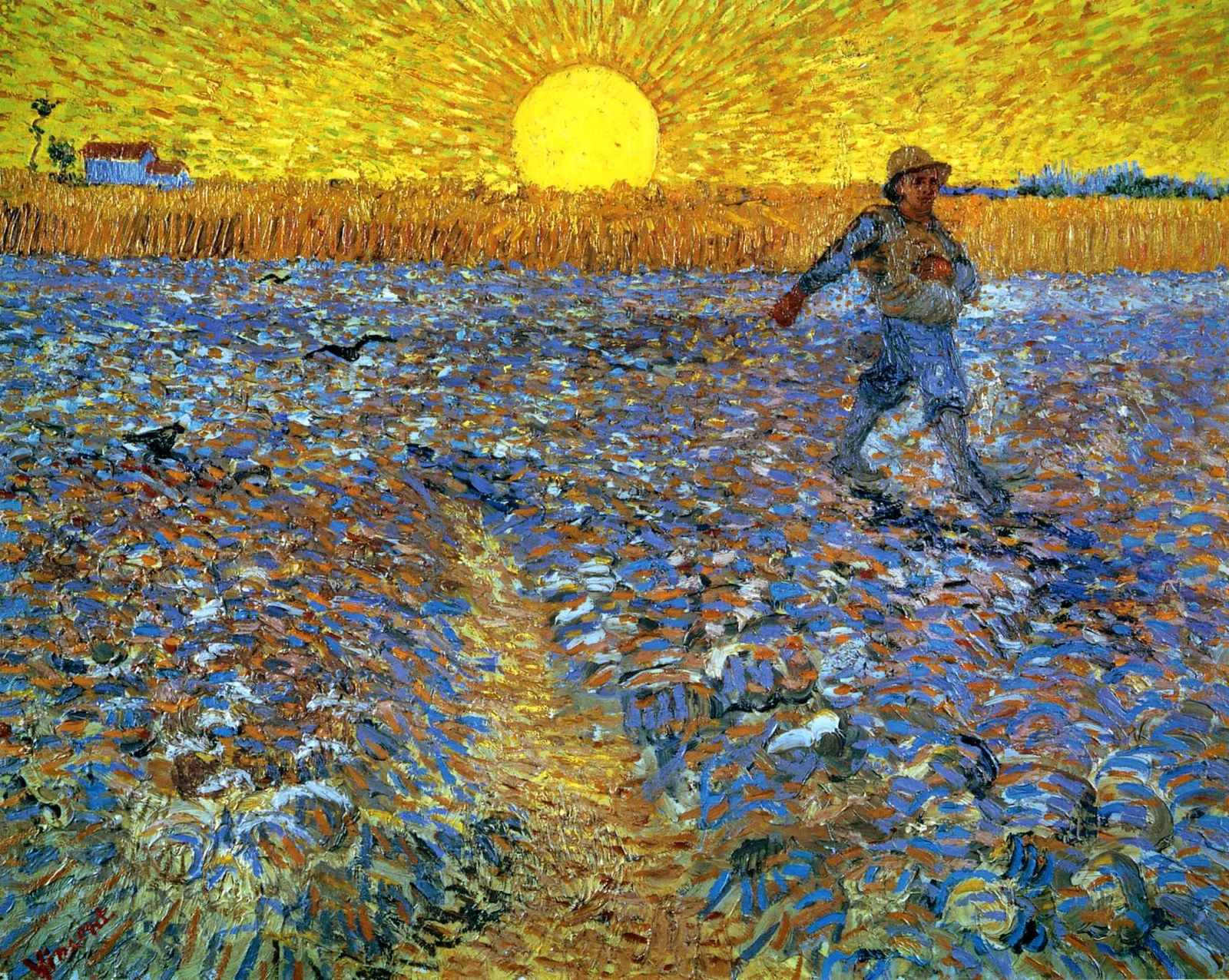
The most famous Van Gogh painting is The Starry Night (1889), at the Museum of Modern Art in New York; even the Van Gogh Museum, which does not own it, calls it “probably one of the world’s most famous artworks” [1]. Below are 15 famous Van Gogh paintings, each with the museum and city where you can see it, its date and the story behind its fame.
How this list works
These are the Van Gogh paintings people search for, recognize and travel to see. The first ten are the ones almost everyone knows; the last five round out the list with a river at night, a cypress, a self-portrait, his own street in Arles and a village church. Each entry gives you the museum and city that hold it, the date and the reason it became famous. All of them belong to Van Gogh’s complete paintings, so you can see what came before and after each one.
One tip before you plan a trip: paintings travel to exhibitions, go into conservation or come off the wall, so check the museum’s own page first. As of October 2026, for example, Wheatfield with Crows was in conservation and the National Gallery listed its Sunflowers as not on display [10][2].
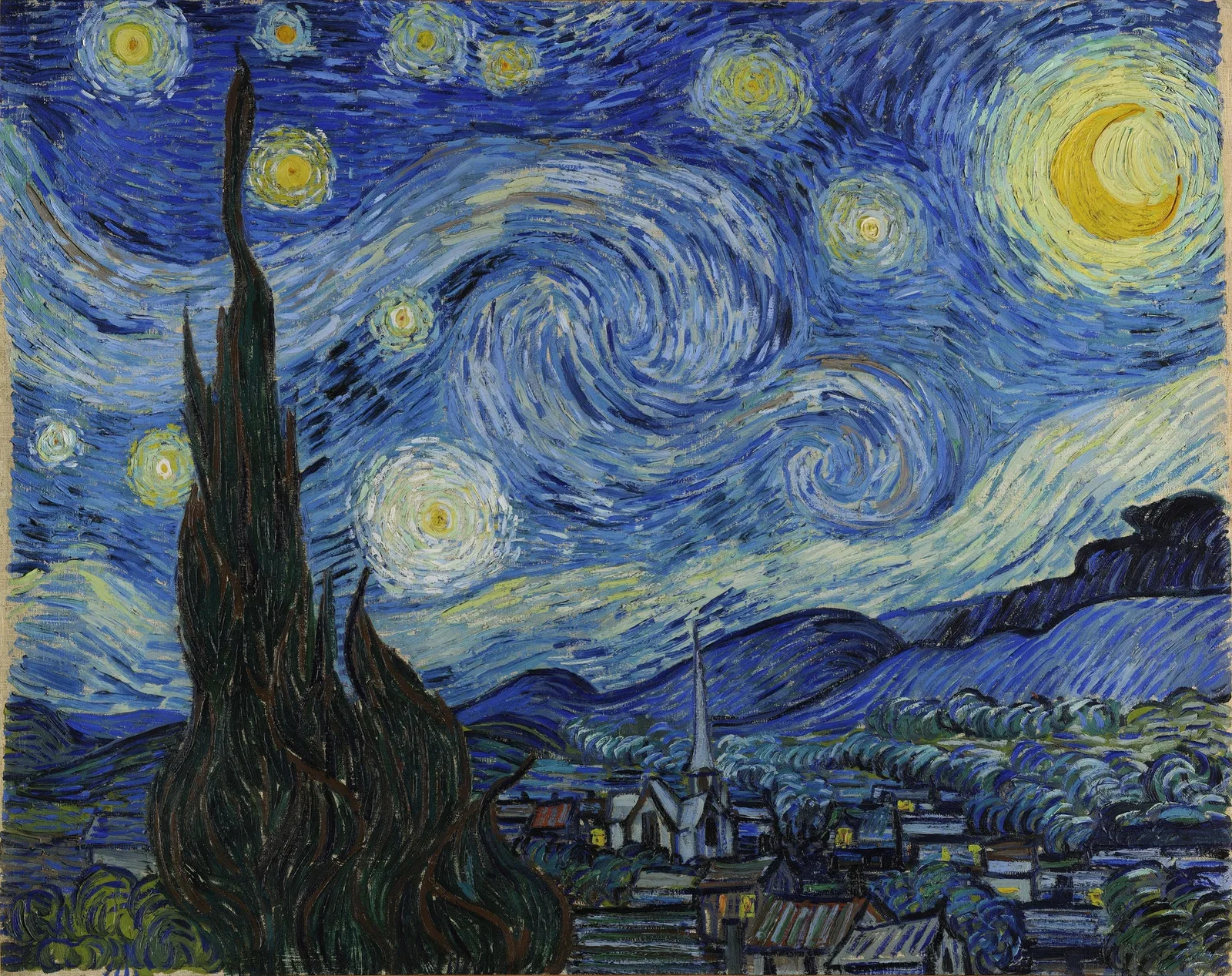
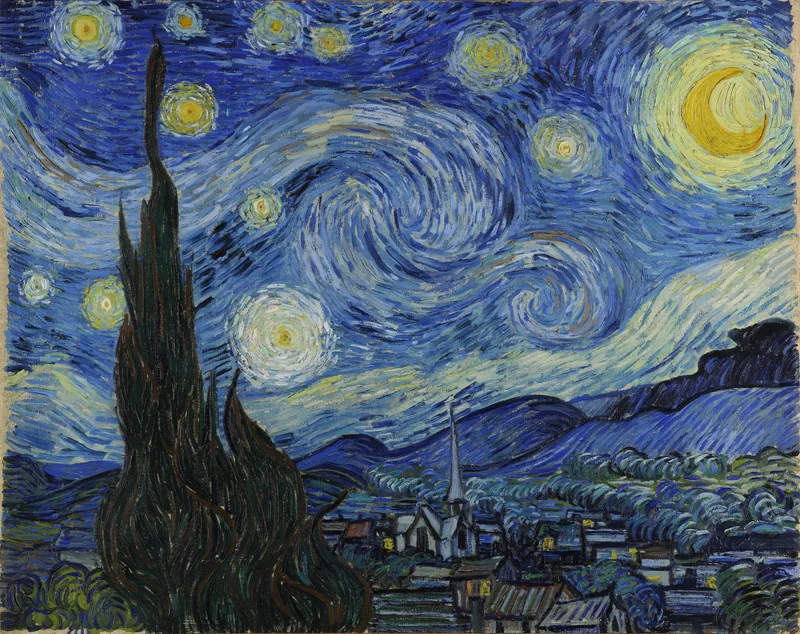
1. The Starry Night (1889)
Where to see it: the Museum of Modern Art, New York [1]. When: 1889, at Saint-Rémy. By 25 June that year it was one of twelve canvases he had on the go there [1][7].
Why it matters: the Van Gogh Museum, which does not own it, calls this rolling night sky full of bright stars “probably one of the world’s most famous artworks” [1]. That fame was built step by step. After Theo died, his widow Jo strategically sold works to influential collectors and museums; she sold The Starry Night to Georgette van Stolk in Rotterdam, and in 1941 MoMA acquired it [1]. Its fame reaches beyond museums, too: Don McLean’s hit is officially called Vincent, but it is more often known by its opening line, “Starry, Starry Night” [1]. How it reached New York, and why it is not in Amsterdam, is told in where The Starry Night is today.
2. Sunflowers (1888–1889)
Where to see it: Van Gogh painted seven versions, and five are in museums, in London, Amsterdam, Munich, Philadelphia and Tokyo [2]. As of October 2026, the National Gallery in London listed its canvas (the first one below) as not on display [2], while the Van Gogh Museum in Amsterdam named its own 1889 Sunflowers among the masterpieces you see in its permanent collection [11]. When: the first four in August 1888, in Arles, and three repetitions in January 1889 [2].
Why it matters: “No other artist has been so closely associated with a specific flower,” the National Gallery writes [2]. He painted the first four in a single week, to decorate his house for a visit from Paul Gauguin; of the seven, one is in a private collection and one was destroyed during the Second World War [2]. In the London picture, 15 flowers run from young bud to full bloom to seed [2]. The Amsterdam canvas has a page of its own, and how many Sunflowers he painted, and where they are keeps all the versions straight.


Hand-painted in oilFrom $350See sizes
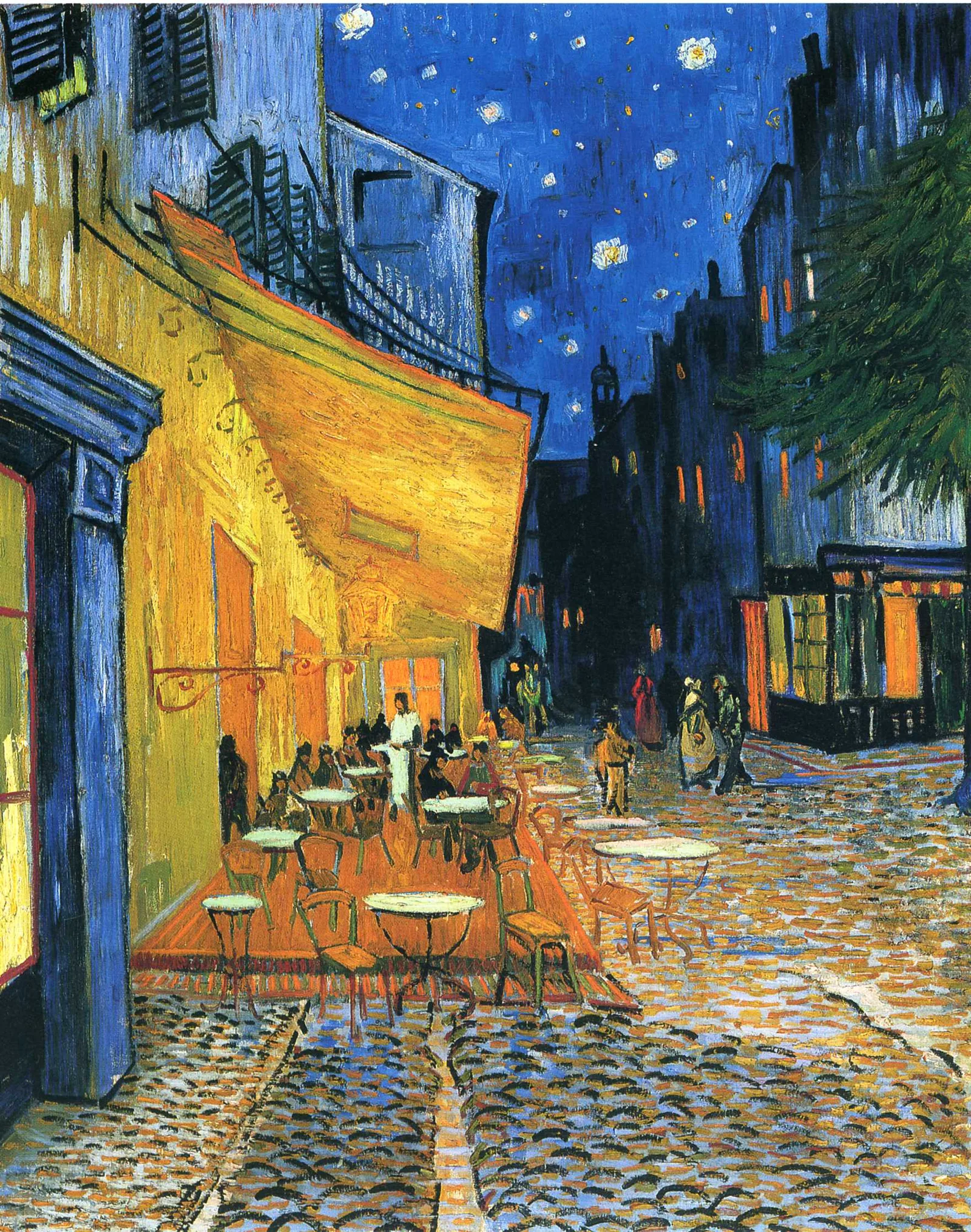
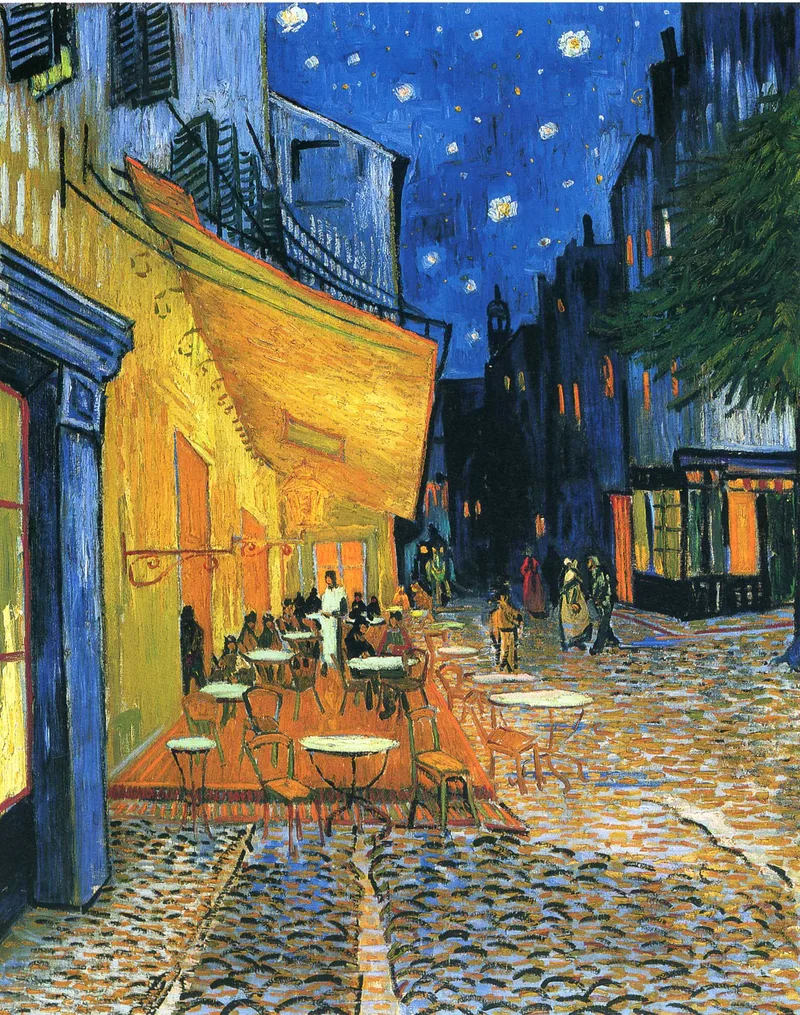
3. Café Terrace at Night (1888)
Where to see it: the Kröller-Müller Museum in Otterlo, the Netherlands, according to the artwork records of the scholarly edition of his letters [3]. When: September 1888, in Arles. The café was the Grand Café du Forum on the place du Forum [3].
Why it matters: this is the picture where he solved the night. Writing to his sister Willemien in letter 678, he described a huge yellow lantern lighting the terrace, the façade, the pavement and even the cobblestones, which took on a violet-pink tinge [3]. He painted it on the spot, after dark, instead of working from a daytime drawing [3]. How Café Terrace at Night came about is told in the story behind the painting.
“Now there’s a painting of night without black.”
4. The Bedroom (1888)
Where to see it: the Van Gogh Museum, Amsterdam, which holds the first version [5]. As of October 2026 the museum named The Bedroom among the masterpieces of its permanent collection [11]. When: 1888, in Arles [5].
Why it matters: it has a flood in its history. The canvas was damaged by moisture after a flood and had to be lined; Theo sent it back to Vincent instead, and he painted a repetition of it in September 1889 [5]. That is why more than one Bedroom exists today. In May 1889 he still put the interior of the bedroom on his short list of canvases worth framing [5]. It is one of the must-see paintings at the Van Gogh Museum.


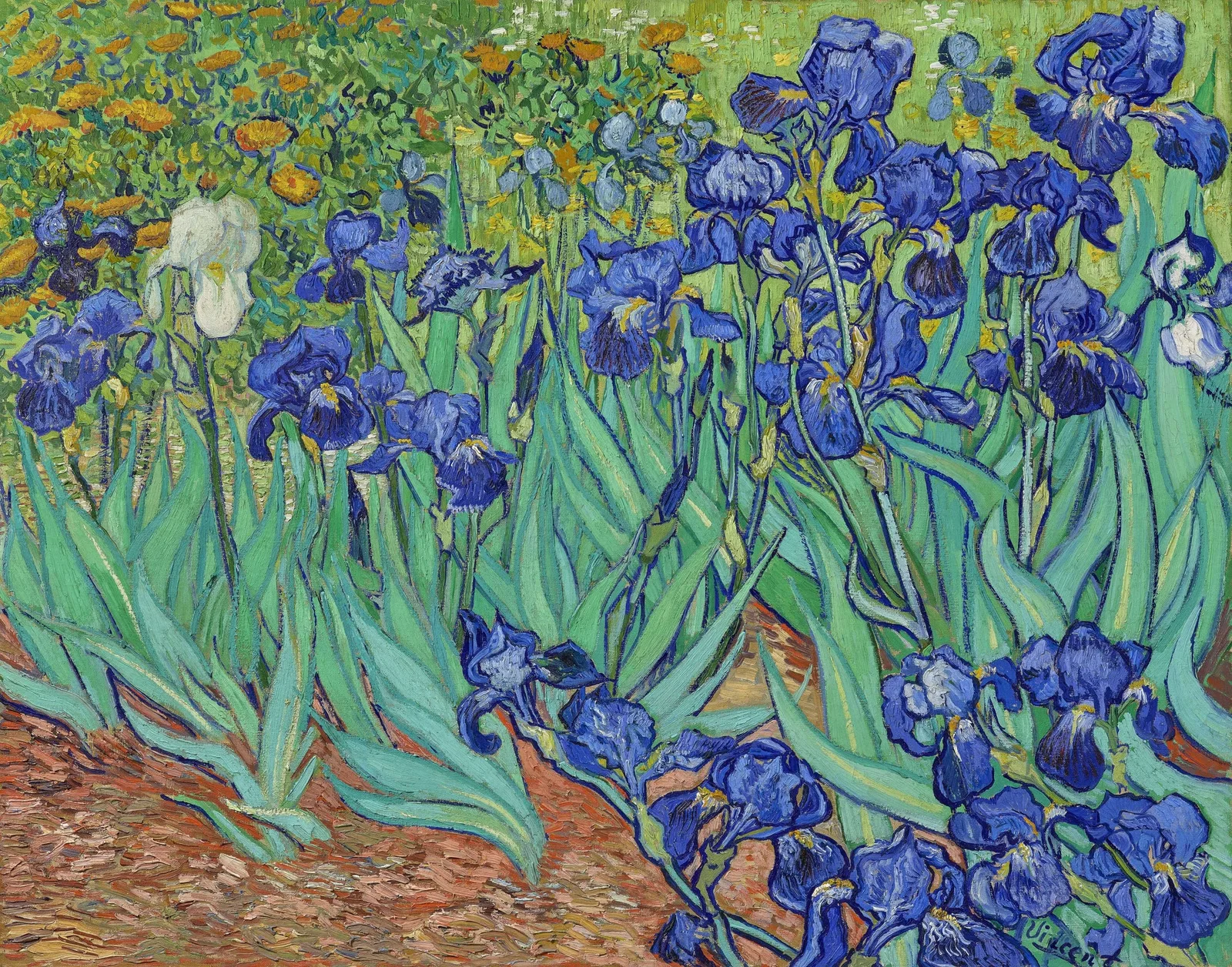
5. Irises (1889)
Where to see it: the J. Paul Getty Museum, Los Angeles [5]. When: spring 1889. By about 23 May it was one of four garden canvases he had on the go at Saint-Rémy [5].
Why it matters: he painted Irises without leaving the grounds. The neglected garden, he told Theo in letter 776, “has provided me with enough work, and I haven’t yet gone outside.” [5] Its colors have a story of their own, told in why Van Gogh’s Irises changed color.
Hand-painted in oilFrom $350See sizes
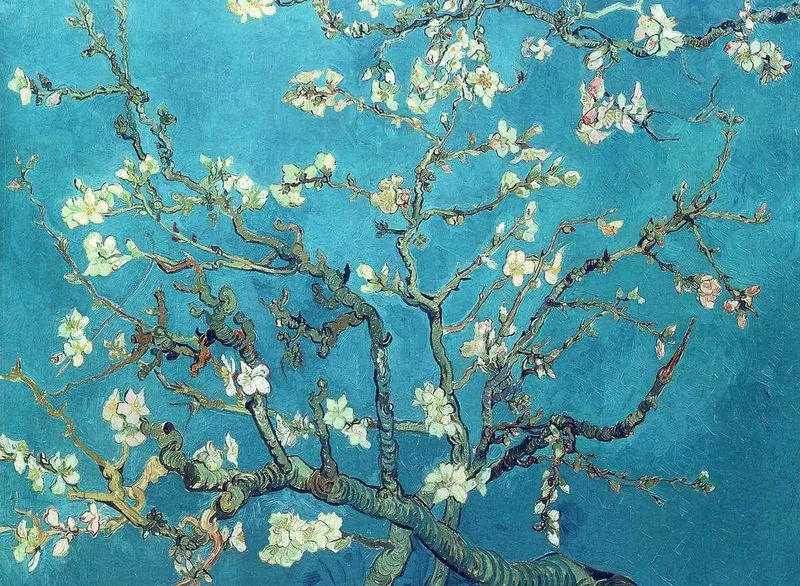
6. Almond Blossom (1890)
Where to see it: the Van Gogh Museum, Amsterdam [8], which named Almond Blossom among the masterpieces of its permanent collection as of October 2026 [11]. When: 1890 [8].
Why it matters: it was a gift for a new baby. In June 1890 Van Gogh told his sister that the large painting he had brought for Theo and Jo’s little son hung above their piano: “white almond blossoms” on “big branches on a sky-blue background” [8]. You can see it in detail on its page.


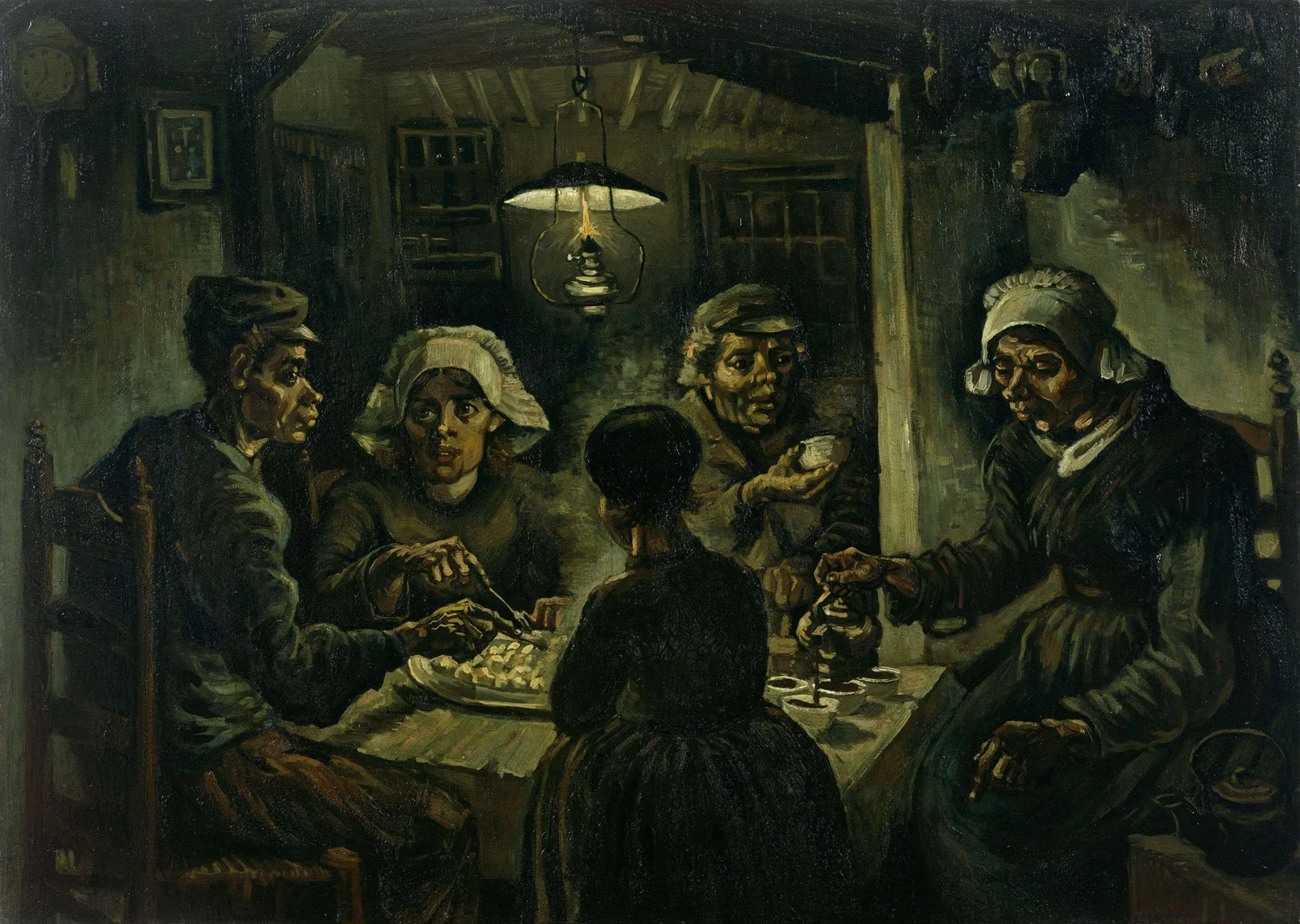
7. The Potato Eaters (1885)
Where to see it: the Van Gogh Museum, Amsterdam, whose page listed it as on view as of October 2026 [9]. When: April and May 1885, in Nuenen [9].
Why it matters: it was his showpiece, a difficult composition chosen to prove he was on his way to becoming a good figure painter [9]. He gave the five peasants coarse faces and bony, working hands and painted them in earth colors [9]. The picture drew heavy criticism for its dark colors and the mistakes in the figures, yet today the museum calls The Potato Eaters “one of Van Gogh’s most famous works” [9]. Two years later, in Paris, he still ranked it first.
Hand-painted in oilFrom $350See sizes
“What I think about my own work is that the painting of the peasants eating potatoes that I did in Nuenen is after all the best thing I did.”
8. Wheatfield with Crows (1890)
Where to see it: the Van Gogh Museum, Amsterdam, though as of October 2026 the canvas was undergoing conservation treatment and was not on display [10]. When: July 1890, at Auvers-sur-Oise [10].
Why it matters: the museum calls it “one of Van Gogh’s most famous paintings,” and much of that fame rests on a story it rejects [10]. The menacing sky, the crows and the dead-end path are often read as signs that his life was ending, as if this were his very last work. The museum’s answer: “that is just a persistent myth,” because he made several other works after it [10]. His final weeks are covered in how Van Gogh died.


9. Self-Portrait with Bandaged Ear (1889)
Where to see it: the Courtauld Gallery, London, which listed it on display in its LVMH Great Room as of October 2026 [6]. When: January 1889, a week after he left the hospital in Arles [6].
Why it matters: the Courtauld calls it “this famous painting” [6]. A few weeks earlier, after a heated argument with Paul Gauguin, Van Gogh had mutilated his left ear; it shows as the right ear here because he painted himself in a mirror [6]. The fur cap was a recent purchase to hold the thick bandage in place and keep out the winter cold [6]. What happened that night is in what the letters reveal about his ear, and the rest of his faces are in Van Gogh’s self-portraits, period by period.


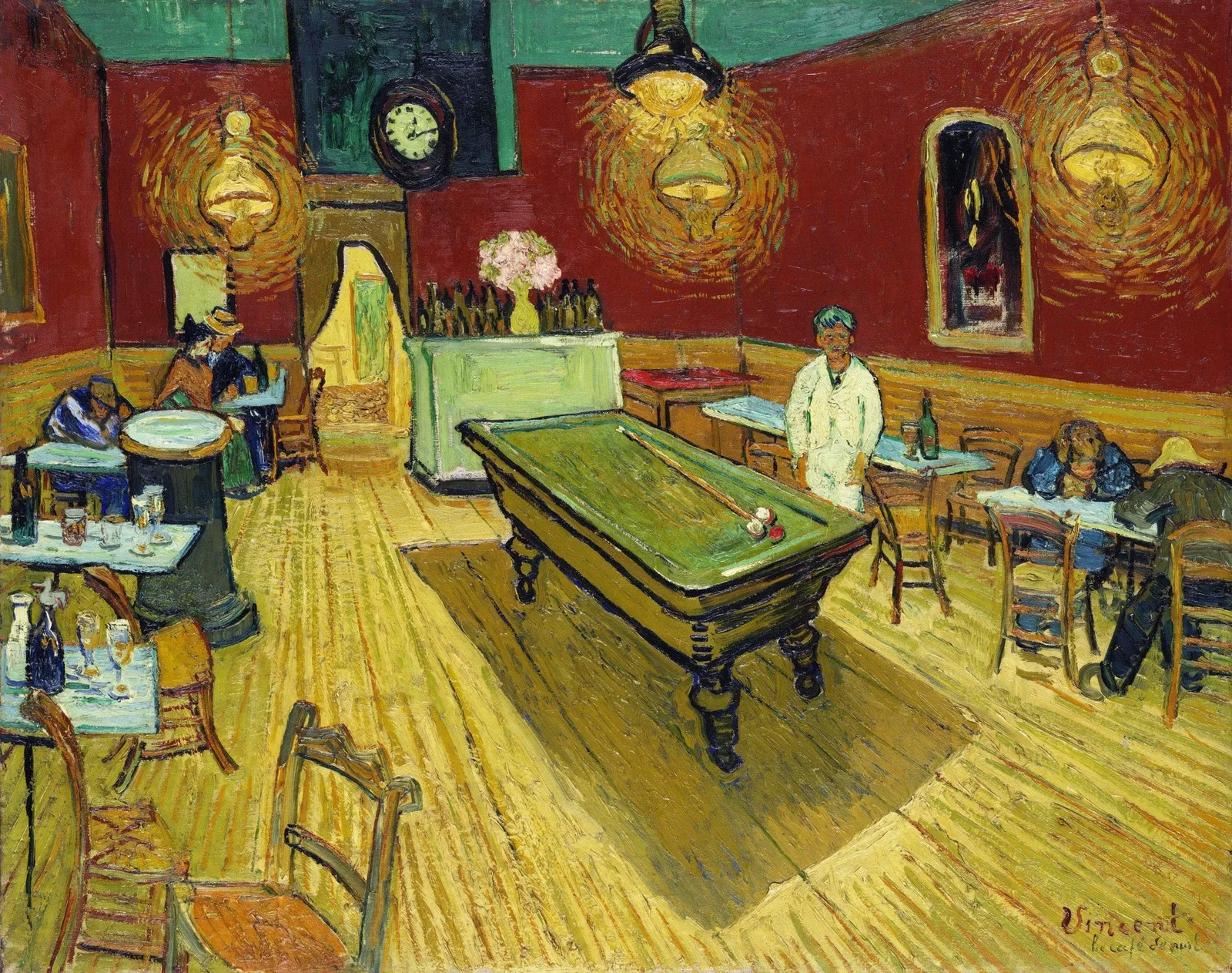
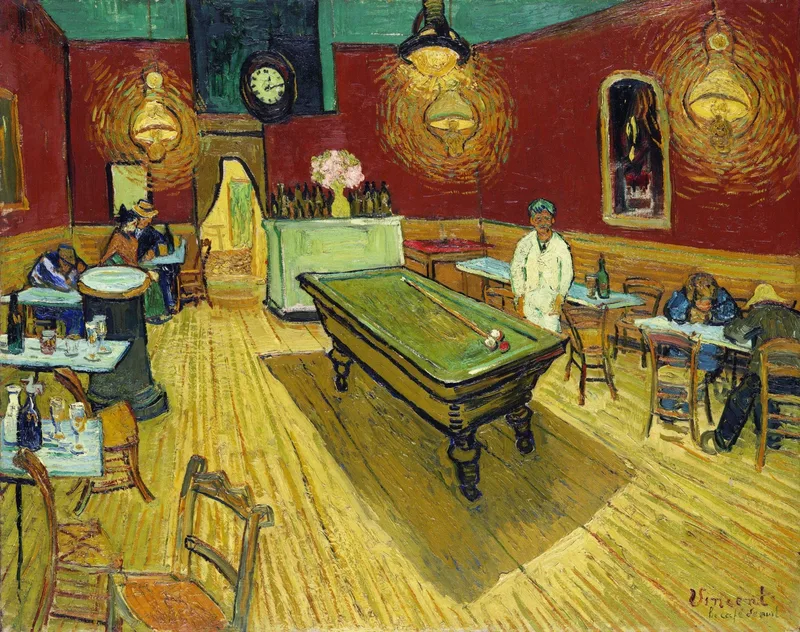
10. The Night Café (1888)
Where to see it: the Yale University Art Gallery, New Haven [3]. When: September 1888, in Arles [3].
Why it matters: it is the dark twin of the café terrace, painted the same month. In the same letter to Willemien he described The Night Café: “The room is painted red, and inside, in the gaslight, the green billiard table, which casts an immense shadow over the floor. In this canvas there are 6 or 7 different reds, from blood-red to delicate pink, contrasting with the same number of pale or dark greens.” [3] His other nocturnes are gathered in Van Gogh’s night paintings.
Hand-painted in oilFrom $350See sizes
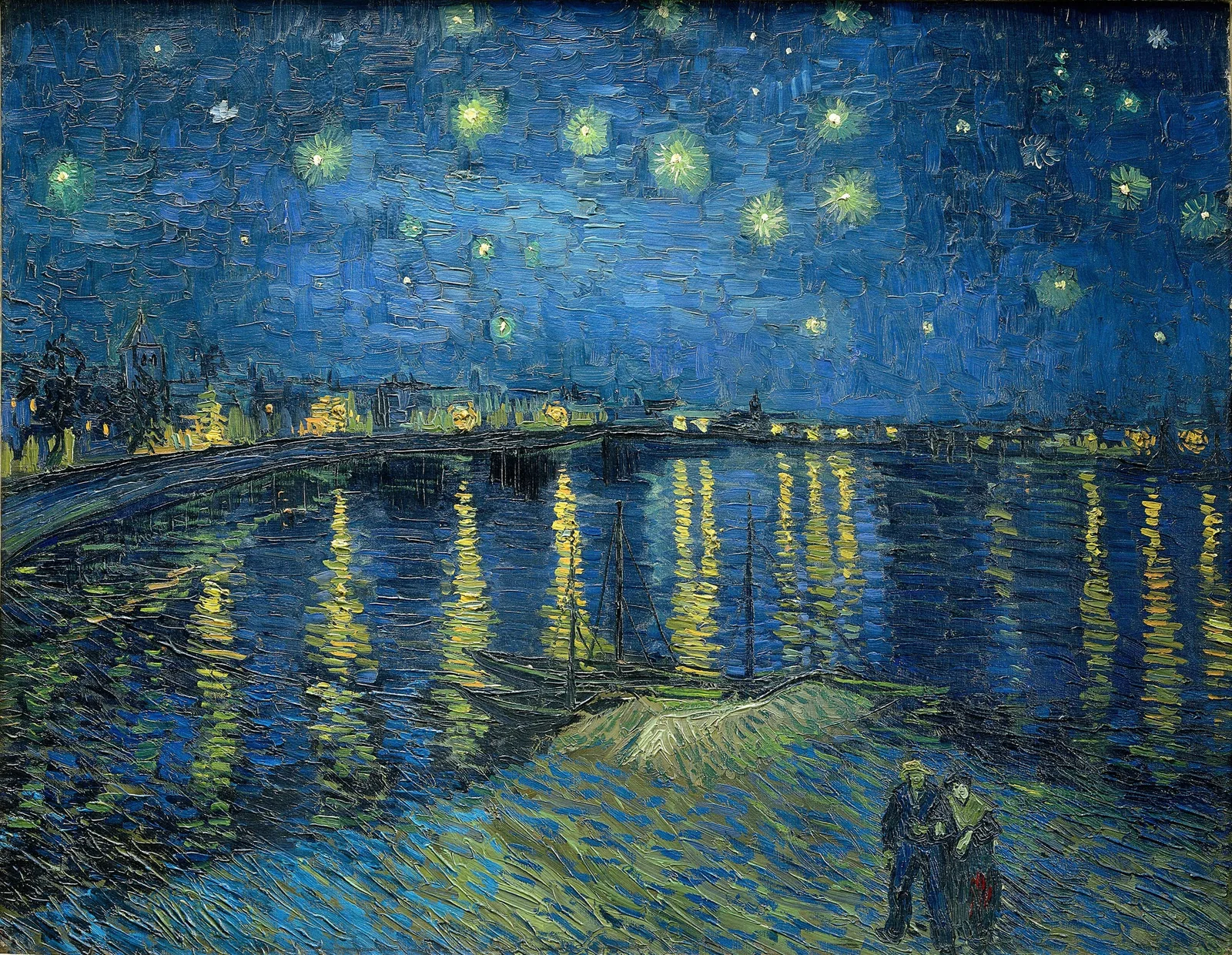
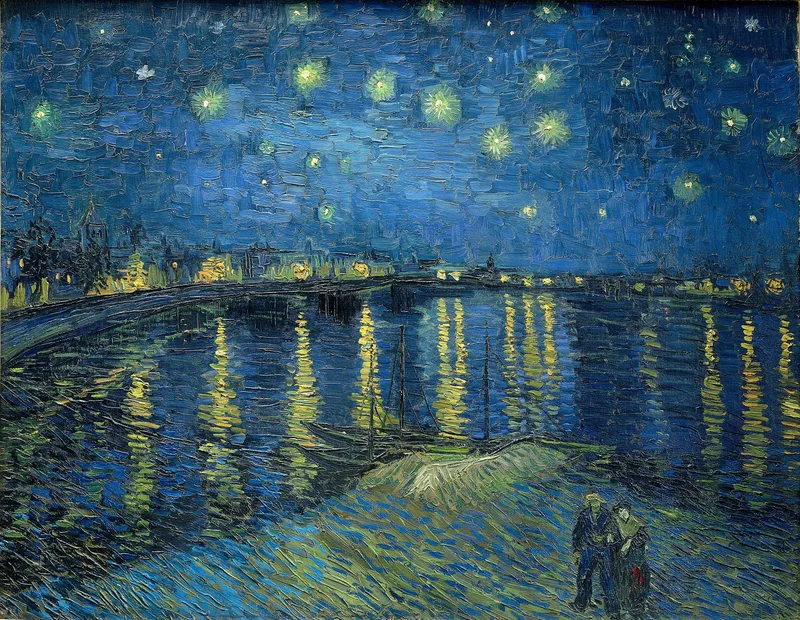
11. Starry Night Over the Rhône (1888)
Where to see it: the Musée d’Orsay, Paris [4]. When: September 1888, in Arles [4].
Why it matters: it is the starry sky he had been waiting to paint. Around 29 September 1888 he sent Theo a sketch of it in letter 691 and called it “the starry sky at last, actually painted at night, under a gas-lamp.” [4] It is easy to confuse Starry Night Over the Rhône with The Starry Night of the following year; how to tell the two apart puts them side by side.
Hand-painted in oilFrom $350See sizes
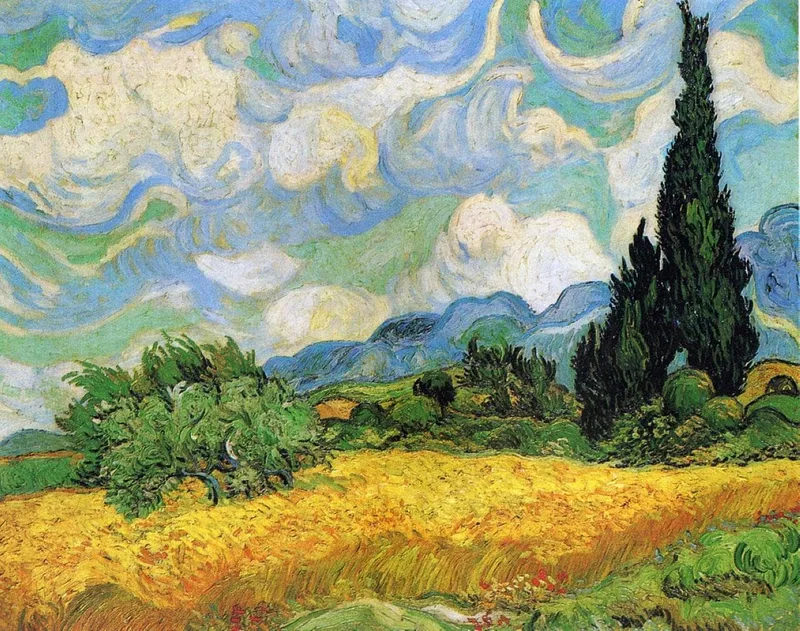
12. Wheat Field with Cypresses (1889)
Where to see it: the Metropolitan Museum of Art, New York [7]. When: 1889, at Saint-Rémy. On 25 June it was among the canvases he had on the go [7].
Why it matters: it shows the tree that still preoccupied him. In that letter he wrote: “The cypresses still preoccupy me, I’d like to do something with them like the canvases of the sunflowers because it astonishes me that no one has yet done them as I see them.” [7] Here a dark cypress rises over a golden field under swirling white clouds. You can study the Met’s canvas up close on the painting’s own page.


Hand-painted in oilFrom $350See sizes
13. Self-Portrait (1889)
Where to see it: the Musée d’Orsay, Paris [8]. When: 1889 [8].
Why it matters: this is the swirling blue self-portrait. In June 1890 Van Gogh told his sister that Dr Gachet was decidedly enthusiastic about it, and summed it up in one phrase: “the blue is a fine southern blue and the suit is light lilac” [8]. In the same letter he set out his goal as a portrait painter: “I would like to do portraits which would look like apparitions to people a century later.” [8]


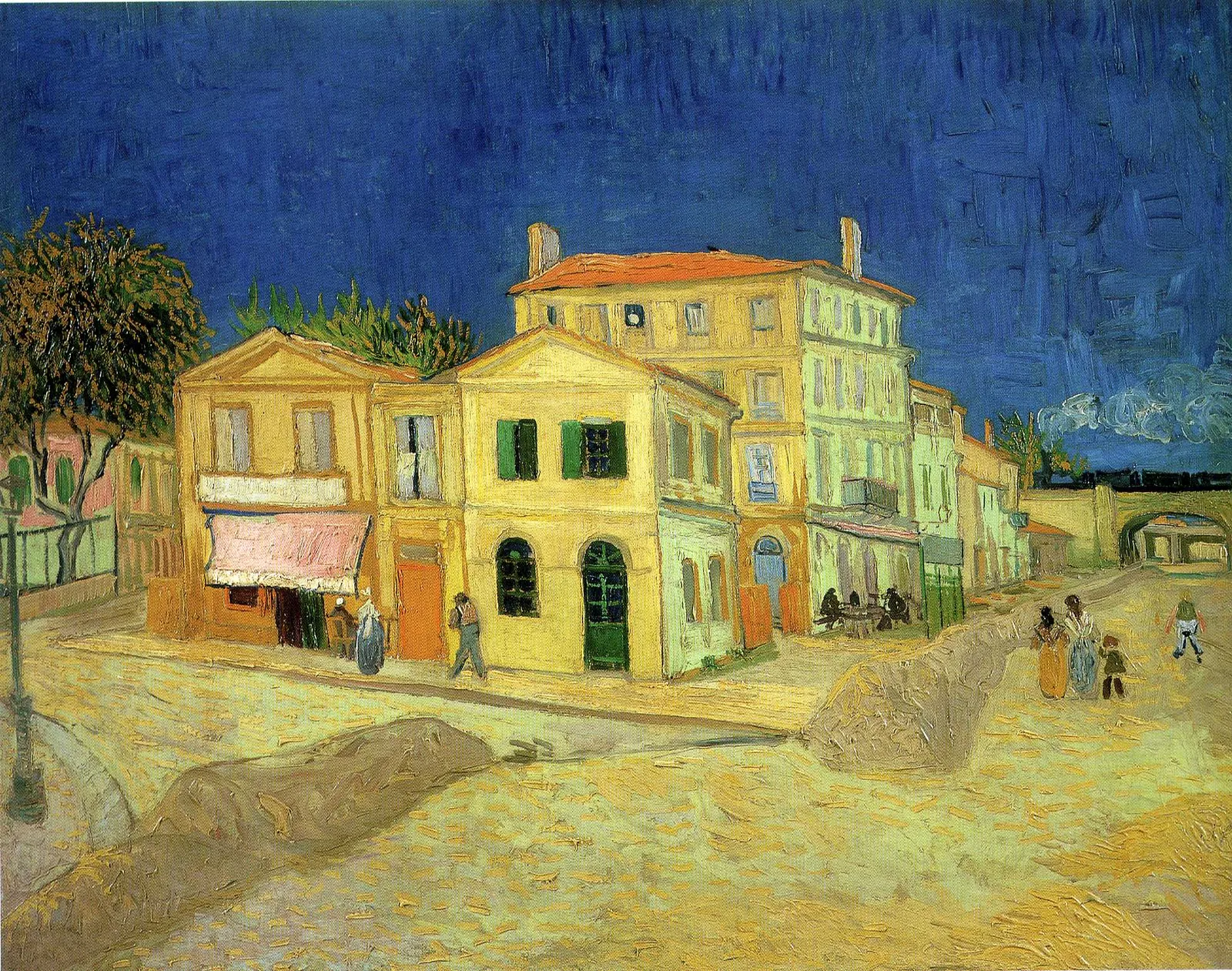
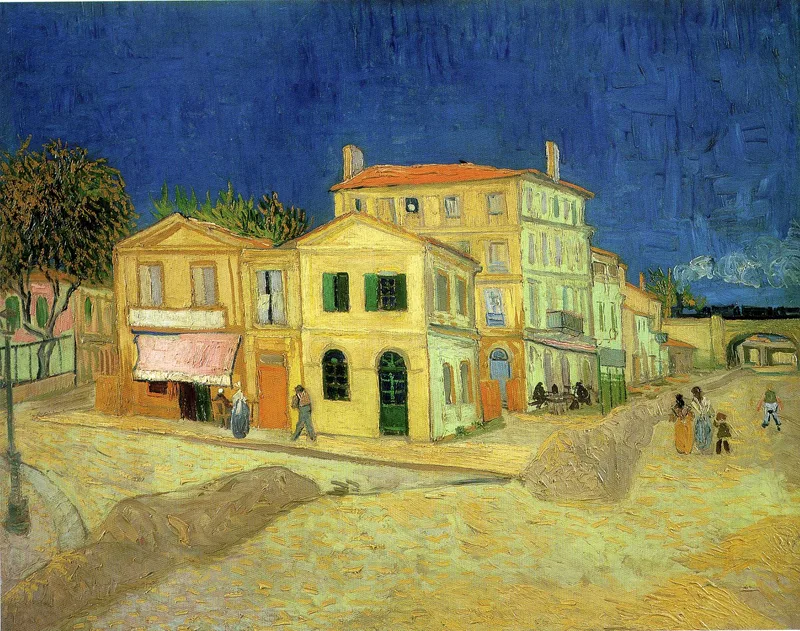
14. The Yellow House (1888)
Where to see it: the Van Gogh Museum, Amsterdam [4]. When: 1888, in Arles. He sketched it for Theo around 29 September [4].
Why it matters: it is a portrait of his own street. The Yellow House shows his home, the restaurant where he ate supper every day and the street where his friend the postman lived [4]. He knew it was hard: “That’s a really difficult subject! But I want to conquer it for that very reason.” [4] What drew him was simple: “Because it’s tremendous, these yellow houses in the sunlight and then the incomparable freshness of the blue.” [4]
Hand-painted in oilFrom $350See sizes
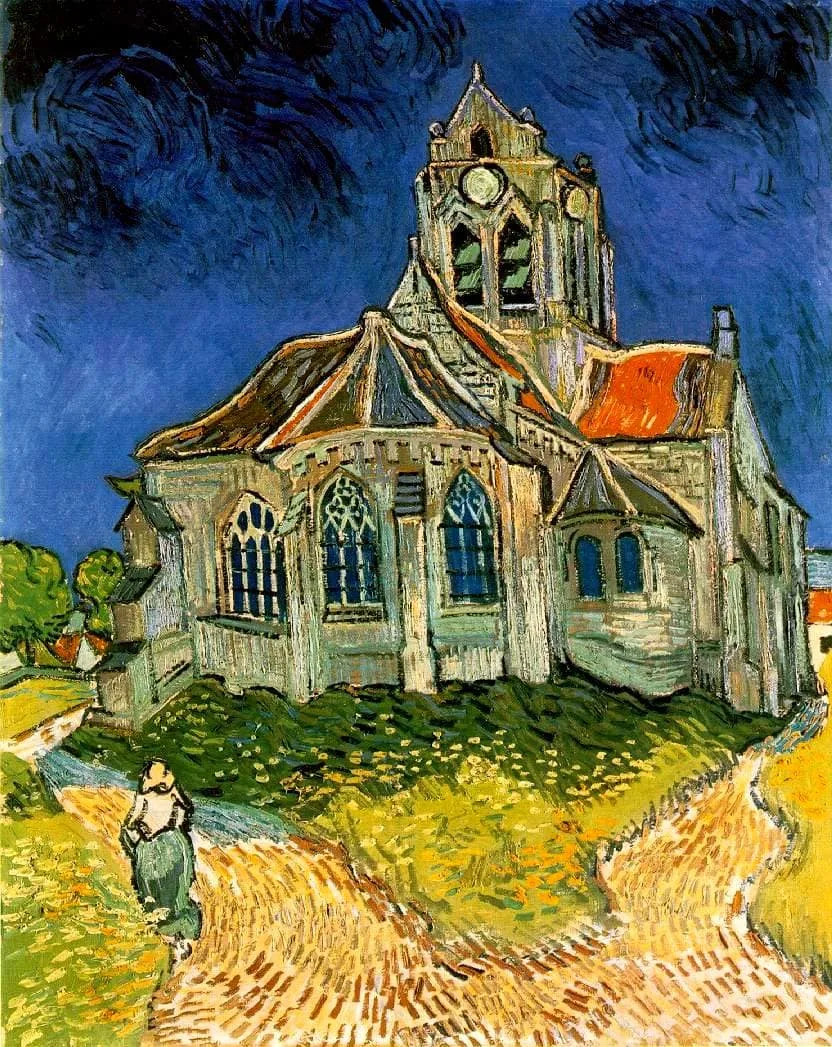
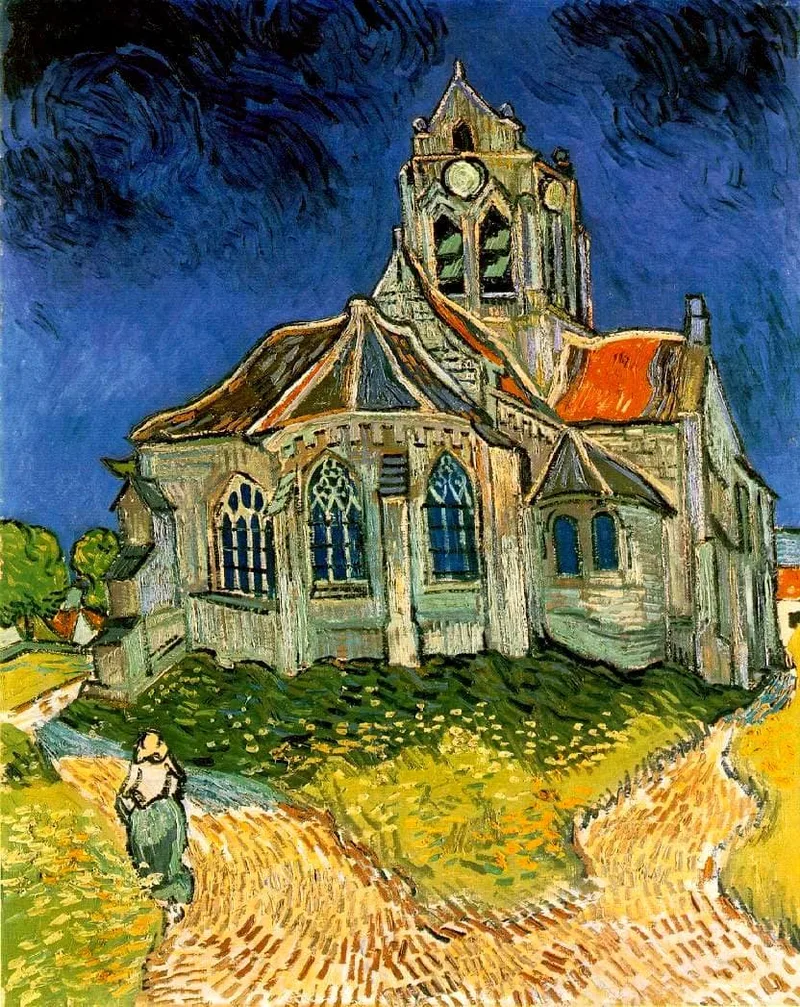
15. The Church at Auvers (1890)
Where to see it: the Musée d’Orsay, Paris [8]. When: 1890, at Auvers-sur-Oise. He described it to his sister on 5 June [8].
Why it matters: it shows how far his color had traveled. He described the church at Auvers as “purplish against a sky of a deep and simple blue of pure cobalt,” with stained-glass windows like “ultramarine blue patches” [8]. It was almost the same subject as his old church studies in Nuenen, he said, only now the color was probably “more expressive, more sumptuous” [8]. The canvas measures 94 by 74 centimeters [8].
Hand-painted in oilFrom $350See sizes
Where to see each one, city by city
Amsterdam leads: five of the 15 are in the Van Gogh Museum, which also has its own Sunflowers [4][5][8][9][10][11]. Paris has three at the Musée d’Orsay [4][8], New York and London have two each [1][7][2][6], and Otterlo, Los Angeles and New Haven have one each [3][5]. Plan by city with the table below, then check each museum’s page before you go. Once you have seen the famous ones, try ten lesser-known paintings worth seeking out.
| City | Museum | Paintings from this list |
|---|---|---|
| Amsterdam | Van Gogh Museum | The Bedroom [5], Almond Blossom [8], The Potato Eaters [9], Wheatfield with Crows (in conservation as of October 2026) [10], The Yellow House [4], plus its 1889 Sunflowers [11] |
| Paris | Musée d’Orsay | Starry Night Over the Rhône [4], Self-Portrait [8], The Church at Auvers [8] |
| New York | Museum of Modern Art | The Starry Night [1] |
| New York | Metropolitan Museum of Art | Wheat Field with Cypresses [7] |
| London | National Gallery | Sunflowers (not on display as of October 2026) [2] |
| London | The Courtauld Gallery | Self-Portrait with Bandaged Ear [6] |
| Otterlo | Kröller-Müller Museum | Café Terrace at Night [3] |
| Los Angeles | J. Paul Getty Museum | Irises [5] |
| New Haven | Yale University Art Gallery | The Night Café [3] |
Locations from museum pages and from the artwork records of the scholarly edition of Van Gogh’s letters; display status as of October 2026 [1][2][3][4][5][6][7][8][9][10][11].
Questions and answers
What is Van Gogh’s most famous painting?
The Starry Night, from 1889. Even the Van Gogh Museum in Amsterdam, which does not own it, calls it “probably one of the world’s most famous artworks.” Its home is the Museum of Modern Art in New York, which acquired it in 1941 [1].
Why is Starry Night so famous?
Partly because of where it was placed. To build Vincent’s name, Theo’s widow Jo strategically sold works to influential collectors and well-known museums. The Starry Night went to a collector in Rotterdam and, in 1941, to MoMA, the first Van Gogh in a New York museum. And Don McLean’s song Vincent is better known by its opening line, “Starry, Starry Night” [1].
What are 10 of Van Gogh’s most famous paintings?
What is Van Gogh’s masterpiece?
Who inherited Van Gogh’s estate?
When Vincent died, his brother Theo inherited the remaining works. Theo died shortly after, and everything passed to his wife, Jo van Gogh-Bonger, and their only son [1].
Written and fact-checked by the Vincent van Gogh Paintings editorial desk12 sourcesUpdated
Sources
- Van Gogh Museum: Where is The Starry Night?Accessed
- The National Gallery, London: Vincent van Gogh, Sunflowers, 1888Accessed
- Vincent van Gogh: The Letters, letter 678 to Willemien van Gogh, Arles, 9 and about 14 September 1888, with notes and artwork recordsAccessed
- Vincent van Gogh: The Letters, letter 691 to Theo van Gogh, Arles, on or about 29 September 1888, with notes and artwork recordsAccessed
- Vincent van Gogh: The Letters, letter 776 to Theo van Gogh, Saint-Rémy, about 23 May 1889, with notes and artwork recordsAccessed
- The Courtauld: Vincent van Gogh, Self-Portrait with Bandaged EarAccessed
- Vincent van Gogh: The Letters, letter 783 to Theo van Gogh, Saint-Rémy, 25 June 1889, with notes and artwork recordsAccessed
- Vincent van Gogh: The Letters, letter 879 to Willemien van Gogh, Auvers-sur-Oise, 5 June 1890, with notes and artwork recordsAccessed
- Van Gogh Museum: The Potato Eaters, 1885, s0005V1962Accessed
- Van Gogh Museum: Wheatfield with Crows, 1890, s0149V1962Accessed
- Van Gogh Museum: The Permanent Collection, Van Gogh’s MasterpiecesAccessed
- Vincent van Gogh: The Letters, letter 574 to Willemien van Gogh, Paris, late October 1887Accessed
Hand-painted oil reproductions
Paintings in this guide
 The Starry NightVincent van GoghFrom$350
 Café Terrace at Night (Place du Forum, Arles)Vincent van GoghFrom$350
 Branches with Almond BlossomVincent van GoghFrom$350
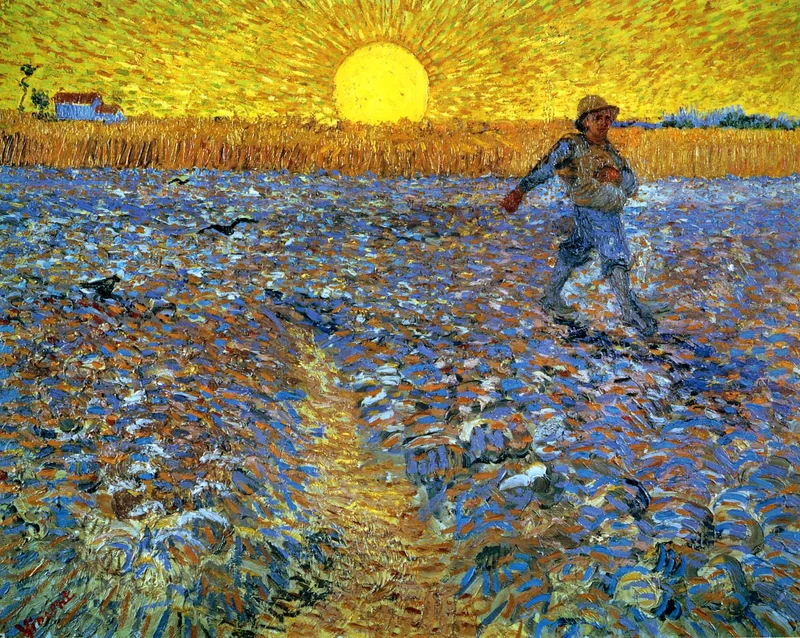 The Sower (Sower with Setting Sun)Vincent van GoghFrom$350
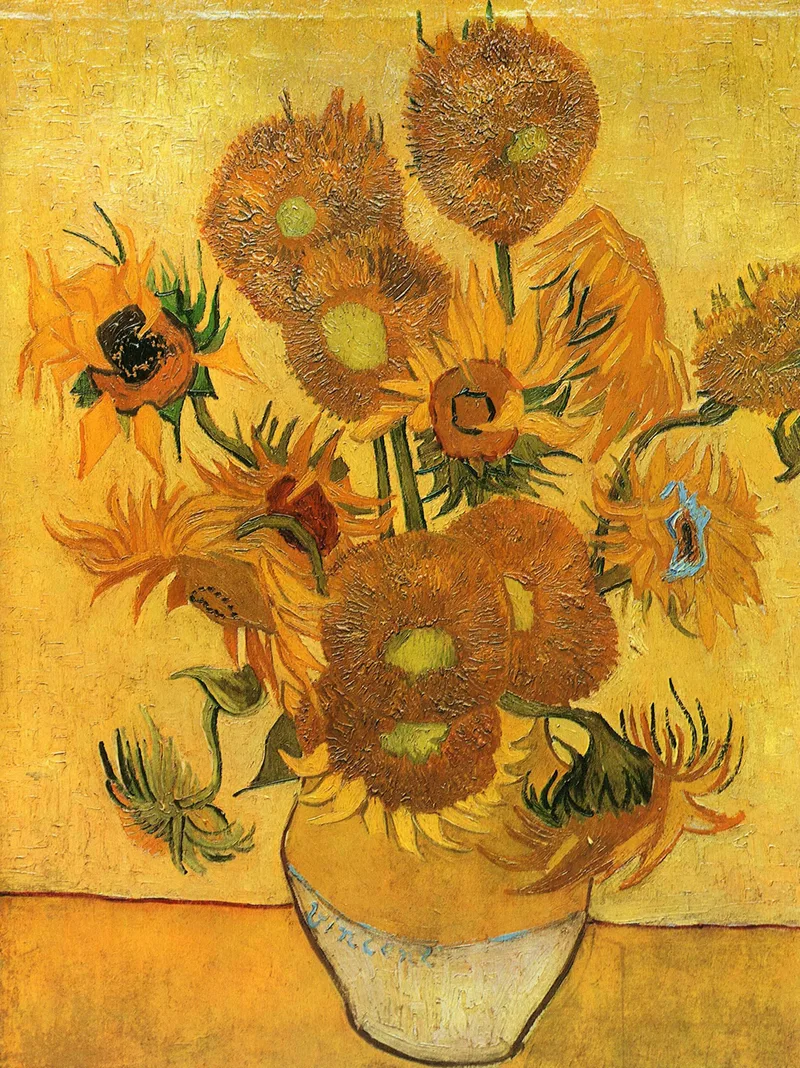 Still Life - Vase with Fifteen SunflowersVincent van GoghFrom$350
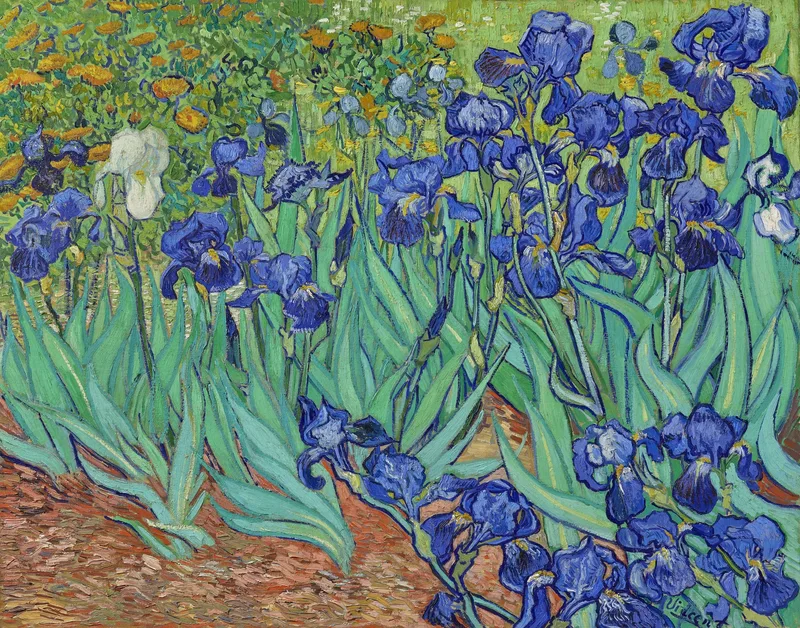 IrisesVincent van GoghFrom$350
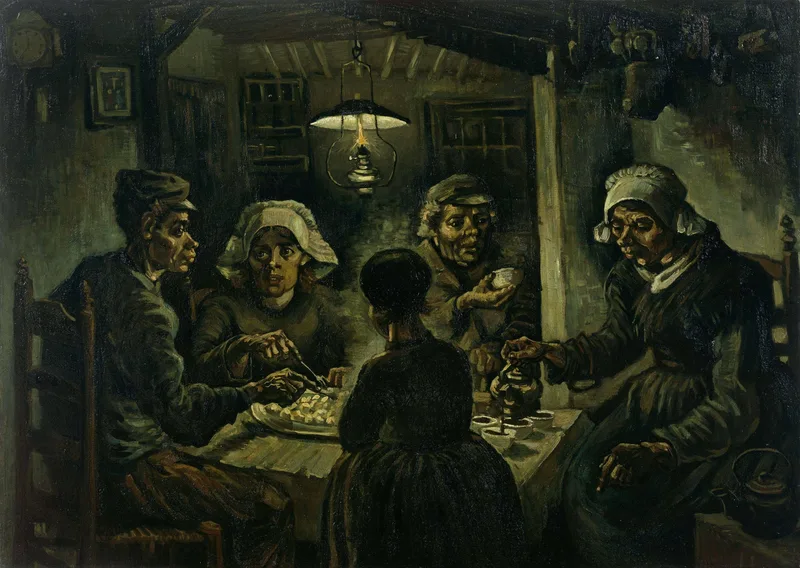 The Potato EatersVincent van GoghFrom$350
 The Night CafeVincent van GoghFrom$350
 Starry Night Over the RhoneVincent van GoghFrom$350
 Wheat Field with Cypresses at the Haude Galline near EygalieresVincent van GoghFrom$350
 The Yellow HouseVincent van GoghFrom$350
 The Church at AuversVincent van GoghFrom$350