
Guide
10 Lesser-Known Van Gogh Paintings Worth Seeking Out
Ten real Van Gogh paintings that rarely make the lists, and where you can go see them


Van Gogh’s lesser-known paintings include a skeleton smoking a cigarette from his student days in Antwerp [1], two crabs he may have painted just after leaving the hospital in Arles [4] and Tree Roots, which the Van Gogh Museum calls “probably Van Gogh’s very last painting” [8]. Here are ten worth seeking out, each with the museum that holds it.
Why these ten are worth seeking out
Every painting below is in a public museum and is documented by that museum or by Van Gogh’s own letters, so you can check it and, with a little planning, see it. None of them is a rumor or a recent attribution. They simply rarely appear on the usual lists, which repeat the same handful of pictures. If you want those first, start with 15 famous Van Gogh paintings; if you want everything, browse all of Van Gogh’s paintings on this site.
The ten run in date order, starting with his student months in Antwerp and ending in his last weeks at Auvers. Together they show sides of him the famous canvases hide: the joker, the naturalist, the copyist and the patient who painted his way through illness.
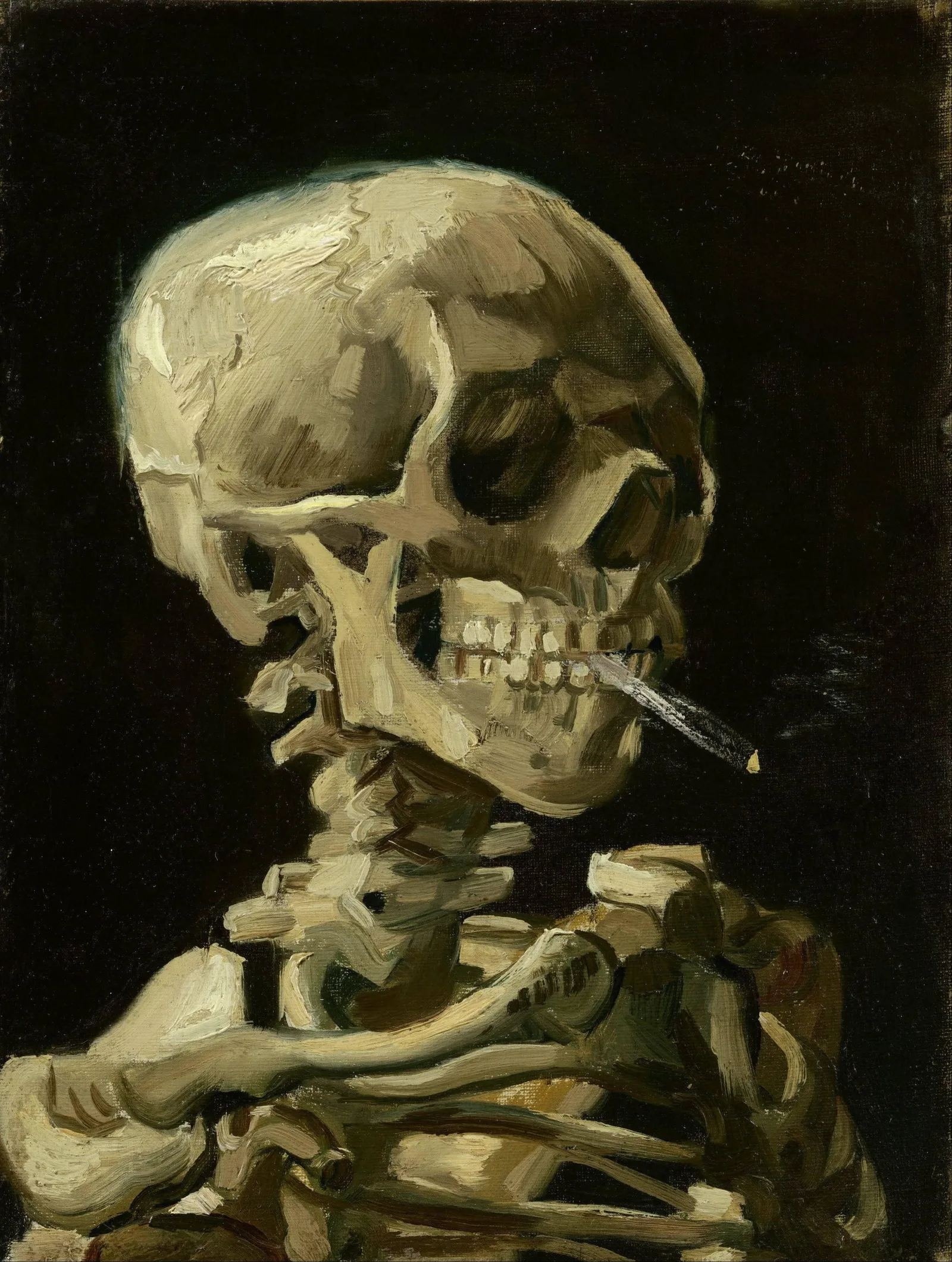
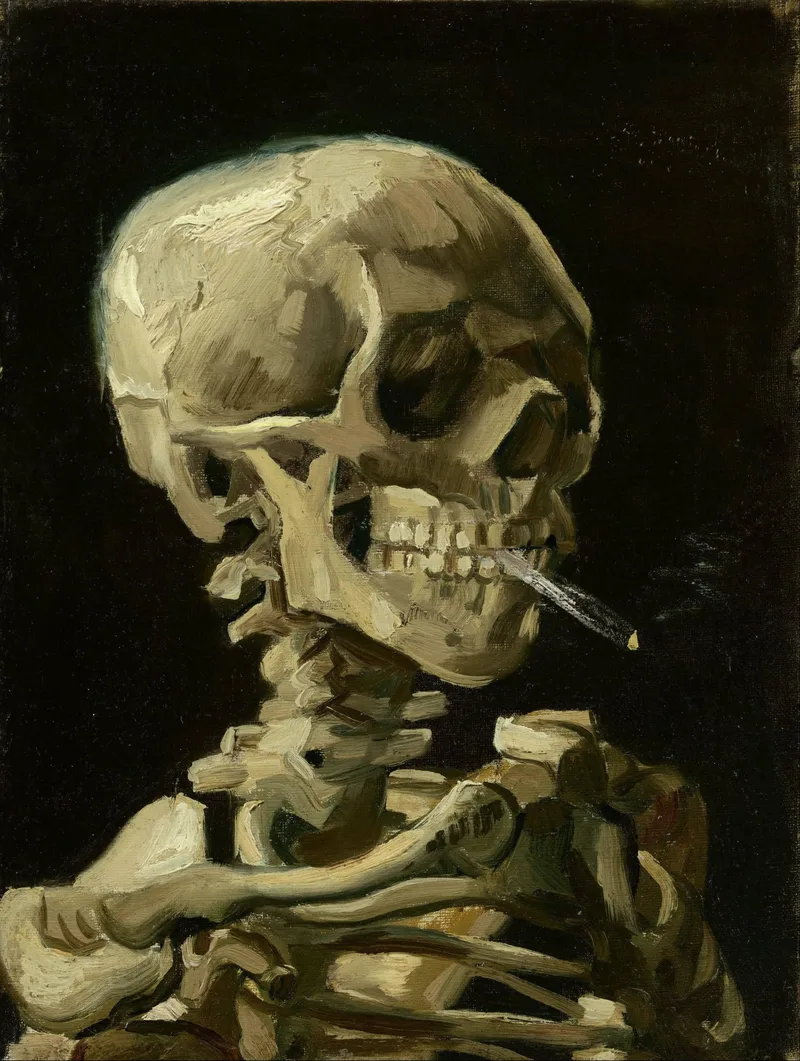
1. Head of a Skeleton with a Burning Cigarette (1886)
Where to see it: the Van Gogh Museum, Amsterdam, which calls it “a juvenile joke” [1]. He painted this small canvas, 32.3 by 24.8 centimeters, in Antwerp in January or February 1886, while he was a student at the art academy [1].
Drawing skeletons was a standard exercise there, but painting them was not part of the curriculum, so the museum concludes he made it between or after his lessons [1]. The joke has a serious side: the skull of a skeleton with a burning cigarette shows he had a good command of anatomy [1]. For more of his darker subjects, see 8 scary Van Gogh paintings and their stories.
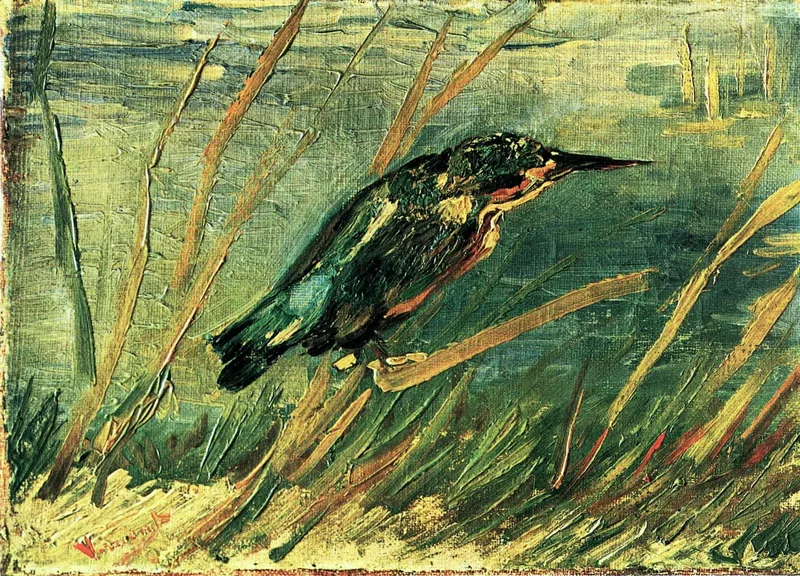
2. Kingfisher by the Waterside (1887)
Where to see it: the Van Gogh Museum, Amsterdam [2]. He painted it in Paris in July or August 1887, and it measures just 26.6 by 19.1 centimeters [2].
Here is the fun part. Van Gogh owned a mounted kingfisher, and the specimen has survived, so the museum can compare model and painting [2]. The comparison shows him editing nature: he made the tail slightly longer, probably to balance the raised beak, and gave the bird feet so it could perch on a reed stem [2]. The Kingfisher is a reminder that the painter of sunflowers also looked closely at animals.


Hand-painted in oilFrom $350See sizes
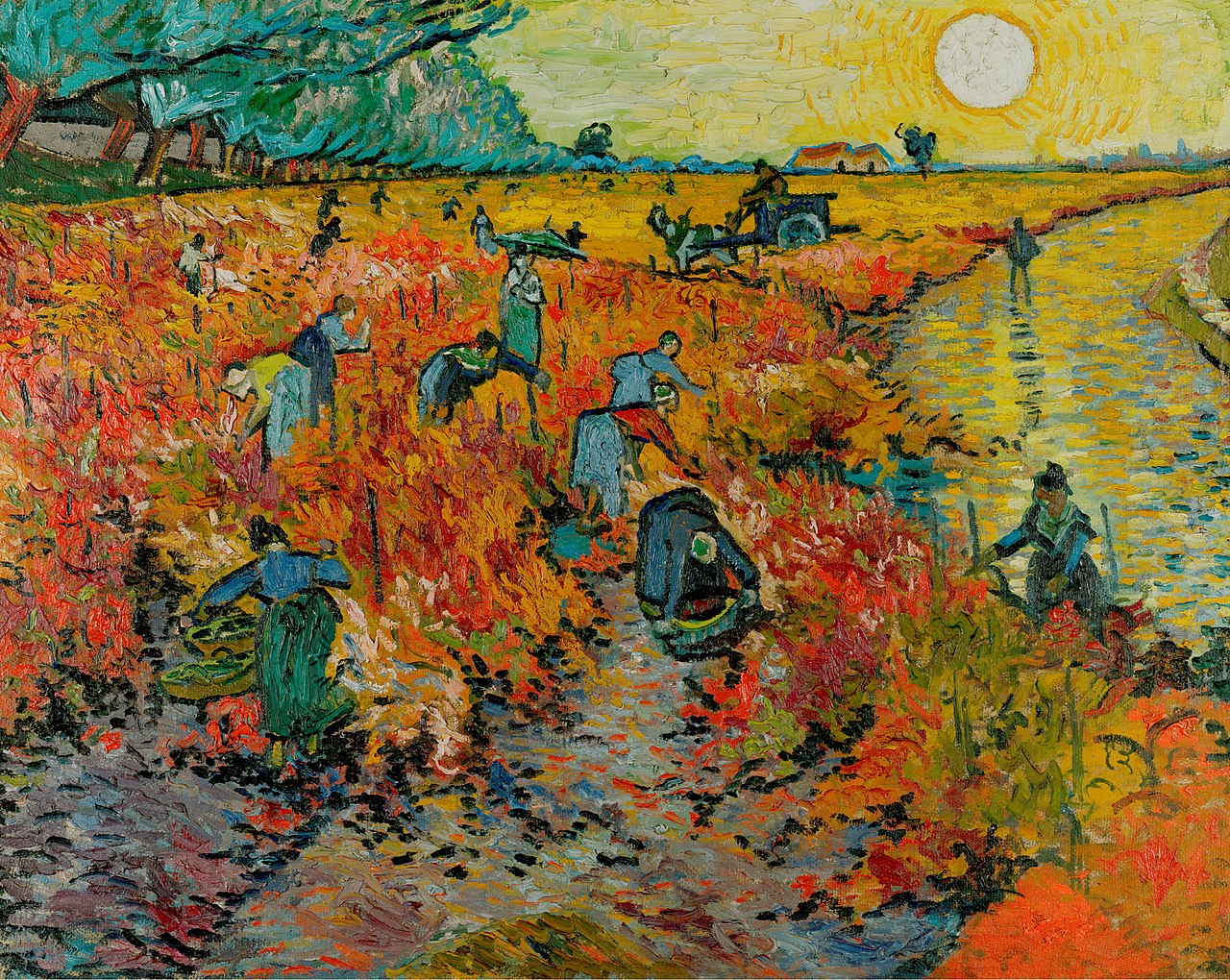
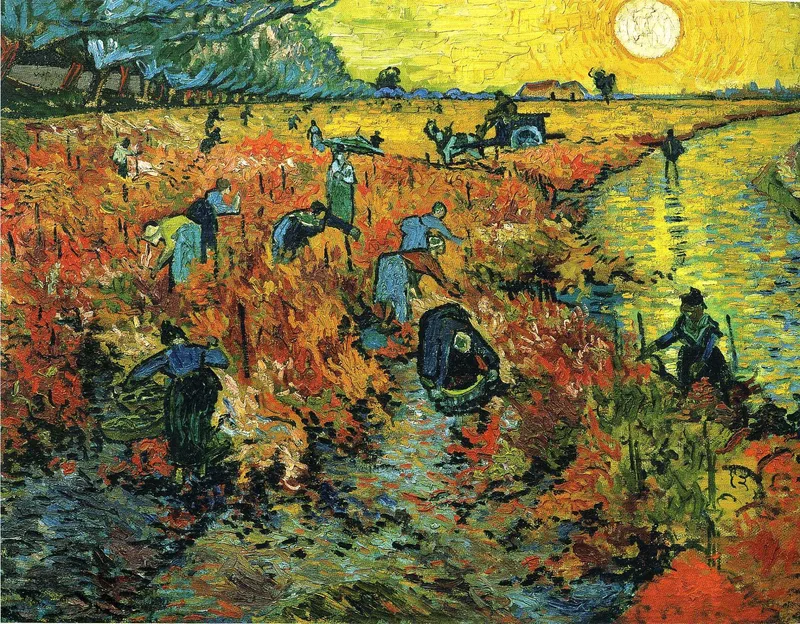
3. The Red Vineyard (1888)
Where to see it: the Pushkin Museum of Fine Arts, Moscow [3]. Painted in 1888, The Red Vineyard is usually remembered for a sale rather than for how it looks: it was bought by Anna Boch, the sister of his friend Eugène Boch [3].
The Van Gogh Museum puts that sale in context. We do not know exactly how many paintings he sold, it says, but it was more than a couple: his uncle Cor ordered 19 cityscapes of The Hague, he sold his first painting to the Paris dealer Julien Tanguy, and Theo sold another work to a gallery in London [3]. The full answer is in how many paintings Van Gogh sold.

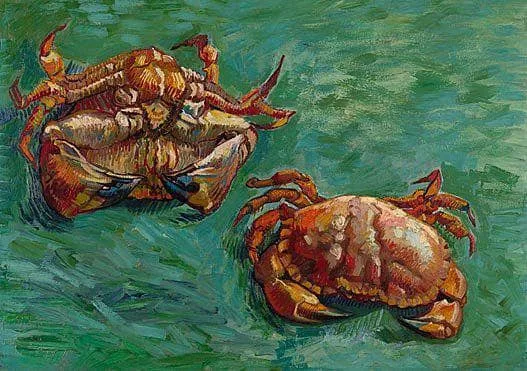
4. Two Crabs (1889)
Where to see it: the National Gallery, London, where it is on loan from a private collection as of October 2026 [4]. The gallery dates it to 1889 and thinks he most likely painted it during his stay in Arles [4].
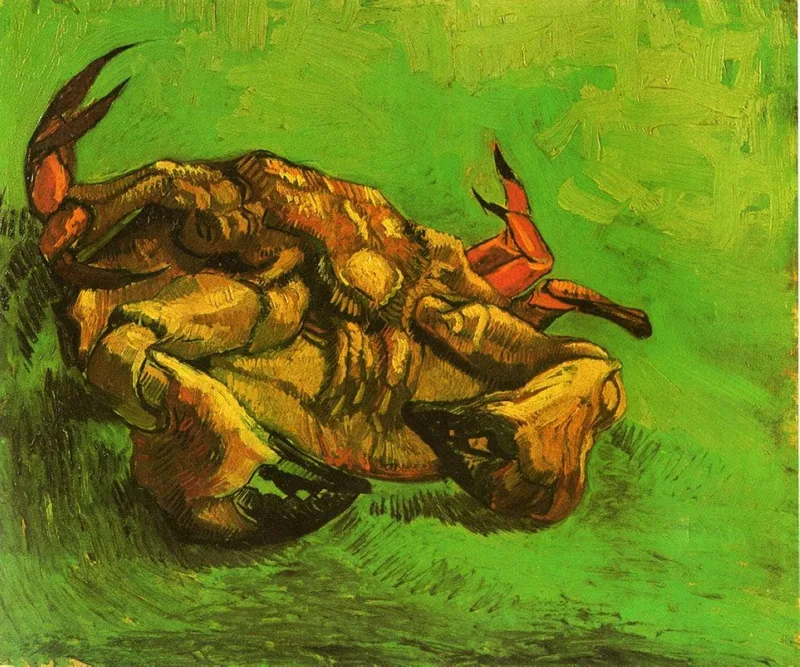
After he came home from the hospital on the evening of 7 January, Van Gogh told Theo he would start work again with one or two still lifes, and the gallery suggests these may be Two Crabs and A Crab on its Back, now in the Van Gogh Museum [4]. It traces the design to Japanese woodblock prints, especially those of Utagawa Kunisada and Katsushika Hokusai, and the red against green to Eugène Delacroix’s theory of contrasting colors [4].
Look closely: the enlarged abdomen flap marks the crab on the left as a female, and he may have painted the same crab twice, flipped over [4]. The single crab in Amsterdam is painted with more detail, which the gallery reads as a sign that it may be the later of the two [4].


Hand-painted in oilFrom $350See sizes
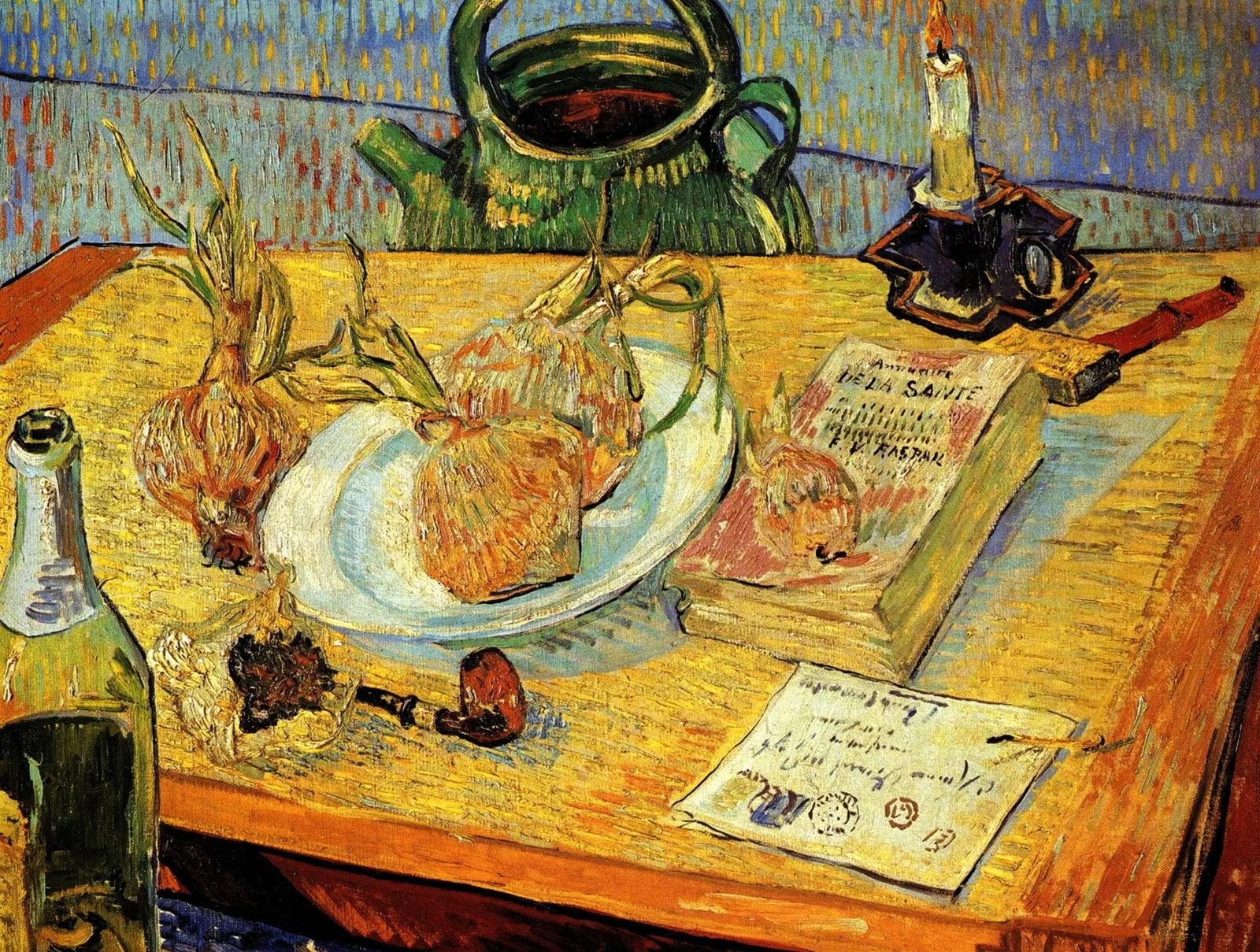
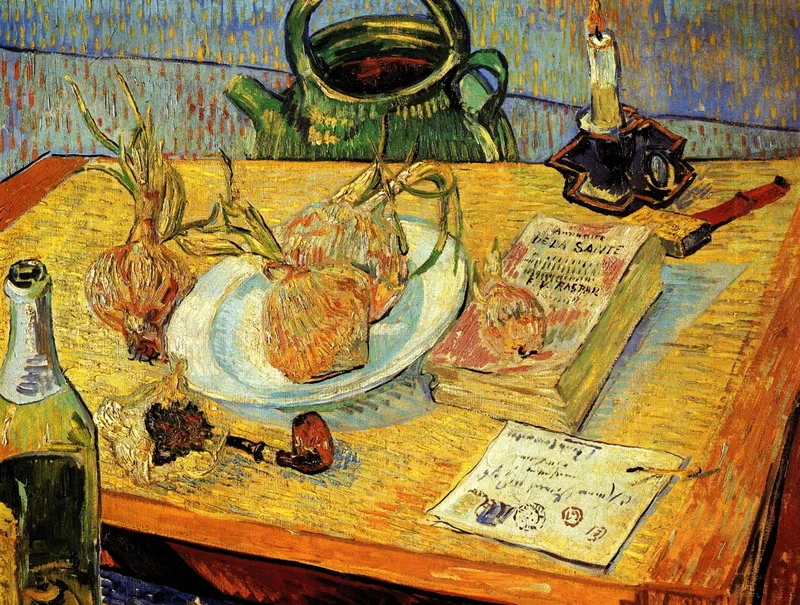
5. Still Life with a Plate of Onions (1889)
Where to see it: the Kröller-Müller Museum, Otterlo [5]. This table top from 1889 works like a self-portrait without a face. The Van Gogh Museum, which discusses it alongside his two bandaged-ear self-portraits, lists what he put on the table: his pipe and tobacco, the envelope of a letter from Theo, an empty bottle of absinthe and a popular handbook he used for self-medication [5].
Read that way, the still life with a plate of onions is an inventory of his life as he recovered from the crisis of 23 December 1888, the night he cut off his left ear, made with ordinary objects instead of his own features [5].
6. Giant Peacock Moth (1889)
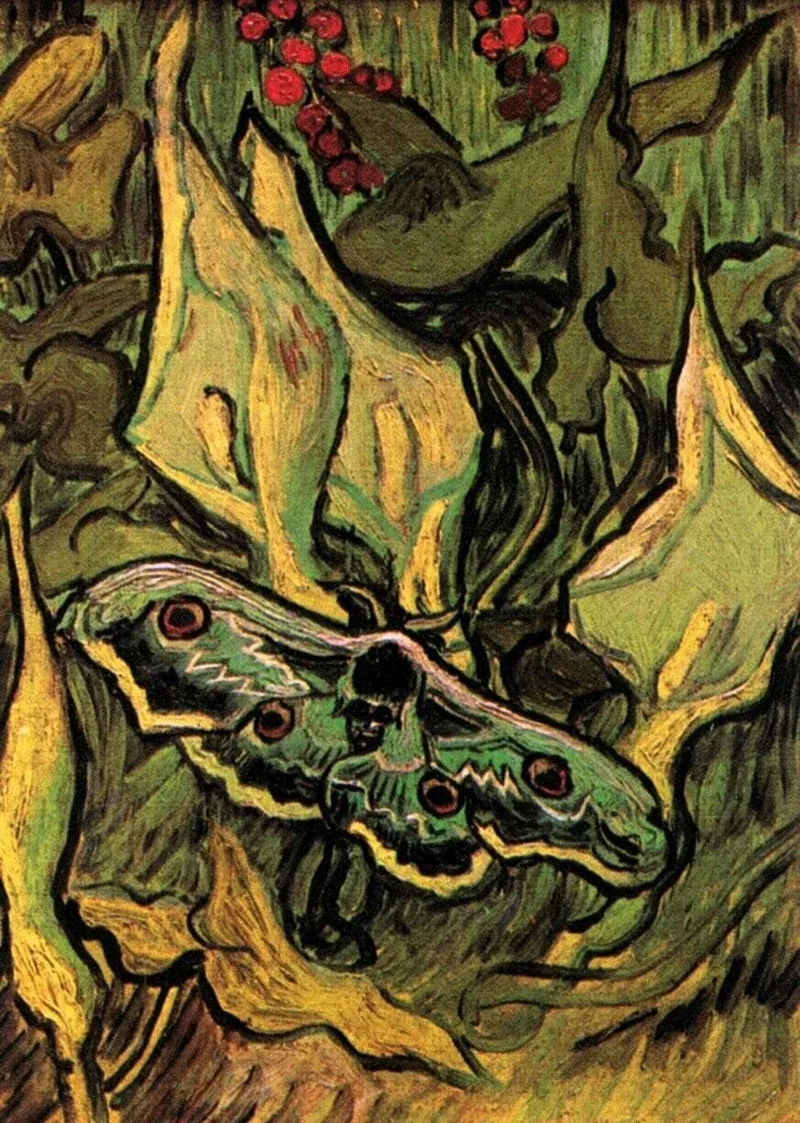
Where to see it: the Van Gogh Museum, Amsterdam [6]. He painted this close-up, 33.5 by 24.5 centimeters, at Saint-Rémy in May or June 1889 [6]. In May he told Theo he had drawn a very large, rare night moth, and that to paint it he would have had to kill it; later he painted it after all, using his drawing as a model [6].
He also got the species wrong. Van Gogh called it a death’s-head moth and painted a kind of skull on its body, but the museum explains that it was a giant peacock moth, a species that has only stripes there [6]. The Giant Peacock Moth belongs with the close-ups of flowers, plants and small creatures he found in the asylum garden [5].


Hand-painted in oilFrom $350See sizes
7. Entrance to a Quarry (1889)
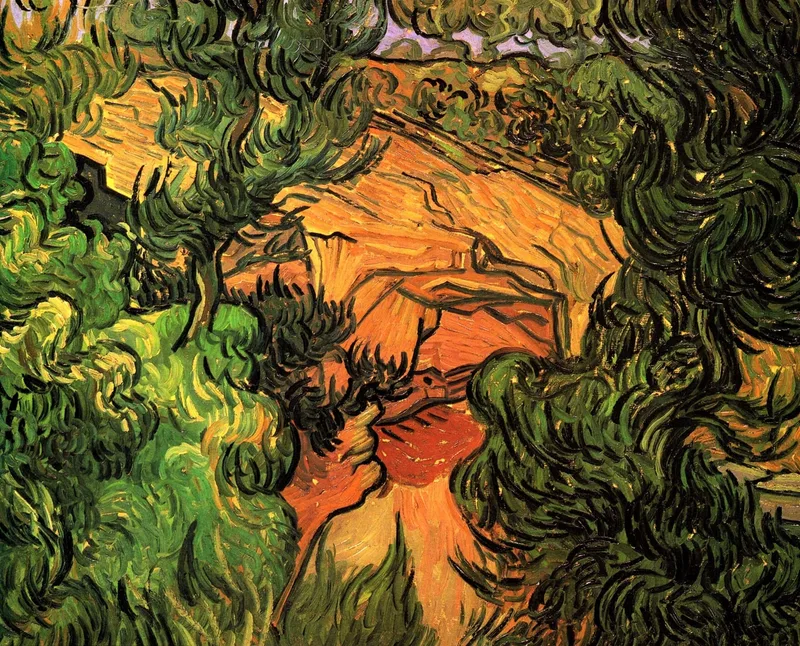
Where to see it: the Van Gogh Museum, Amsterdam [7]. The canvas, from 1889, measures 60 by 74.5 centimeters [7]. In July 1889, the Van Gogh Museum records, he was painting a quarry when he felt a new attack of his illness coming on [5]. He wanted this picture matt in color, the museum adds, and it was the first time since moving to France that he went back to a muted palette [9].
What makes Entrance to a Quarry remarkable is that he liked it anyway. Around 20 September 1889 he told Theo in letter 805: “Myself I quite like the Entrance to a quarry which I did when I felt this attack beginning, because to my taste the dark greens go well with the ochre tones, there’s something sad in them that’s healthy, and that’s why it doesn’t annoy me.” [7] Later in the same letter he named it among the few canvases from that batch he considered a little good [7].


Hand-painted in oilFrom $350See sizes
8. Pietà, after Delacroix (1889)
Where to see it: the Van Gogh Museum, Amsterdam, which holds the larger version, 73 by 60.5 centimeters [7]. It began with an accident. On 10 September 1889 he told Theo that during his illness his lithograph of Delacroix’s Pietà “with other sheets had fallen into some oil and paint and got spoiled” [11]. So he painted it. The museum calls the result more a variation than a copy: he kept Delacroix’s theme and composition and added his own color [10]. The stained print has survived [10].
His hand, at least, was steady. Theo would see it if he watched him work, he wrote: “with my thoughts clear and my fingers so sure that I drew that Delacroix Pietà without taking a single measurement” [11]. He made two versions; the large canvas was the one he painted for himself, while he thought the small sketch, 42 by 34 centimeters, had no artistic value [7][12].
Funnily enough, he told Theo, just as he was making the copy he discovered where Delacroix’s original canvas had gone: it belonged to a queen who wrote poems as Carmen Sylva [7]. He had it wrong. The editors of his letters explain that the Delacroix the writer Pierre Loti saw in the Romanian queen’s boudoir was a copy of a different picture, The Lamentation of 1844 [12]. The Pietà itself, painted around 1850, is in Oslo [11]. The Van Gogh Museum places its Pietà in the months of crises at the asylum and asks whether he identified himself with the recently deceased Christ [5].


9. Sheepshearers, after Millet (1889)
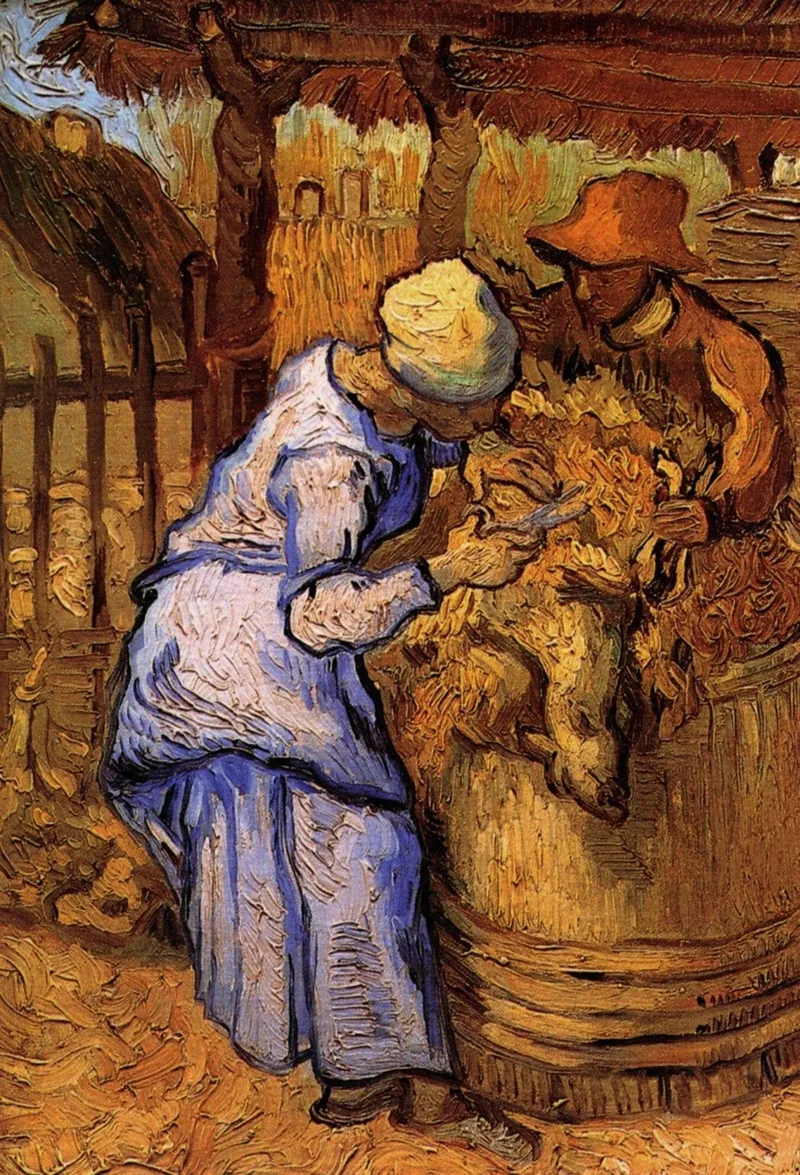
Where to see it: the Van Gogh Museum, Amsterdam [7]. The same letter 805 reports a project that rarely makes the famous lists: “At present I have 7 copies out of ten of Millet’s Travaux des champs.” [7] The editors identify the Sheepshearers, a small canvas of 44 by 30 centimeters, as the copy he painted that day, the eighth in the series [7]. “Today I attempted the Sheep shearer in a colour scale ranging from lilac to yellow,” he wrote [7].
Why would a painter with his own style copy at all? “I can assure you that it interests me enormously to make copies,” he wrote, adding that copying “teaches and above all sometimes consoles” [7]. He placed a black-and-white print in front of him and improvised the color, which he called his own interpretation [7].
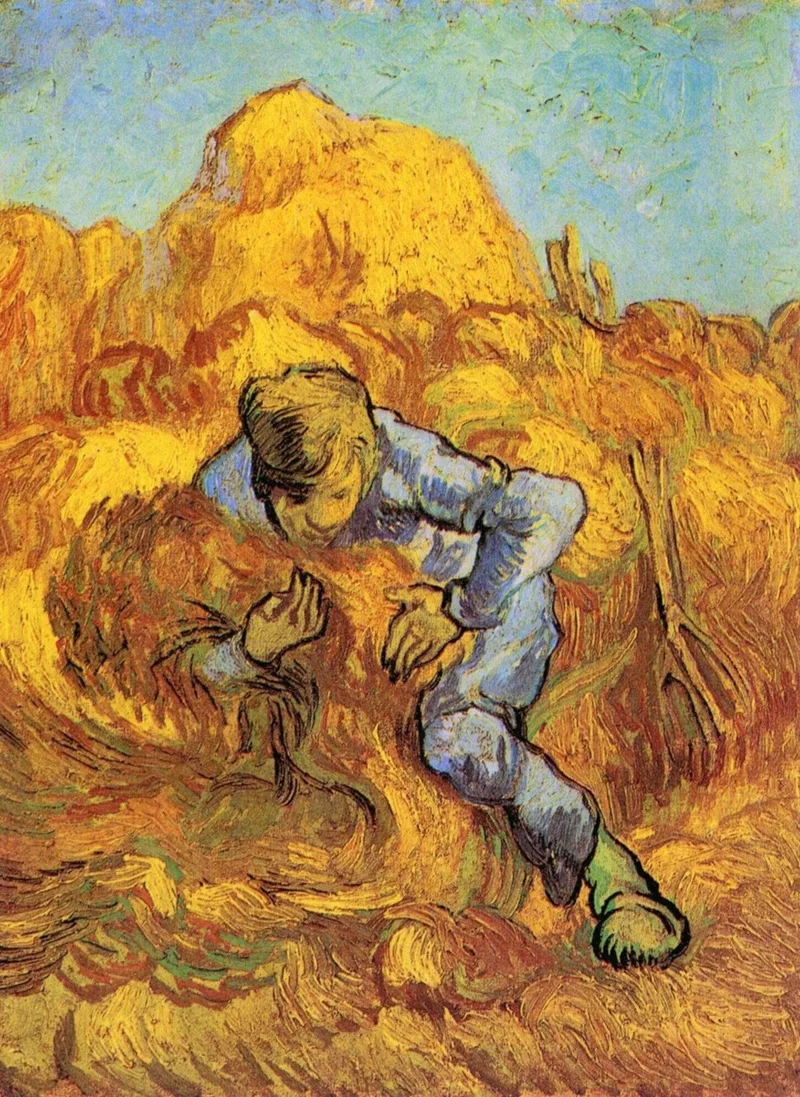
Assuming he followed the order of the prints, the editors think the seven copies already finished included The Sheaf-Binder, which also belongs to the Van Gogh Museum [7]. If you like these, his letters are full of such working notes, and how to read Van Gogh’s letters shows where to start.


Hand-painted in oilFrom $350See sizes


Hand-painted in oilFrom $350See sizes
10. Tree Roots (1890)
Where to see it: the Van Gogh Museum, Amsterdam, which calls it “probably Van Gogh’s very last painting” [8]. He painted it at Auvers-sur-Oise in July 1890, and it measures 50.3 by 100.1 centimeters [8].
At first it reads as a jumble of bright colors and abstract shapes; only then do you see a slope with tree trunks and roots, timber trees growing in a marl quarry near Auvers [8]. It was not entirely finished, which explains how it looks. Andries Bonger, Theo’s brother-in-law, wrote that on the morning before his death Van Gogh had painted a forest scene “full of sun and life” [8]. His final days are covered in how Van Gogh died.


Where to see all ten, and what to look for
Seven of the ten belong to the Van Gogh Museum in Amsterdam, so one visit covers most of this list [1][2][6][7][8]; you can pair it with the 10 must-see paintings at the Van Gogh Museum. The others are in the National Gallery in London, on loan from a private collection as of October 2026 [4], the Kröller-Müller Museum in Otterlo [5] and the Pushkin Museum in Moscow [3]. Museums lend works to exhibitions and take them off the walls for conservation, so check the museum’s page before you go.
| Painting | Date | Where to see it | What to look for |
|---|---|---|---|
| Head of a Skeleton with a Burning Cigarette | January to February 1886 | Van Gogh Museum, Amsterdam [1] | A student joke that shows his grasp of anatomy [1] |
| Kingfisher by the Waterside | July to August 1887 | Van Gogh Museum, Amsterdam [2] | The lengthened tail and the added feet [2] |
| The Red Vineyard | 1888 | Pushkin Museum of Fine Arts, Moscow [3] | The painting Anna Boch bought [3] |
| Two Crabs | 1889 | National Gallery, London, on loan as of October 2026 [4] | The wider abdomen flap of the female crab [4] |
| Still Life with a Plate of Onions | 1889 | Kröller-Müller Museum, Otterlo [5] | The absinthe bottle and the medical handbook [5] |
| Giant Peacock Moth | May to June 1889 | Van Gogh Museum, Amsterdam [6] | The skull he added, where the real moth has stripes [6] |
| Entrance to a Quarry | 1889 | Van Gogh Museum, Amsterdam [7] | Dark greens against ochre [7] |
| Pietà, after Delacroix | 1889 | Van Gogh Museum, Amsterdam [7] | His own colors on Delacroix’s design [10] |
| Sheepshearers, after Millet | 1889 | Van Gogh Museum, Amsterdam [7] | A color scale from lilac to yellow [7] |
| Tree Roots | July 1890 | Van Gogh Museum, Amsterdam [8] | Its unfinished look [8] |
Dates and locations from the museums’ own pages, the Van Gogh Museum’s stories or the artwork records of the scholarly edition of Van Gogh’s letters [1][2][3][4][5][6][7][8][10].
Questions and answers
Did Van Gogh paint animals?
Was Van Gogh inspired by Millet?
Yes, enough to copy him. In September 1889 he wrote from Saint-Rémy that he had “7 copies out of ten of Millet’s Travaux des champs.” He worked from black-and-white prints and improvised the color, which he called his own interpretation [7].
Where can I see lesser-known Van Gogh paintings?
Written and fact-checked by the Vincent van Gogh Paintings editorial desk12 sourcesUpdated
Sources
- Van Gogh Museum: Head of a Skeleton with a Burning Cigarette, 1886, s0083V1962Accessed
- Van Gogh Museum: Kingfisher by the Waterside, 1887, s0100V1962Accessed
- Van Gogh Museum: How many paintings did Vincent sell during his lifetime?Accessed
- The National Gallery, London: Vincent van Gogh, Two CrabsAccessed
- Van Gogh Museum: Vincent’s Illness and the Healing Power of ArtAccessed
- Van Gogh Museum: Giant Peacock Moth, 1889, s0189V1962Accessed
- Vincent van Gogh: The Letters, letter 805 to Theo van Gogh, Saint-Rémy, about 20 September 1889, with notes and artwork recordsAccessed
- Van Gogh Museum: Tree Roots, 1890, s0195V1962Accessed
- Van Gogh Museum: Entrance to a Quarry, 1889, s0041V1962Accessed
- Van Gogh Museum: Pietà (after Delacroix), 1889, s0168V1962Accessed
- Vincent van Gogh: The Letters, letter 801 to Theo van Gogh, Saint-Rémy, 10 September 1889, with notesAccessed
- Vincent van Gogh: The Letters, letter 804 to Willemien van Gogh, Saint-Rémy, 19 September 1889, with notesAccessed
Hand-painted oil reproductions
Paintings in this guide
 Skull of a Skeleton with Burning CigaretteVincent van GoghFrom$350
 Red Vineyards at ArlesVincent van GoghFrom$350
 Still Life with Drawing Board, Pipe, Onions and Sealing-WaxVincent van GoghFrom$350
 Two CrabsVincent van GoghFrom$350
 The KingfisherVincent van GoghFrom$350
 Crab on It`s BackVincent van GoghFrom$350
 Great Peacock MothVincent van GoghFrom$350
 Entrance to a QuarryVincent van GoghFrom$350
 Sheep-Shearers, The after MilletVincent van GoghFrom$350
 Sheaf-Binder, The after MilletVincent van GoghFrom$350