Guide
How Many Paintings Did Van Gogh Sell in His Lifetime?
The one famous sale, the others hiding in the letters and records, and why so little sold while he lived
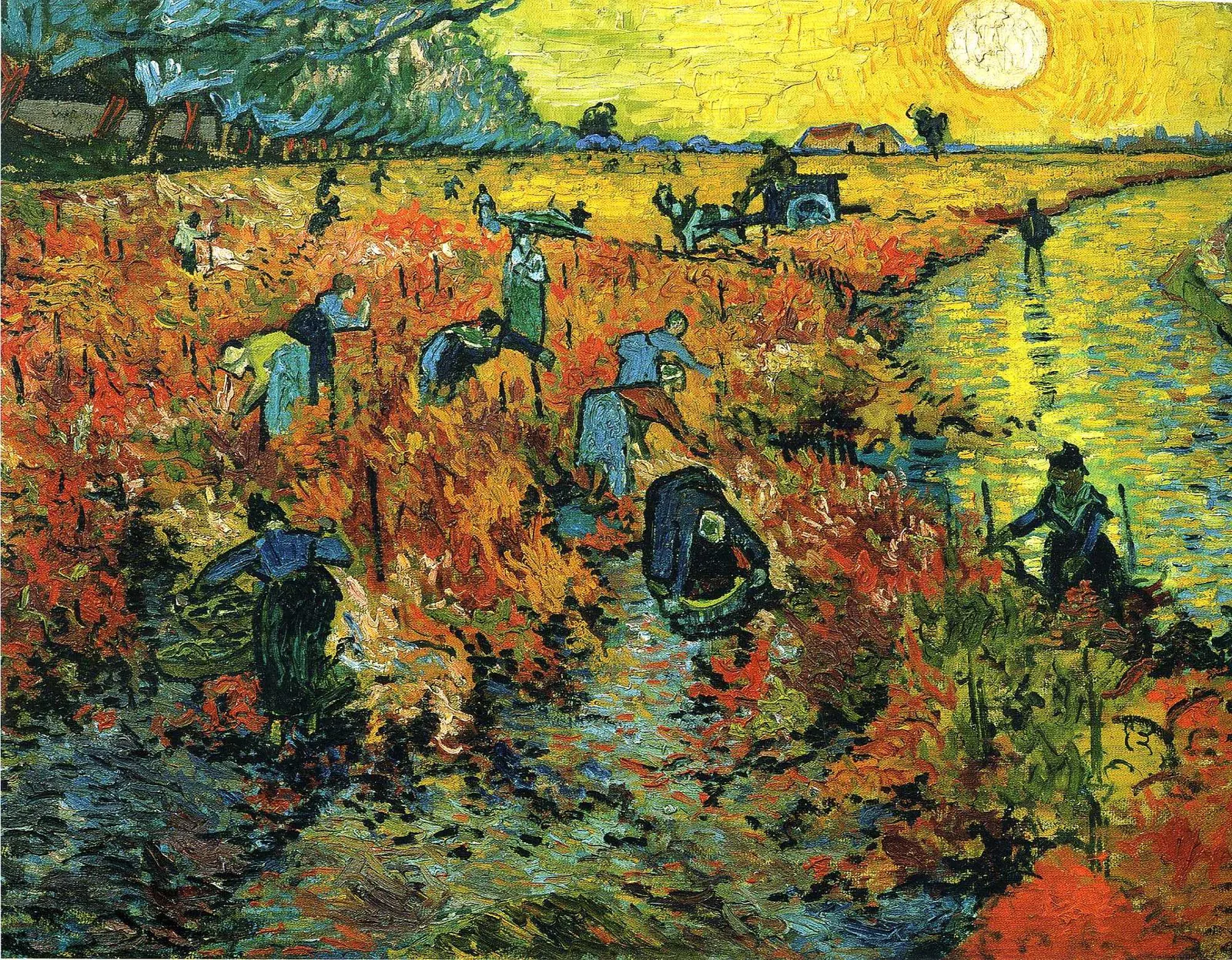
Nobody knows exactly how many paintings Van Gogh sold in his lifetime, but the Van Gogh Museum says it was “more than a couple” [1]. The only painting with a documented sale is The Red Vineyard, bought for 400 francs in 1890 [2][5]. The letters and records show a handful of other sales, commissions and trades, all listed below [3][6]. For the full picture of Van Gogh's paintings, start here.
Did Van Gogh really sell only one painting?
Not quite. It is often said that he sold a single painting, with only one identified work going to a buyer, as Martin Bailey of The Art Newspaper notes [3]. The Pushkin Museum, which owns that work, calls it “the only documented work sold during his lifetime” [5]. “Documented” here means there is a paper trail for the sale, not that nothing else ever sold.
The wider record gives a fuller story. In August 1890 his aunt Cornelia wrote to Theo that it must have been satisfying that Vincent had succeeded in “selling a painting and in fact more than once” [3]. Even so, a handful of sales is a minute share of the almost 1,000 paintings he completed [3].
Who bought The Red Vineyard, and for how much?
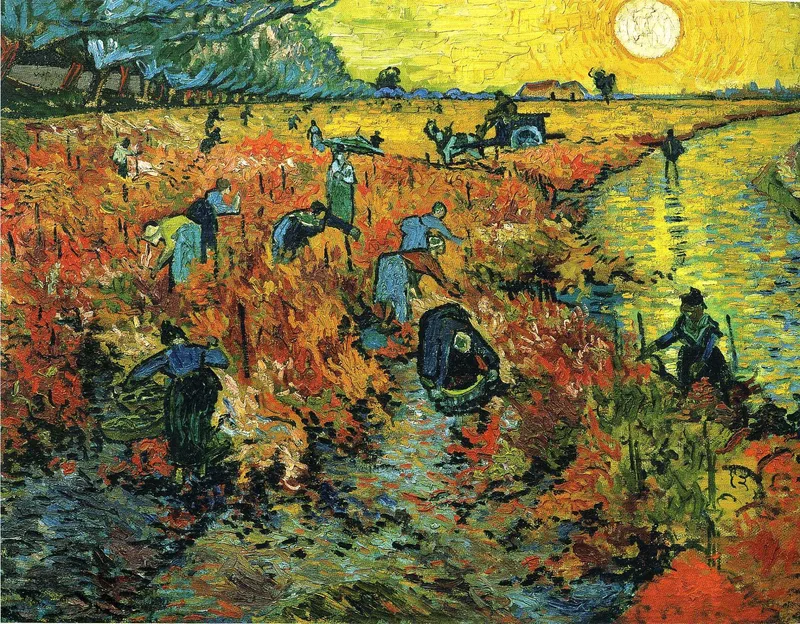
The buyer was the Belgian painter Anna Boch, sister of Vincent's friend Eugène Boch, who bought The Red Vineyard at the Les Vingt exhibition in Brussels for 400 francs [1][2][4]. Vincent heard the news from Theo and passed it on to his mother on 19 February 1890 [2]. On 6 March Theo entered the 400 francs in his account book, received from “Mlle Bock pour tab Vigne rouge” (Miss Boch for the painting Red vineyard) [2].
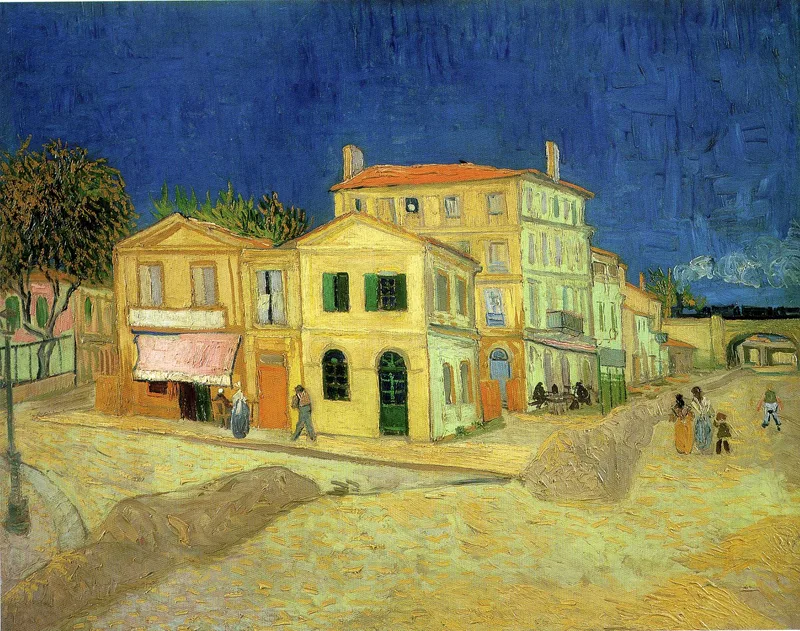
Vincent played the sum down, but 400 francs was a serious price for an up-and-coming artist: two months of the allowance Theo sent him in Arles, or more than two years' rent for the Yellow House [3]. Theo, a dealer at the leading Boussod & Valadon gallery, arranged the sale privately [3]. Van Gogh had painted the canvas in early November 1888, shortly after Gauguin arrived in Arles, and it is now in the Pushkin Museum in Moscow [4][5].
Hand-painted in oilFrom $350See sizes
Hand-painted in oilFrom $350See sizes
“yesterday, what’s more, Theo informed me that they’d sold one of my paintings in Brussels for 400 francs. In comparison with other prices, including the Dutch ones, this isn’t much, but that’s why I try to be productive in order to be able to keep working at reasonable prices.”
What else did he sell or trade?
His first commission came from his uncle Cor, an art dealer, who in March 1882 ordered 12 small pen drawings of The Hague at a rijksdaalder (2.50 guilders) each, with the promise of more; the museum counts 19 cityscapes in all [1][6]. In 1884, in Nuenen, a retired goldsmith named Antoon Hermans commissioned six landscapes for his dining room, but in the end paid only 25 guilders, which hardly covered the paint [3]. Bailey shows one of them, Potato Planting, from August 1884 [3].
In Paris, the museum says, he sold his first painting to the paint dealer Julien Tanguy, and Theo sold another work to a gallery in London [1]. Bailey adds a portrait of a friend of Tanguy's, sold for 20 francs, a still life of smoked herrings swapped for a carpet, and “a study” bought in 1888 by the Paris dealer Athanase Bague [3]. Bailey thinks the portrait is one known only from a black-and-white photograph, and he shows no picture of the herrings, so there is nothing to show for either [3]. And he often traded work, with other artists and, in his younger years, for food or drawing and painting supplies [1].

| When | What | Buyer or partner | Price | Source |
|---|---|---|---|---|
| March 1882 | 12 pen drawings of The Hague, more ordered later | Uncle Cor (C. M. van Gogh) | 1 rijksdaalder (2.50 guilders) each | [6] |
| 1884 | Six landscapes for a dining room in Nuenen | Antoon Hermans | 25 guilders in the end | [3] |
| Paris, around 1887 | Portrait of a friend of Tanguy | Not named | 20 francs | [3] |
| Paris | Still life of smoked herrings | Exchanged for a carpet | No money | [3] |
| 1888 | A self-portrait, now lost (a probable sale) | Sulley and Lawrie, London | Not known | [3] |
| October 1888 | “A study” | Athanase Bague, Paris | Not known | [3] |
| Early 1890 | The Red Vineyard | Anna Boch | 400 francs | [2] |
Prices as given in the letters edition [2][6] and by Martin Bailey [3]. The Van Gogh Museum adds that Vincent often traded work with other artists [1].
Why did he sell so little?
Despite encouragement from his avant-garde colleagues, most people simply rejected his work, Bailey writes, and The Art Newspaper suggests he may have ended up pricing his pictures too high [3]. Having a dealer for a brother gave him an allowance and contacts, but selling his art proved very challenging [3].
Time was the other problem. Recognition only came in his last two years: he showed at the Indépendants in Paris (three paintings in 1888, two in 1889 and ten in March 1890), the critic Albert Aurier praised him in a six-page article in January 1890, and more than 20 reviews cited his work in his last seven months [3]. His death in July 1890, told in how Van Gogh died, cut that career short [3].
When did his paintings start to sell?
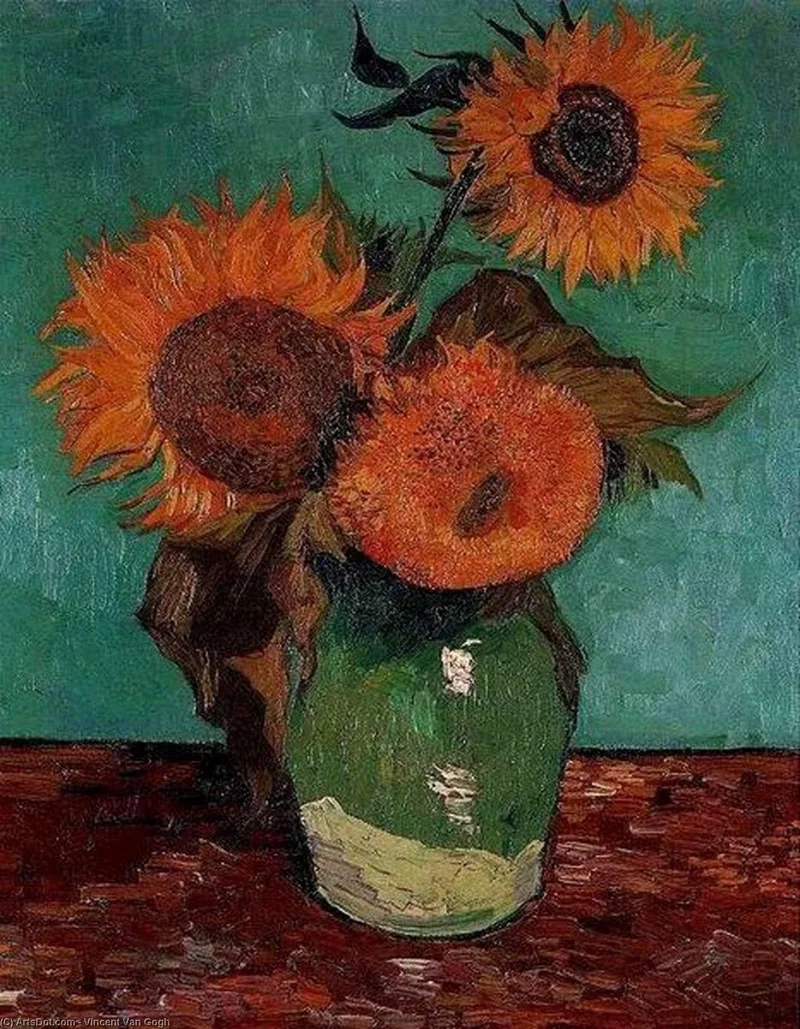
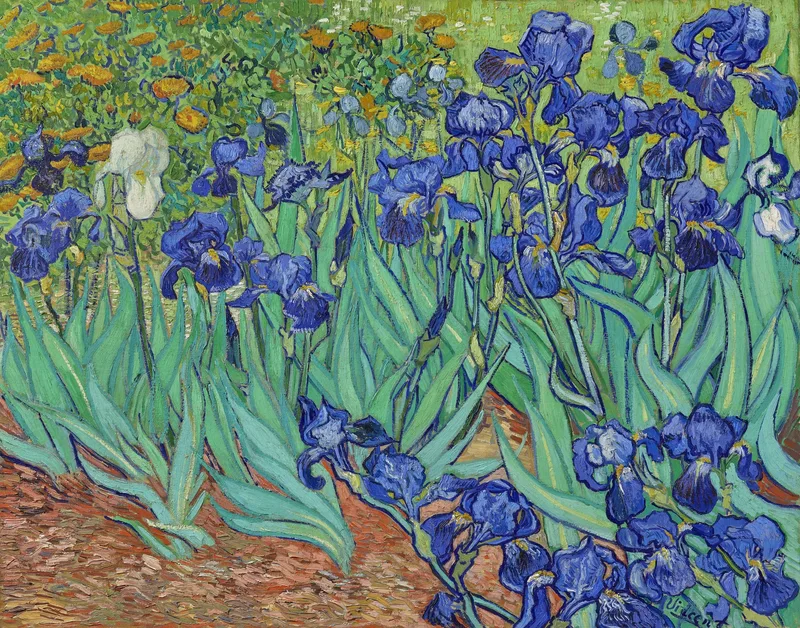
A year after his death, slowly at first [4]. In April 1891 the critic Octave Mirbeau bought two flower paintings, Three Sunflowers and Irises, for 600 francs together; he had paid 300 francs for the sunflowers, which were worth 50,000 francs by 1912 [4]. The J. Paul Getty Museum bought Irises in 1990, for around $50 million by Bailey's account [4].
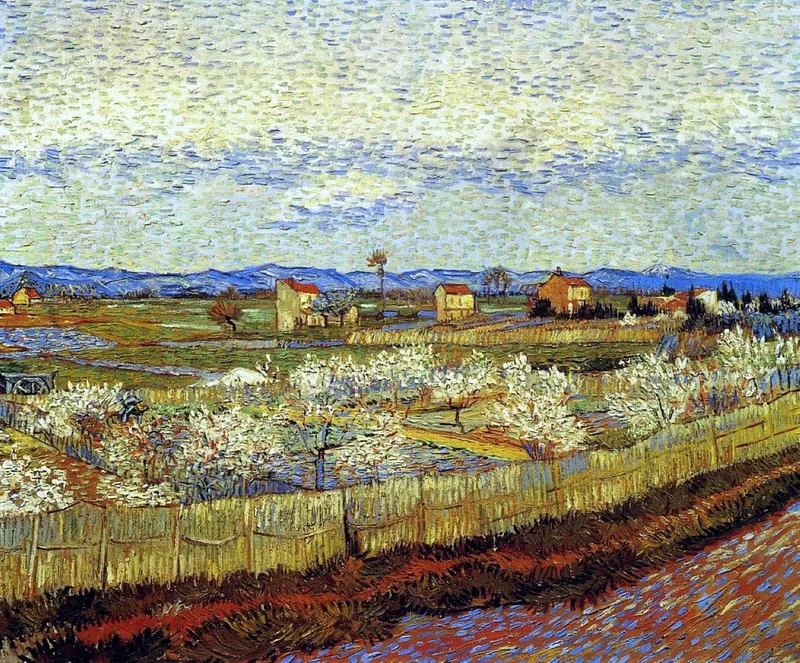
Anna Boch added a second Van Gogh, Peach Trees in Blossom, for 350 francs [4]. All 11 paintings sold in 1891 went for roughly 400 francs each, marketed by Tanguy for Theo's widow, Jo Bonger [4].
Real commercial success began in 1895, when the Paris dealer Ambroise Vollard started a series of exhibitions and sold around 30 paintings in five years [4]. For what his work fetches now, see how much a Van Gogh painting is worth.
Hand-painted in oilFrom $350See sizes
Hand-painted in oilFrom $350See sizes
Questions and answers
How many paintings did Van Gogh sell?
What was the only painting Van Gogh sold?
How many paintings did Van Gogh make?
Written and fact-checked by the Vincent van Gogh Paintings editorial desk7 sourcesUpdated
Sources
- Van Gogh Museum: How many paintings did Vincent sell during his lifetime?Accessed
- Vincent van Gogh, The Letters: letter 855, to Anna van Gogh-Carbentus, Saint-Rémy-de-Provence, 19 February 1890, with note 5Accessed
- The Art Newspaper (Martin Bailey): Why did Van Gogh fail to sell his work? (3 June 2022)Accessed
- The Art Newspaper (Martin Bailey): What were the first 12 Van Gogh paintings ever sold? (23 September 2022)Accessed
- Pushkin State Museum of Fine Arts: The Red Vineyards at Arles, study and conservation projectAccessed
- Vincent van Gogh, The Letters: letter 210, to Theo van Gogh, The Hague, 11 March 1882Accessed
- The Art Newspaper (Martin Bailey): Dutch museum puts all 88 of its Van Gogh paintings on display for the first time in more than two decades (18 September 2026)Accessed
Hand-painted oil reproductions