Guide
How to Read Van Gogh's Letters and Where to Start
Over 900 letters survive, and here is a friendly way in, even if you only have one evening
Vincent van Gogh's letters, 903 in all (820 by him and 83 to him), can all be read free at vangoghletters.org, in the original language and in English, with notes [1][2]. Most went to his brother Theo [1]. Start with the five letters below, keep the notes open, and use the sketches as your guide [3][6].
What are the letters about?
Mostly about his work: once he became an artist, the editors write, everything revolved around his drawings and paintings [4]. The edition's own summary says they tell the story of his search for a vocation, his close bond with Theo, his sometimes difficult friendships, his need for recognition and, above all, his passion for art and literature [9]. That makes them a rich record behind Van Gogh's paintings: the edition describes the correspondence as a "document humain" with a huge wealth of biographical and art-historical detail [9].
They are practical, too. The brothers agreed that Theo would send a monthly allowance and in return receive all of Vincent's artworks, which he would try to sell; the letters carry Vincent's orders for canvas, brushes and paint, and by April 1888 he had already ordered more than 100 tubes of paint from Theo [1]. And they can be startlingly personal: in September 1884 he told Theo, in confidence, that his neighbor Margot Begemann had taken poison [1].
1. Open the free edition at vangoghletters.org
The standard text is the scholarly web edition made by the Van Gogh Museum, which holds the great majority of the correspondence, together with the Huygens Institute [2]. It contains all the surviving letters written and received by Van Gogh [2], and you can browse them by period, by correspondent, by place, or only the ones with sketches [6].
Each letter opens in three columns. You choose what goes in the outer two: the original text, the English translation, the notes, or a facsimile of the handwritten pages that you can zoom into [6]. A good setup for a first visit is translation on the left and facsimile on the right, so you see his handwriting while you read.
2. Choose a period before a letter
The correspondence with Theo opens on 29 September 1872 with the words "My dear Theo" [4], and the early letters follow a polite pattern of thanks, family news and greetings [4]. In the summer of 1875 the tone changes: he entered a religious phase that lasted until about 1879 and filled his letters with Bible quotations [4]. From the end of the 1870s writing became his personal means of expression, and it stayed that way [4].
So start where your interest is. If a painting brought you here, go to the place and months it was made: Nuenen, Paris, Arles, Saint-Rémy or Auvers-sur-Oise. The edition's period list will take you straight there [6].
Where to start: five letters to open first
If you only have an evening, read these five in order. Four of them connect to a picture you can look at while you read, and together they cover his early search, The Potato Eaters and his time in Arles. Look the date up in the edition's period list [6].
| Letter | Date | Why open it |
|---|---|---|
| 155, to Theo | 22 to 24 June 1880 | The "great fire in his soul" letter, written to thank Theo for fifty francs [7] |
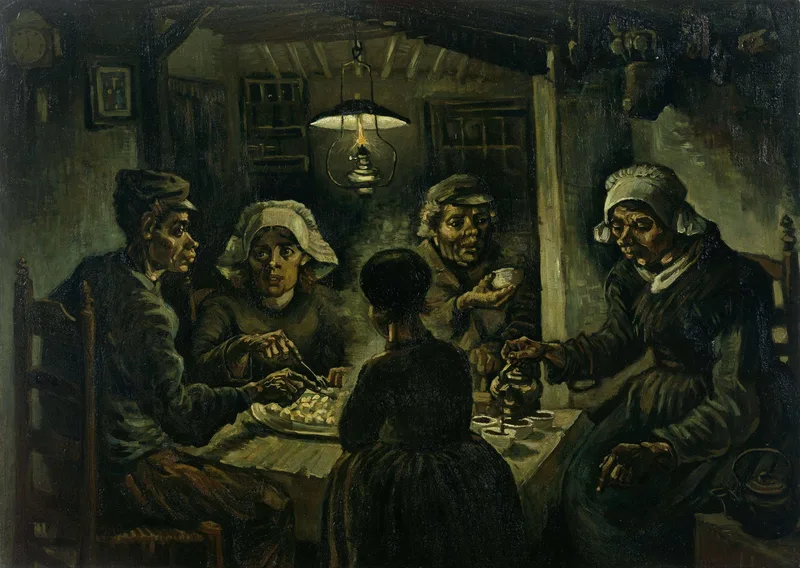
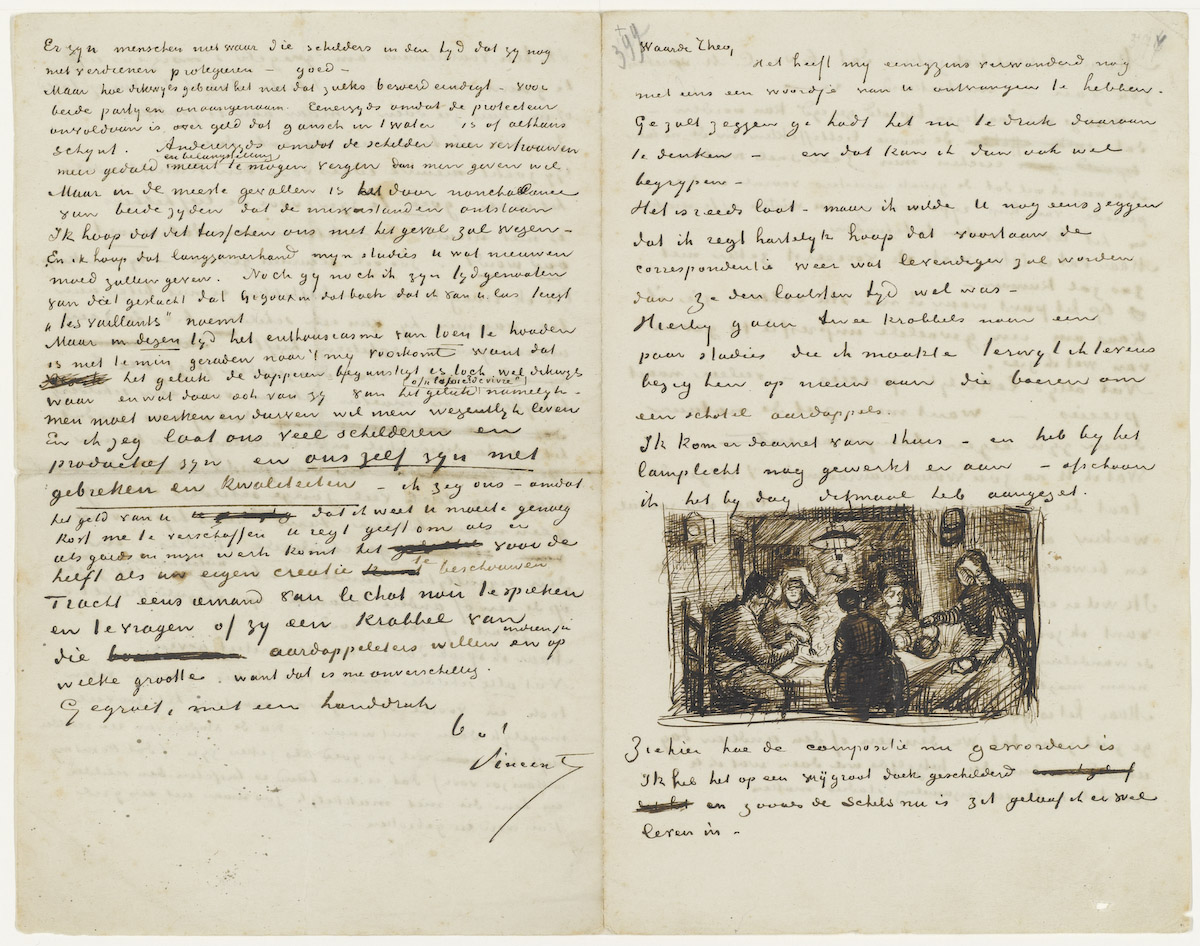
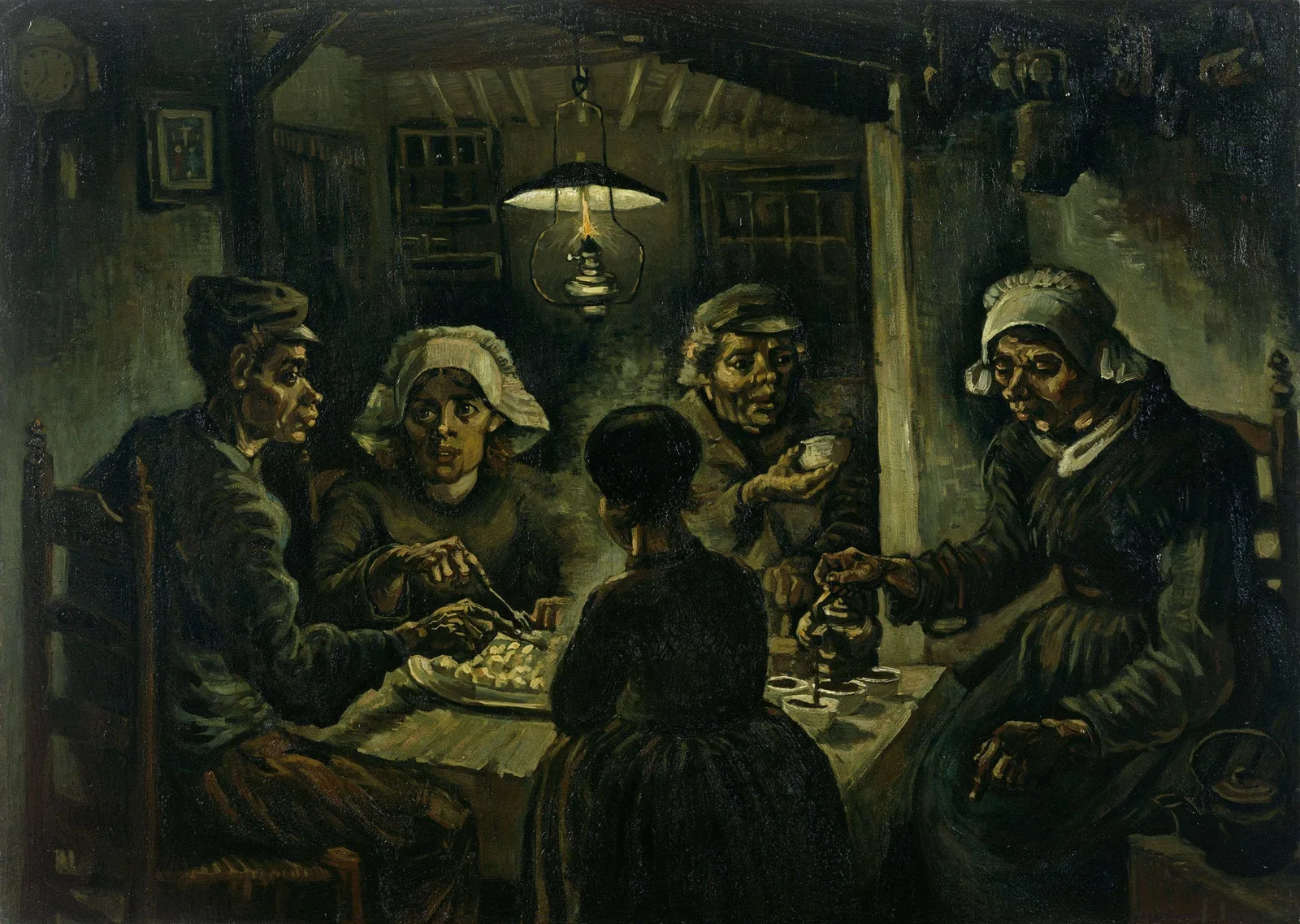
| 492, to Theo | 9 April 1885 | Ink sketch of the peasants around a dish of potatoes, a step toward The Potato Eaters [8] |
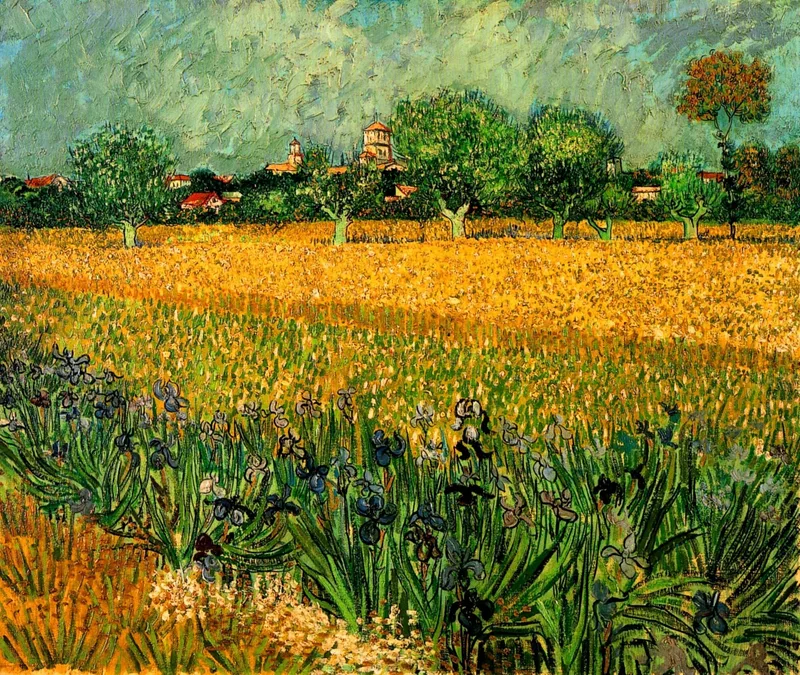
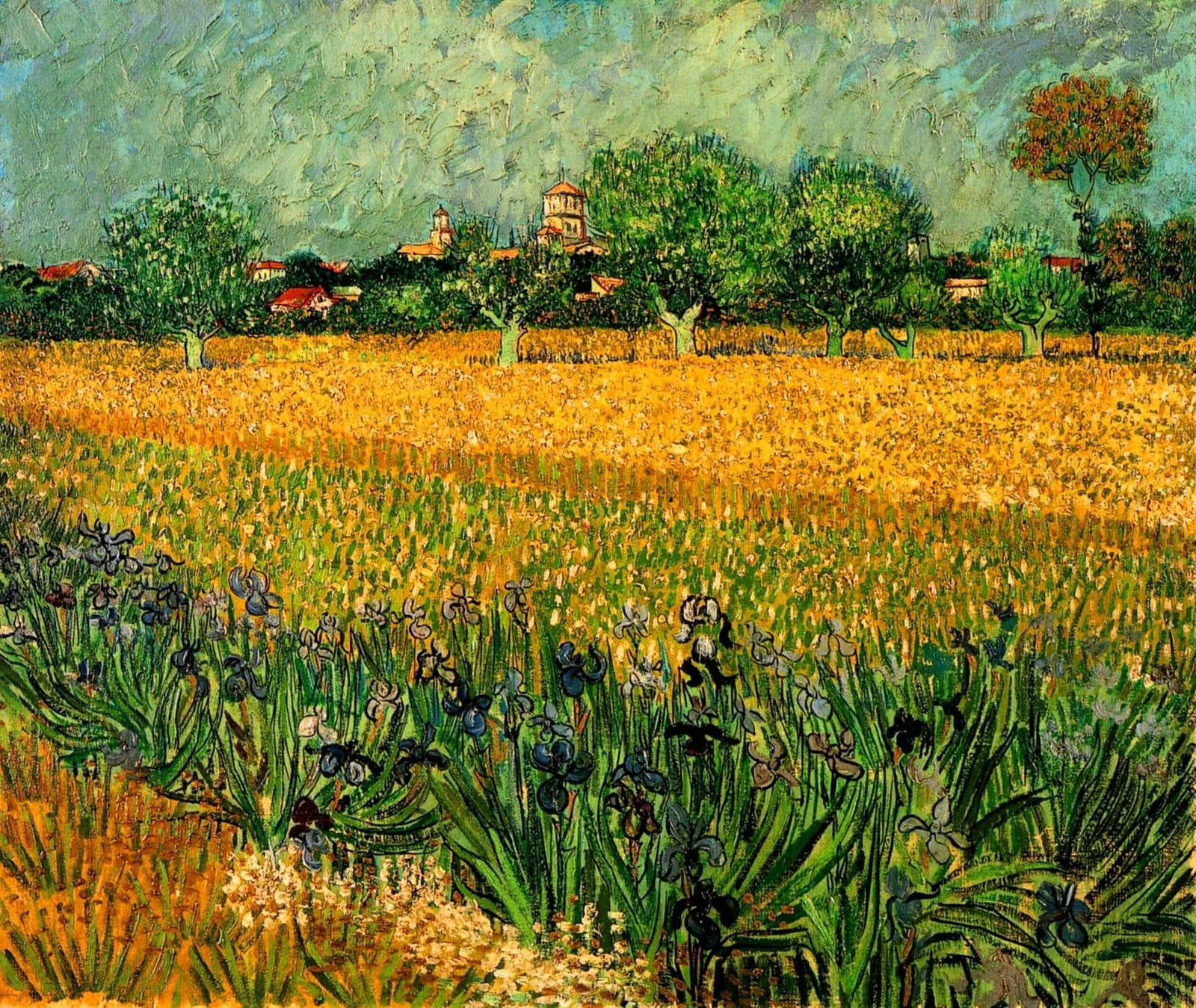
| To Theo | 12 May 1888 | Sketch of a field with irises, with the colors written on it [1] |
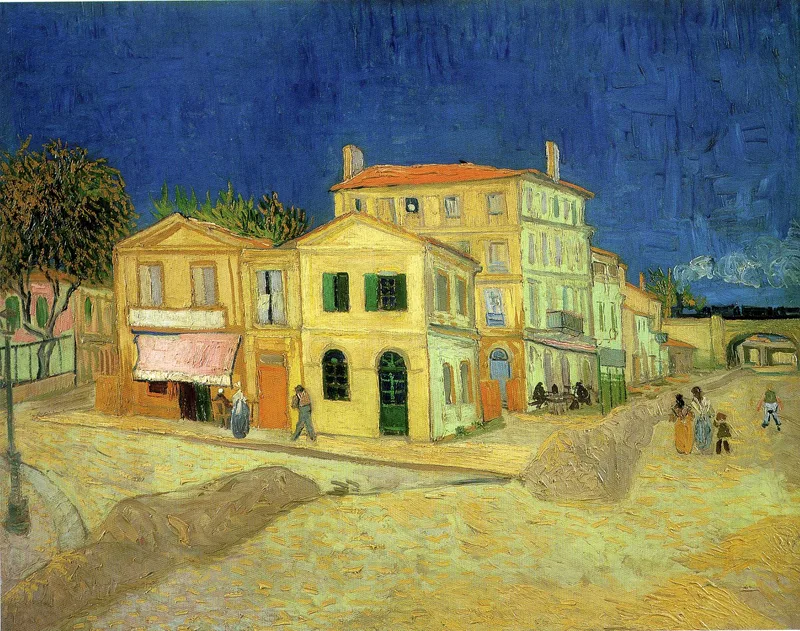
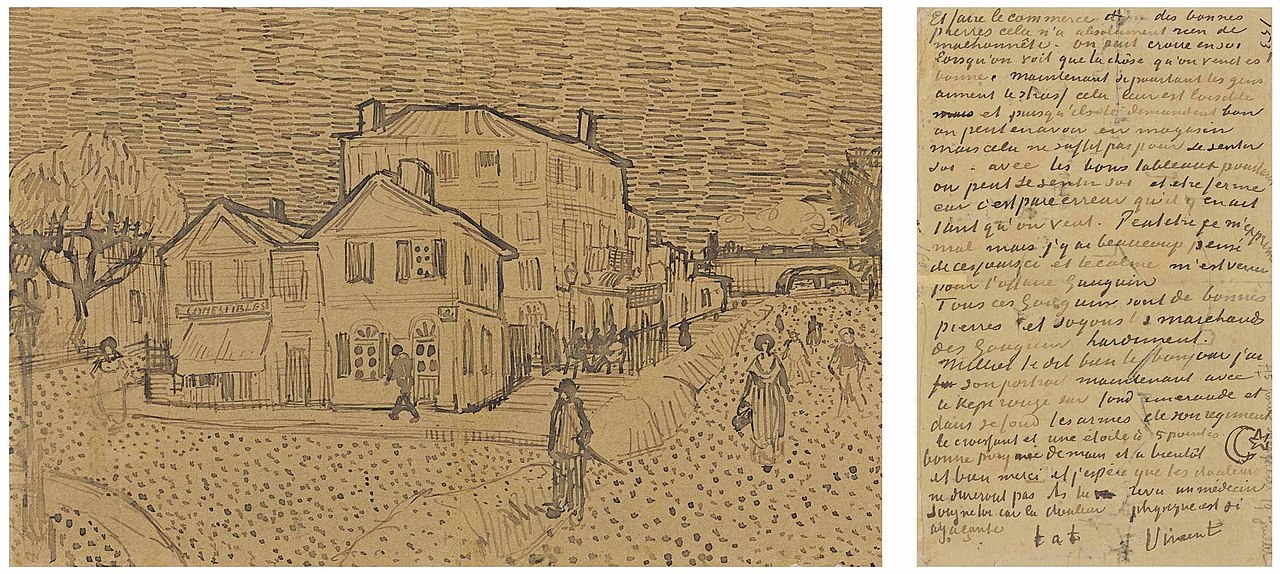
| 691, to Theo | On or about 29 September 1888 | Description and sketch of the Yellow House: "tremendous, these yellow houses in the sunlight" [10] |
| 705, to Theo | 16 October 1888 | Sketch of the bedroom, with the shadows removed and "flat, plain tints like Japanese prints" [12] |
The edition numbers every letter; use its period list to jump to the date. Older books may number them differently. [6][7]
3. Read the letters to Theo first
Of the 820 surviving letters Van Gogh wrote, 651 went to Theo and 7 to Theo and Jo; of the 83 he received, 39 came from Theo and 2 from Theo and Jo together [3]. The imbalance has a simple cause. Theo kept Vincent's letters with great care, while Vincent threw many replies away or burned them [1].
Read them knowing what was at stake. Theo paid the bills and, under their agreement, was joint owner of Vincent's work, so the editors hear an element of self-justification in these letters [4]. Vincent says it himself in letter 492, telling Theo that the money he sends "gives you the right, if anything good happens in my work, to consider half of it as your own creation" [8]. How much of that work actually sold is covered in how many paintings Van Gogh sold.
“Someone has a great fire in his soul and nobody ever comes to warm themselves at it, and passers-by see nothing but a little smoke at the top of the chimney and then go on their way.”
4. Keep the original language in view
Van Gogh was Dutch, but he wrote about a third of his letters in French, and after moving to Paris in 1886 he switched to French completely, even with Theo and his sister Willemien [1]. He usually signed off to Theo with "tout à toi, Vincent" (ever yours, Vincent) [1]. The edition's English is a new translation that sticks to the meaning rather than trying to be literary [2], so when a single word matters, glance at the original column.
One more tip: older books often number the letters differently. The letter quoted above is 155 in this edition, but older editions number it 154 or 133 [7]. If you want to tie a passage to one particular canvas, our guide on how to match a letter to the painting it describes walks through the method step by step.
5. Look closely at the sketches
The letters contain more than 240 sketches. Van Gogh called them "scratches" and used them to show Theo or an artist friend what he was working on, a bit like sending a photo today [1]. He often wrote the colors on them: on the sketch of Field with Irises near Arles in his letter to Theo of 12 May 1888 he wrote "blue", "grey-green", "yellow" and "purple" [1].
Letter 492, shown at the top of this page, is a lovely place to practice. Written late on 9 April 1885 in Nuenen, it carries a sketch of the peasants around a dish of potatoes, and the editors file it under the preparations for The Potato Eaters [8]. Their note adds that the sketch is based on a painted version on a 72 by 93 centimeter canvas [8]. The finished picture is The Potato Eaters.
Hand-painted in oilFrom $350See sizes
“See, this is what the composition has now become. I’ve painted it on a fairly large canvas, and as the sketch is now, I believe there’s life in it.”
6. Compare a letter sketch with the finished painting
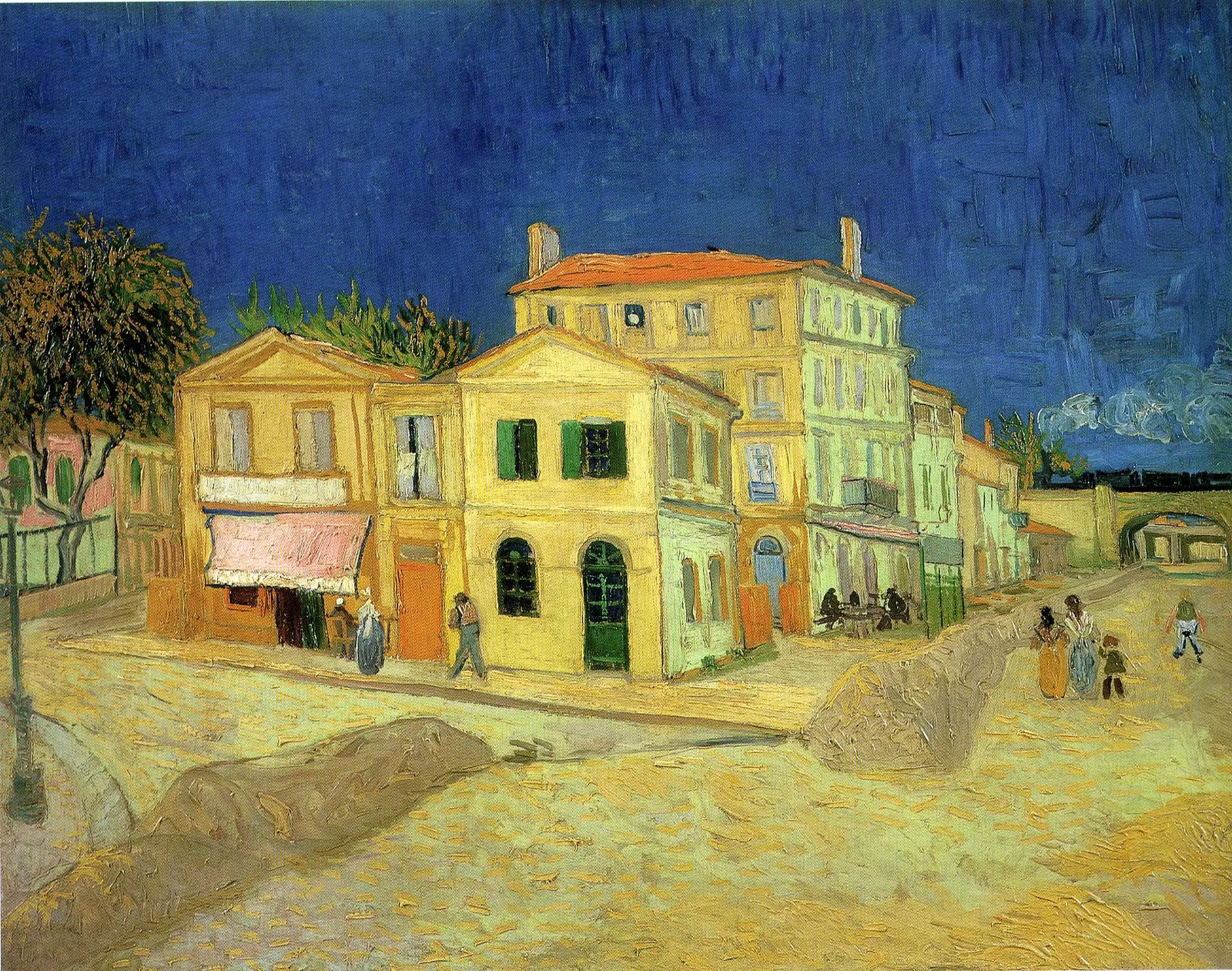
Two letters from Arles make a good test. In letter 691, written about 29 September 1888, he sent Theo a sketch of the yellow house and its surroundings and wrote: "it’s tremendous, these yellow houses in the sunlight and then the incomparable freshness of the blue" [10]. The sketch is all line and dots; the painting turns the sky a deep blue and the walls a glowing yellow. Our page on The Yellow House has the painting in detail.
The bedroom works the same way. In letter 705 of 16 October 1888 he sent Theo a sketch and wrote that the shadows and cast shadows are removed and the room is coloured in flat, plain tints like Japanese prints [12]. The Van Gogh Museum adds that he told Theo he had deliberately "flattened" the interior [11]. Put the pen sketch beside the painting and you can see exactly what he kept: the bed, the two chairs, the window, the pictures on the wall. The colors came later, and they have changed: research shows the walls and doors were originally purple rather than blue [11].


7. Remember what the letters leave out
It is tempting to treat the letters as a diary. The editors warn against it: daily life is largely invisible, so we do not know how he organized his day or what and where he usually ate [4]. Many letters are simply gone, too. The editors estimate that at least 550 letters written to Van Gogh and at least 290 written by him are lost [2], and Emile Bernard's side of their exchange has not survived [4].
So read his words alongside the other records. His final weeks are covered in how Van Gogh died, and his own explanations of famous pictures are gathered in what Van Gogh's paintings mean, in his own words.
8. Prefer a book? Three printed editions
The first broad edition appeared in 1914, when Theo's widow Jo van Gogh-Bonger published the letters to Theo in three volumes [2]. Today the complete set is Vincent van Gogh: The Letters, six volumes with 2,180 pages and more than 4,000 illustrations, edited by Leo Jansen, Hans Luijten and Nienke Bakker and published in English by Thames and Hudson in 2009 [9]. For one volume, the same editors chose the 265 most essential letters, with more than 100 letter sketches, published in English as Ever Yours: The Essential Letters by Yale University Press [9]. The shortest way in is Vincent van Gogh: A Life in Letters, 76 letters with introductions, published by Thames and Hudson in 2020 [9]. More reading ideas are in the best books about Van Gogh.

Questions and answers
What are the letters of Vincent van Gogh about?
Did Vincent van Gogh speak English?
How many letters did Van Gogh write?
Written and fact-checked by the Vincent van Gogh Paintings editorial desk12 sourcesUpdated
Sources
- Van Gogh Museum: Van Gogh's Letters (five things you need to know)Accessed
- Vincent van Gogh, The Letters: About this editionAccessed
- Vincent van Gogh, The Letters: Van Gogh as a letter-writer, 1. A new editionAccessed
- Vincent van Gogh, The Letters: Van Gogh as a letter-writer, 2. The letters, from conventional to personalAccessed
- Vincent van Gogh, The Letters: Van Gogh as a letter-writer, 3. Language and spellingAccessed
- Vincent van Gogh, The Letters: Quick guideAccessed
- Vincent van Gogh, The Letters: letter 155 to Theo van Gogh, Cuesmes, about 22–24 June 1880Accessed
- Vincent van Gogh, The Letters: letter 492 to Theo van Gogh, Nuenen, 9 April 1885, with notesAccessed
- Vincent van Gogh, The Letters: Book editionsAccessed
- Vincent van Gogh, The Letters: letter 691 to Theo van Gogh, Arles, on or about 29 September 1888Accessed
- Van Gogh Museum: The Bedroom, s0047V1962Accessed
- Vincent van Gogh, The Letters: letter 705 to Theo van Gogh, Arles, 16 October 1888Accessed
Hand-painted oil reproductions