
Guide
Why Did Van Gogh Cut Off His Ear? What the Letters Reveal
A calm, factual look at that December night in Arles, what the letters say, and what nobody can know


Van Gogh cut off his left ear on the evening of 23 December 1888, in a severe mental health crisis after a heated row with Paul Gauguin in Arles, and he could later recall nothing of what had happened [1][4]. He told his doctor it was “a purely personal matter” [4]. Here is what happened, and what it means for how we look at Van Gogh’s paintings.
What led up to that night in Arles?
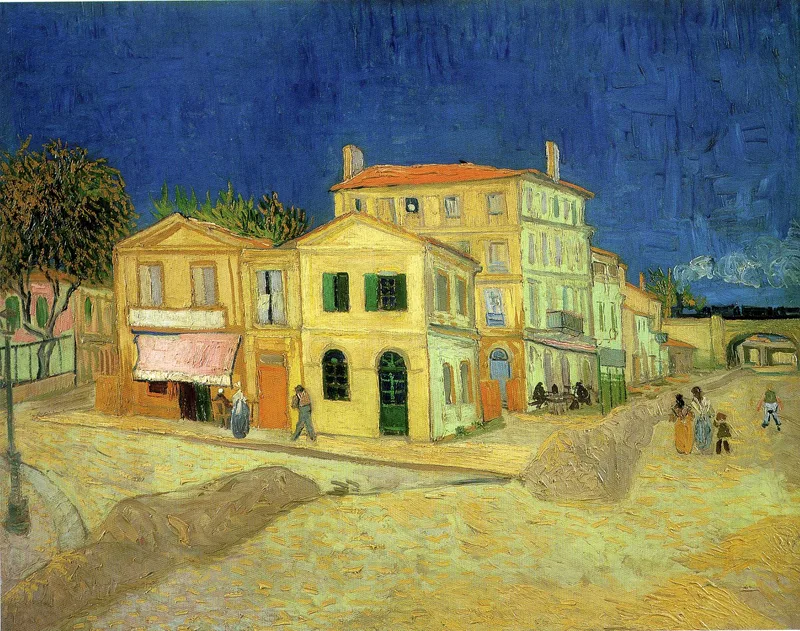
In May 1888 Van Gogh rented four rooms in a house on Place Lamartine in Arles, the Yellow House, and hoped to turn it into an artists’ house where like-minded painters could live and work together [11]. In the fall Paul Gauguin joined him there, and at first the two worked happily side by side [1][2]. Soon the situation deteriorated. Their discussions about art grew heated: Vincent believed in working from reality, Gauguin from memory and imagination [2].
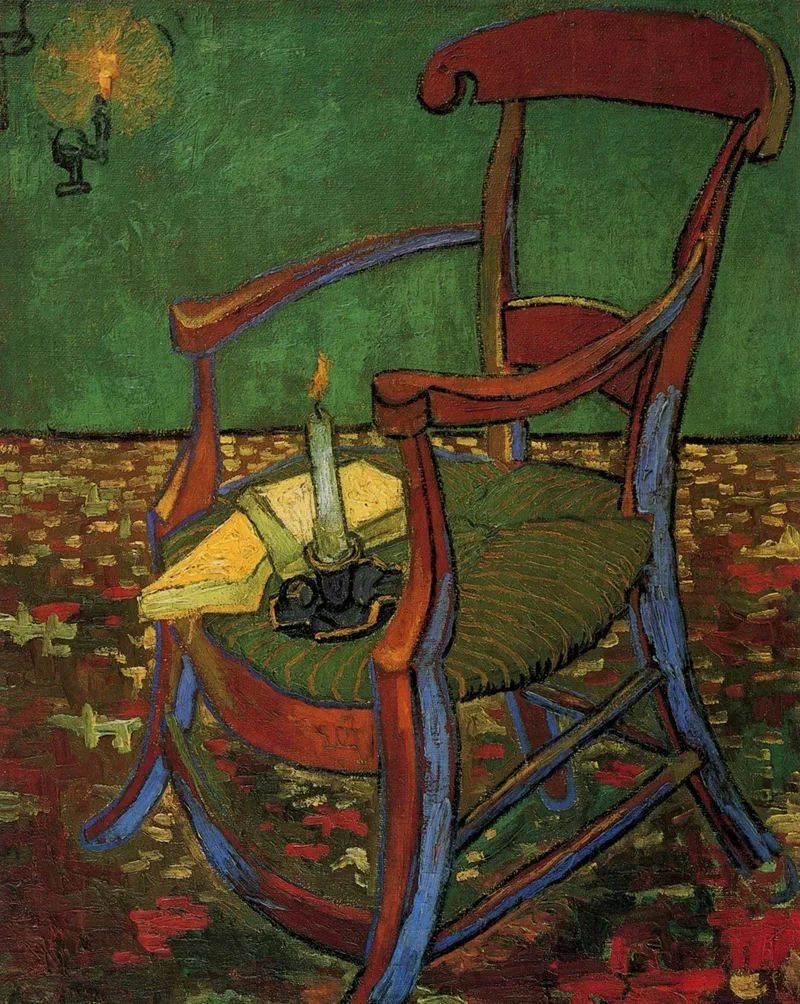
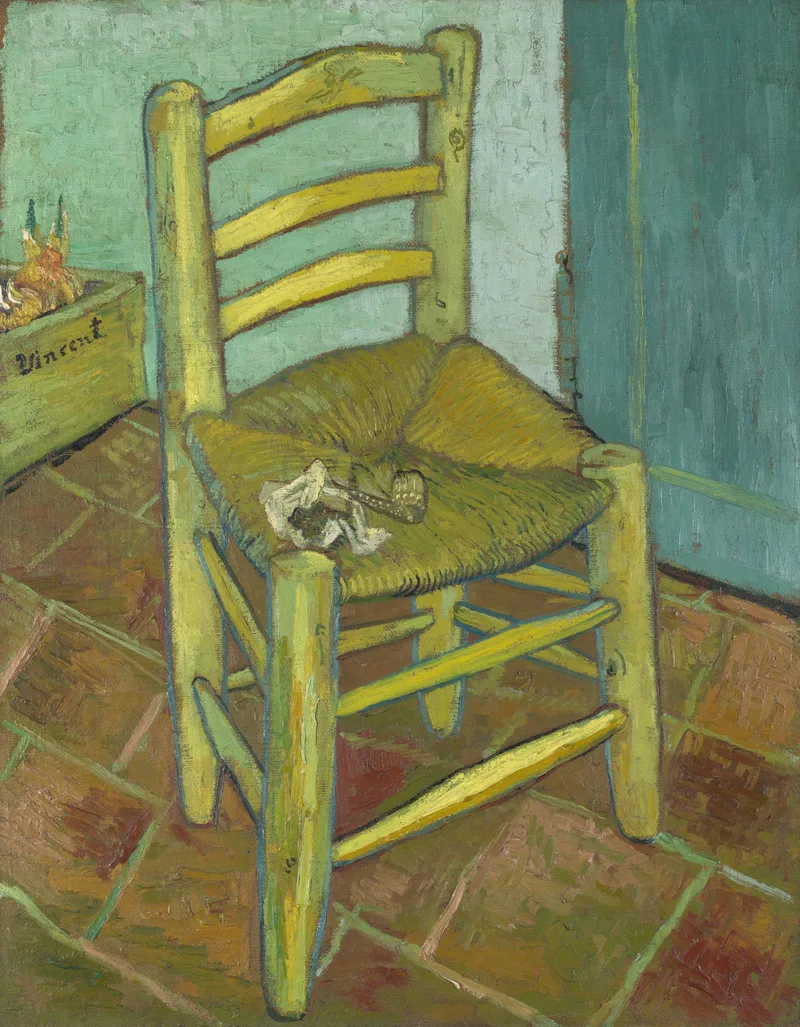
Van Gogh even painted the difference. Gauguin’s Chair, with its candle and book, points to the imagination; Van Gogh’s Chair, with its onions, to nature [2]. Gauguin, for his part, painted Van Gogh at work on a vase of sunflowers. It was December and the blooming season was long over, so this is not a scene from life, and the museum notes that Van Gogh suffered his crisis a few days after the portrait was finished [12].
Hand-painted in oilFrom $350See sizes
Hand-painted in oilFrom $350See sizes


What happened on the night of 23 December 1888?
Things came to a head on 23 December [2]. Gauguin later claimed that Vincent rushed at him with an open razor and that he spent the night in a hotel; he wrote that in 1903, and the editors of the letters note that doubt has often been cast on his reliability, though they think his account was based on the truth [4]. That evening Van Gogh cut off his left ear [4]. According to the local paper, at half past eleven he went to brothel no. 1, asked for a woman called Rachel and handed her the ear, saying “Keep this object carefully” [4]. The police found him at home the next morning and had him admitted to hospital [4].
Gauguin telegraphed Theo, who took the night train to Arles, and when Theo left on 25 December Gauguin went back to Paris with him, never visiting Vincent in hospital [4]. Their last weeks together are the background to Gauguin’s portrait of Van Gogh painting sunflowers.
What do the letters reveal about why he did it?
Less than you might expect. The honest answer is that nobody knows. Van Gogh says nothing in his letters about the immediate cause, and could later recall nothing about what had happened and just wanted to forget it [1][4]. The letter of 2 January 1889 was written jointly by Vincent and Dr Félix Rey, and the editors’ notes preserve what Rey reported to Theo on 30 December [4]. Weeks later Vincent was a little more open, telling Theo in his own letters that he had gone back to see the girl and that he had not known a brain could break and heal [5][6].
Nine months afterward, looking at Gauguin’s portrait of him, he told Theo, in the museum’s translation: “My face has lit up after all a lot since, but it was indeed me, extremely tired and charged with electricity as I was then” [12]. He describes his state, not the reason for the act: he was exhausted and overwrought.
“When I tried to get him to talk about the motive that drove him to cut off his ear, he replied that it was a purely personal matter”
What do doctors and researchers think caused it?
In September 2016 the Van Gogh Museum brought psychiatrists, neurologists, physicians and psychologists together with art historians to weigh every diagnosis proposed so far [3]. They concluded that on 23 December he was genuinely psychotic, and that stress, excessive drinking and lack of sleep together might have caused the attack [3]. A 2020 study by Willem Nolen and colleagues proposes a likely bipolar mood disorder with borderline traits, worsened by alcohol and malnutrition, that with rising tensions led to the crisis [9]. The museum itself puts it plainly: “There are many theories, but an all-embracing diagnosis is yet to be found.” [1]
Did news of Theo’s engagement set it off?
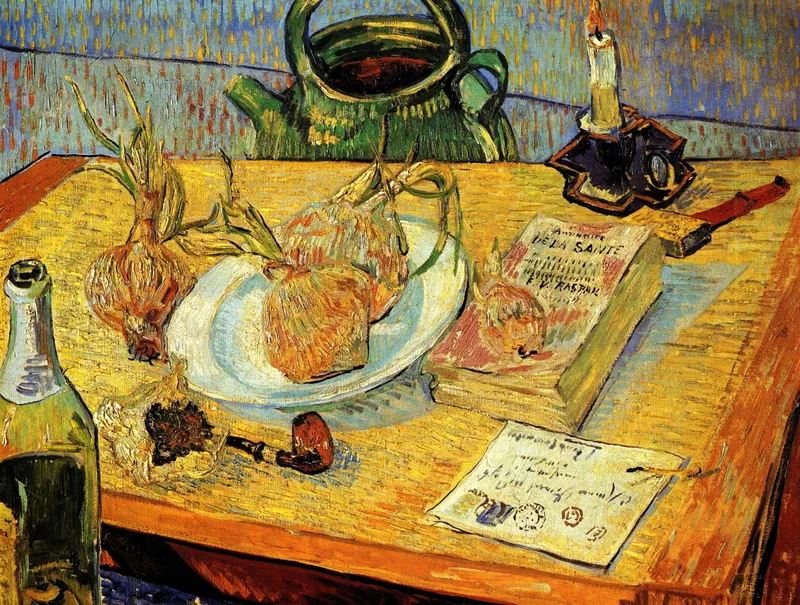
His brother Theo had just decided to marry Jo Bonger, and on 21 December he asked their mother for her consent [4]. The Van Gogh specialist Martin Bailey believes the news probably reached Vincent in a letter on 23 December, a few hours before the crisis, and calls the engagement “probably a trigger”, though not the fundamental cause [8]. Vincent depended on Theo for money and emotional support, and Bailey thinks he feared losing both [8]. He links that letter to the envelope from Theo in a still life with a plate of onions painted in January 1889 [8]. The editors of the letters are more careful: it is not known when Theo wrote to Vincent about the engagement [4].

Did Gauguin cut off Van Gogh’s ear?
In 2009 two German historians, Hans Kaufmann and Rita Wildegans, argued that Gauguin, an accomplished fencer, attacked Van Gogh with a rapier, and that Vincent promised not to tell [10]. Louis van Tilborgh of the Van Gogh Museum answered that he had found no proof: the police did not arrest Gauguin, and nothing in Vincent’s letters confirms it [10]. Kaufmann acknowledged that there is no definitive proof of what happened that night [10]. The hospital’s chief physician, in papers sent to the mayor of Arles on 29 December, recorded that Van Gogh had “removed his ear using a razor” [4].
Did he cut off the whole ear?
Until recently, historians thought he had cut off only the lobe, partly on the word of the painter Paul Signac, who visited him in hospital [7]. But Signac only saw him wearing a band round his head and a fur cap [7]. Following a clue in a 1955 letter, the Irish art historian Bernadette Murphy traced a note from Dr Rey to the papers of the writer Irving Stone at UC Berkeley’s Bancroft Library [7]. Rey had drawn the wound for Stone in 1930 and wrote: “The ear was cut off with a razor along the dotted line” [2]. The Van Gogh Museum now says “we now know for certain that Vincent cut off his entire ear”, and the letters edition agrees [2][4].
Who did he give the ear to?
The local paper called her Rachel, and a police officer, Alphonse Robert, later recalled that she worked under the name Gaby; the editors of the letters say her identity remains a mystery [6]. Bernadette Murphy believes she was not a prostitute at all, but an 18-year-old named Gabrielle who worked as a maid at the brothel to pay off medical bills after a bite from a rabid dog [7]. Her evidence: Arles census records with no prostitute named Rachel, and the memories of Gabrielle’s descendants [7]. In February 1889 he went back to see her [6].
“Yesterday I went back to see the girl I went to when I went out of my mind. I was told there that things like that aren’t at all surprising around here.”
What happened to Van Gogh afterward?
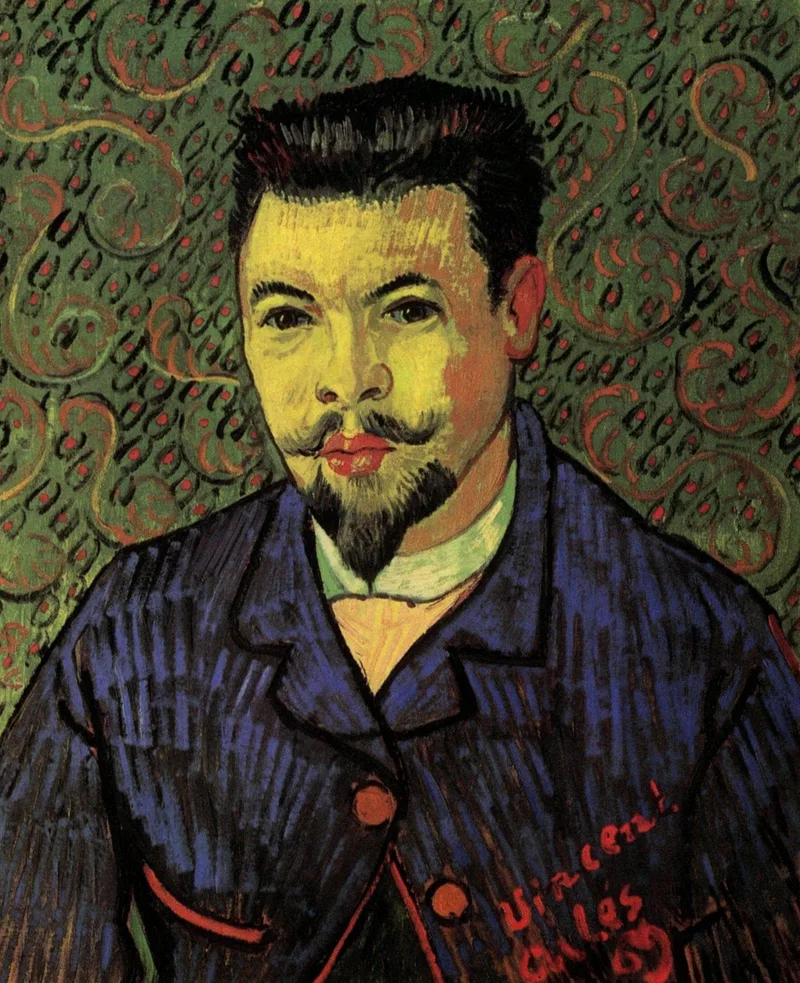
He was in hospital for about two weeks and went home on 7 January 1889, cared for by Dr Félix Rey, whose portrait he painted that year, and friends such as the postman Joseph Roulin and the minister Frédéric Salles came to see him [2][4]. Back home he began painting again, including two self-portraits with the bandage, gathered in Van Gogh’s self-portraits [2]. Three weeks later he told Theo he was astonished to be recovering [5].
The recovery did not last. New attacks came about a month later, his neighbors petitioned to have him locked up, and in May 1889 he voluntarily entered the psychiatric hospital at Saint-Rémy [1][2]. He died in Auvers in July 1890, a story told in how Van Gogh died.
“I well knew that one could break one’s arms and legs before, and that then afterwards that could get better but I didn’t know that one could break one’s brain and that afterwards that got better too.”
Questions and answers
How old was Van Gogh when he cut off his ear?
He was 35. The Van Gogh Museum notes that he cut off his left ear just before Christmas 1888, at 35, and that it marked the beginning of a period of uncertainty about his mental health [2].
Which ear did Van Gogh cut off?
What was Van Gogh’s illness?
There is still no definitive diagnosis [1]. His doctors at the time called it a form of epilepsy [2]. Looking at his life as a whole, the experts at the museum’s 2016 meeting saw elements of borderline personality disorder, bipolar disorder and, slightly less likely, epilepsy, but not enough to speak of an illness before the ear crisis; after it he had several more psychotic episodes [3].
Who did Van Gogh give his ear to?
What did Van Gogh paint after he cut off his ear?
Back home he was painting again: two self-portraits showing the bandage, and a still life of personal things such as his pipe, tobacco, a letter from Theo and a medical handbook [2].
Written and fact-checked by the Vincent van Gogh Paintings editorial desk12 sourcesUpdated
Sources
- Van Gogh Museum: Why Did Vincent van Gogh Cut off His Ear?Accessed
- Van Gogh Museum: Vincent’s Illness and the Healing Power of ArtAccessed
- Van Gogh Museum: Expert Meeting and Symposium On the Verge of Insanity (September 2016)Accessed
- Vincent van Gogh, The Letters: letter 728, Vincent van Gogh and Félix Rey to Theo van Gogh, Arles, 2 January 1889, with notes 1 and 2Accessed
- Vincent van Gogh, The Letters: letter 743, to Theo van Gogh, Arles, 28 January 1889Accessed
- Vincent van Gogh, The Letters: letter 745, to Theo van Gogh, Arles, 3 February 1889, with note 18Accessed
- UC Berkeley Library: What actually happened to Vincent van Gogh’s ear? Here are 3 things you should know (26 November 2019)Accessed
- The Art Newspaper (Martin Bailey): Was Van Gogh’s mutilation of his ear connected to his brother’s engagement? (11 April 2025)Accessed
- Nolen, van Meekeren, Voskuil and van Tilburg, “New vision on the mental problems of Vincent van Gogh”, International Journal of Bipolar Disorders 8 (2020), PubMed abstractAccessed
- NPR: Who Really Cut Off Van Gogh’s Ear? (10 May 2009)Accessed
- Van Gogh Museum: The Yellow House (The Street), collection entry s0032V1962Accessed
- Van Gogh Museum: Paul Gauguin, Vincent van Gogh Painting Sunflowers, collection entry s0225V1962Accessed
Hand-painted oil reproductions