Guide
Where Is The Starry Night Today, and Why Not in Amsterdam?
It lives in New York, it rarely travels, and a family sale explains why Amsterdam never got it
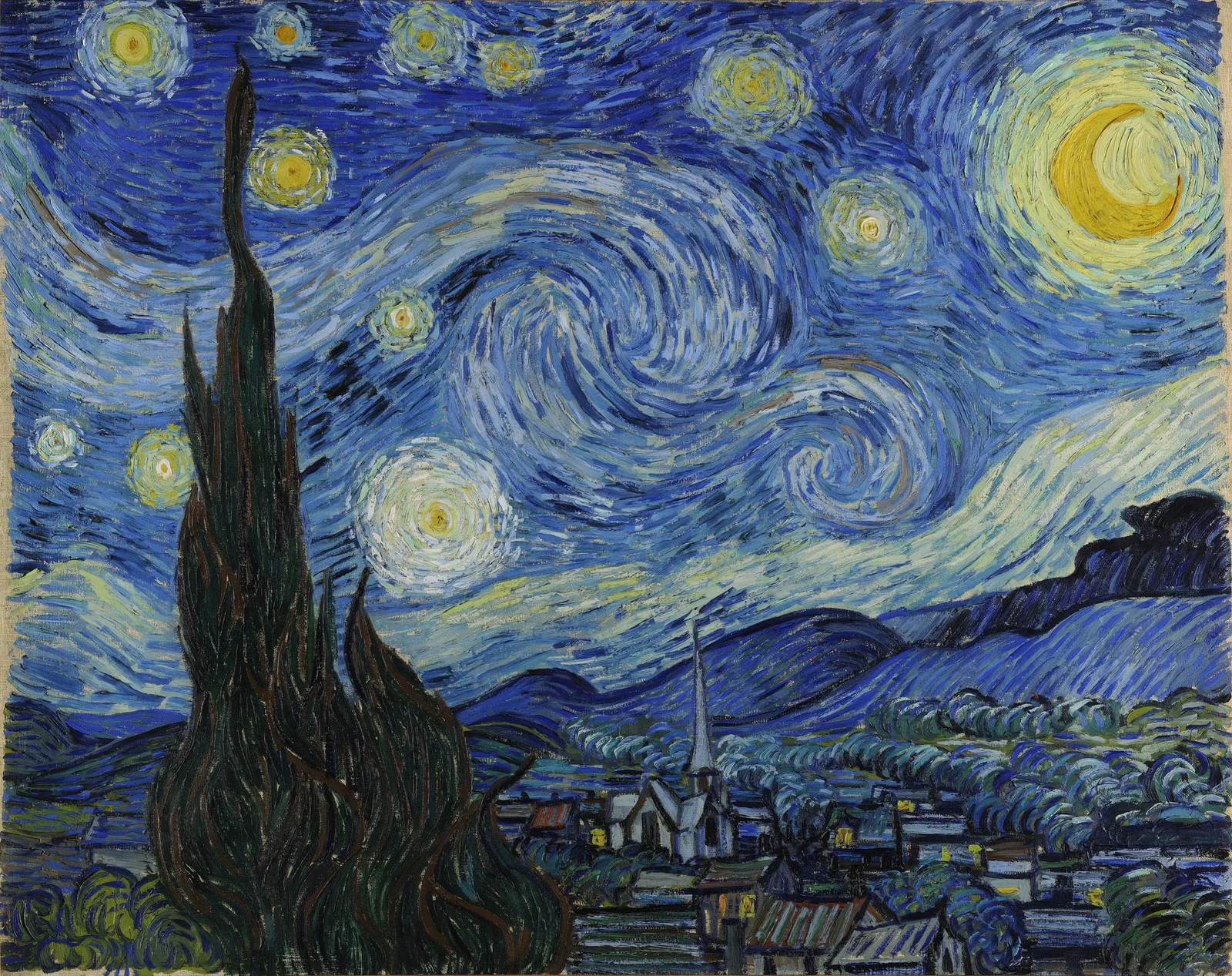
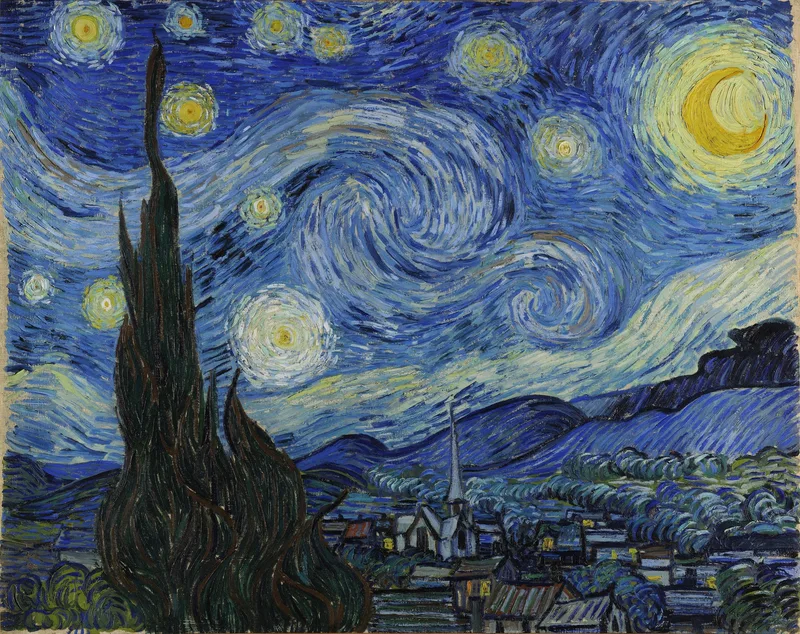
The Starry Night is at the Museum of Modern Art (MoMA) in New York, which has owned it since 1941 [1][2]. As of October 2026 MoMA's collection page listed it on view on Floor 5, in Gallery 501 [1]. It is not in Amsterdam, because Van Gogh's family sold it, and the starry night in Paris is a different painting [6].
Where in MoMA can you see it?
MoMA records the canvas as The Starry Night, Saint-Rémy, June 1889: oil on canvas, 73.7 by 92.1 centimeters (29 by 36 1/4 inches), object number 472.1941 [1]. As of October 2026 the collection page placed it in the Alfred H. Barr, Jr. Galleries on the fifth floor, Gallery 501 [1]. Gallery numbers can change, so check that page before your visit.
The view itself came from Saint-Rémy: MoMA says it was inspired by what Van Gogh saw from his window at the Saint-Paul-de-Mausole asylum [1]. MoMA's 2008 press release adds a twist: the village and hills were inspired by Saint-Rémy and the nearby Alpilles but were not modeled on them closely, and the cypress and swirling sky came from his imagination [7]. And the painting tends to stay put: a 2010 post by MoMA's painting and sculpture department put it with a few works that stay on the walls indefinitely [4].
How did it end up in New York, not Amsterdam?
Because the family sold it. Vincent sold only a handful of works in his lifetime, the Van Gogh Museum notes [2] (how many, exactly, is its own story). After his death his brother Theo inherited the rest, and when Theo died soon after, everything passed to Theo's widow, Jo van Gogh-Bonger, and their son [2]. To build Vincent van Gogh's reputation, Jo sold works strategically to influential collectors and museums, and she sold The Starry Night to Georgette van Stolk in Rotterdam [2].
MoMA's release of September 1941 said the painting would go on public view on Tuesday, September 30, and a footnote adds that it had been "In the Collection of Miss G. P. van Stolk of Rotterdam until three years ago" [3]. Today MoMA's credit line reads "Acquired through the Lillie P. Bliss Bequest (by exchange)" [1]. Alfred H. Barr, Jr., then MoMA's director, called it "one of the most important paintings ever acquired by the Museum of Modern Art" [3].
New Yorkers had seen it before the purchase. It arrived from Holland too late for MoMA's big Van Gogh show of November 1935 to January 1936, and was added when that show returned for a final two-week run in January 1937 [3]. What it might be worth now is a separate question, answered in our Starry Night value guide.
Has The Starry Night ever left MoMA?
Seldom. MoMA's blog put it this way in 2010: "sometimes even The Starry Night must travel" [4]. It was one of the stars of the exhibition Van Gogh and the Colors of the Night, shown at MoMA from September 21, 2008 to January 5, 2009 and then at the Van Gogh Museum in Amsterdam from February 13 to June 7, 2009 [4][5].
MoMA says the canvas was "missing from our walls from February to June 2009," and that the museum posted alerts on its website and signs in the galleries about the absence [4]. If you are planning a trip to Amsterdam instead, start with the must-see paintings at the Van Gogh Museum.
What traveled with it in 2008 and 2009?
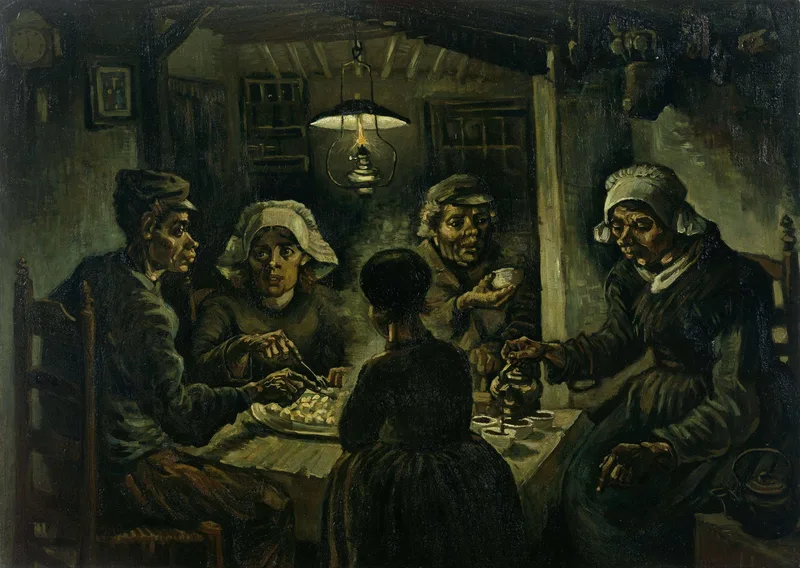
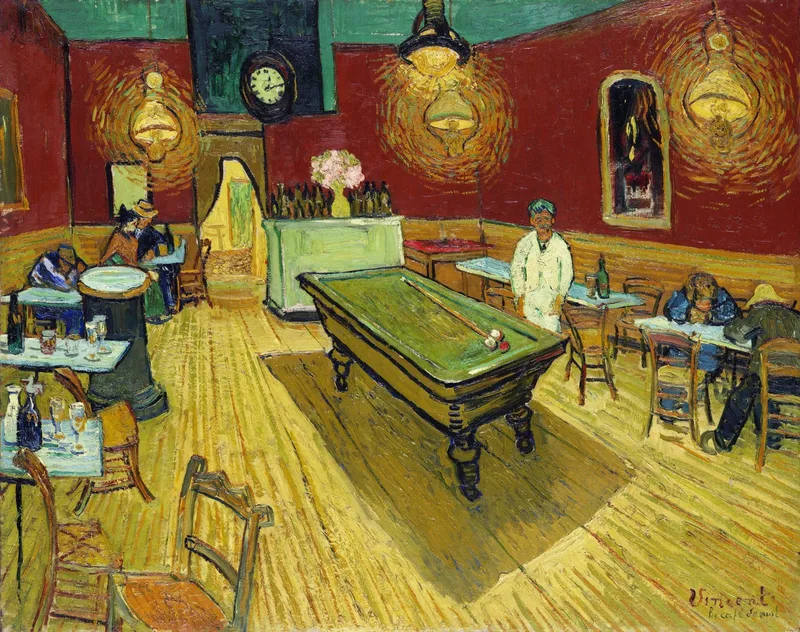
MoMA's press release called the show the first exhibition to examine Van Gogh's nocturnal landscapes and interiors, with 23 paintings and 10 works on paper [7]. It followed his path to the night sky. The Potato Eaters (1885) was his first significant interior night scene, and The Night Café (1888) was shown only at MoMA [7]. The release says that after finishing The Night Café, he wrote to his sister Wil that he definitely wanted to paint a starry sky [7].
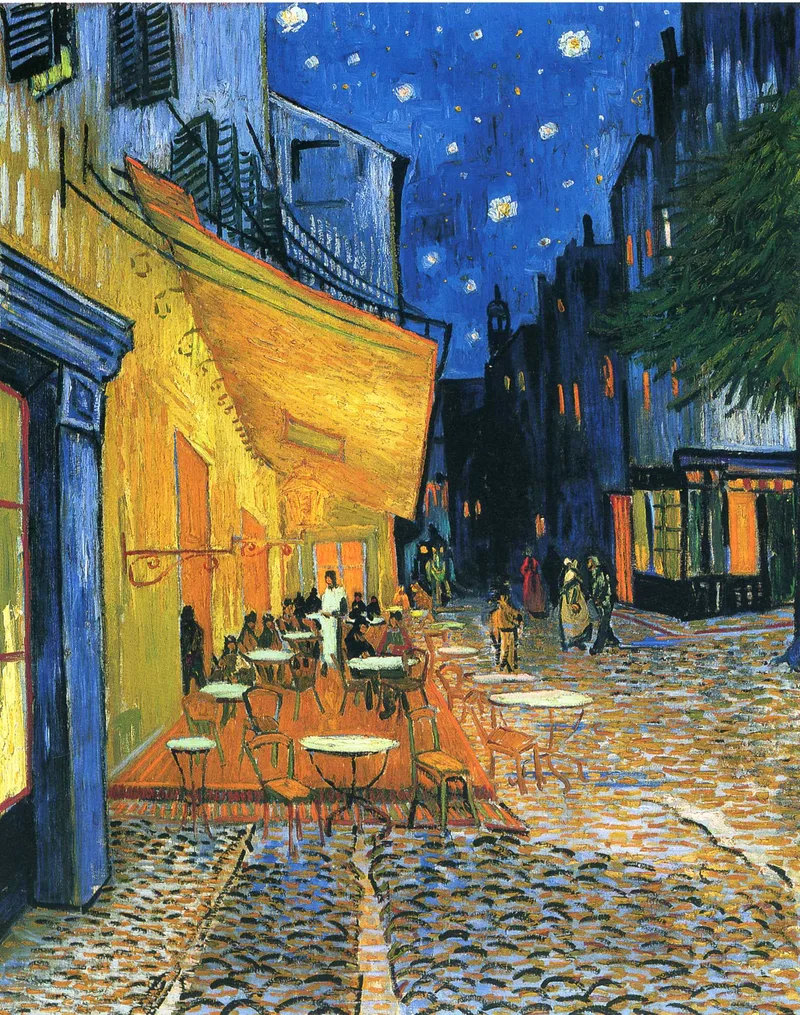
Then he set up his easel under the outdoor gas lamps of an Arles café, which lit the canvas enough to paint a street scene below twinkling stars, and twelve nights later he began Starry Night Over the Rhône [7]. The release does not name the café picture, but it is Café Terrace at Night. Our guide to Van Gogh's night paintings follows that whole story.
Hand-painted in oilFrom $350See sizes
Hand-painted in oilFrom $350See sizes
So which starry night is in Paris?
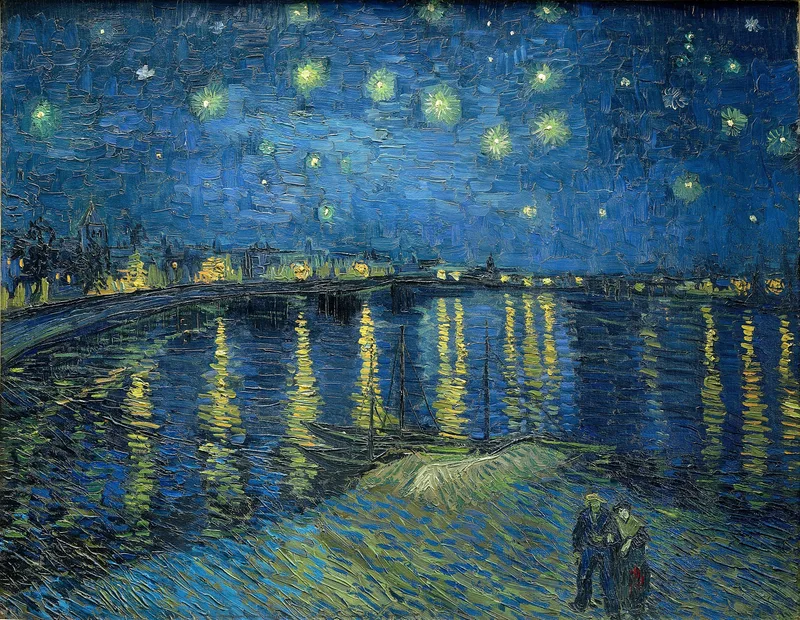
It is Starry Night Over the Rhône, painted in Arles in 1888 and now at the Musée d'Orsay, where the museum listed it in Room 36 as of October 2026 [6]. The Orsay's own description sets it beside its sibling, calling the Saint-Rémy canvas "Starry Night (New York, MoMA)" [6]. Dates, sizes and letters are side by side in our guide to telling the two apart, and what Van Gogh's paintings mean has his own words on the sky.
Questions and answers
Where is the original Starry Night painting right now?
Are there two starry nights?
Why is Starry Night not in the Van Gogh Museum?
Because it left the family long ago. Theo's widow, Jo van Gogh-Bonger, sold works to collectors and museums to build Vincent's reputation, and she sold The Starry Night to Georgette van Stolk in Rotterdam. MoMA acquired it in 1941 [2].
Written and fact-checked by the Vincent van Gogh Paintings editorial desk7 sourcesUpdated
Sources
- The Museum of Modern Art: Vincent van Gogh, The Starry Night, 472.1941Accessed
- Van Gogh Museum: Where is The Starry Night?Accessed
- The Museum of Modern Art: press release, Museum of Modern Art Acquires Important Van Gogh (September 1941)Accessed
- The Museum of Modern Art, Inside/Out: MoMA Offsite: Where Did It Go? (April 14, 2010)Accessed
- The Museum of Modern Art: Van Gogh and the Colors of the Night (exhibition, 2008–2009)Accessed
- Musée d'Orsay: Vincent van Gogh, La Nuit étoilée, RF 1975 19Accessed
- The Museum of Modern Art: press release, Van Gogh and the Colors of the Night (September 16, 2008)Accessed
Hand-painted oil reproductions