
Guide
How Much Is The Starry Night Worth? Why It Has No Price Tag
MoMA has held it since 1941 and never sold it, so real Van Gogh sales are our best guide to the number
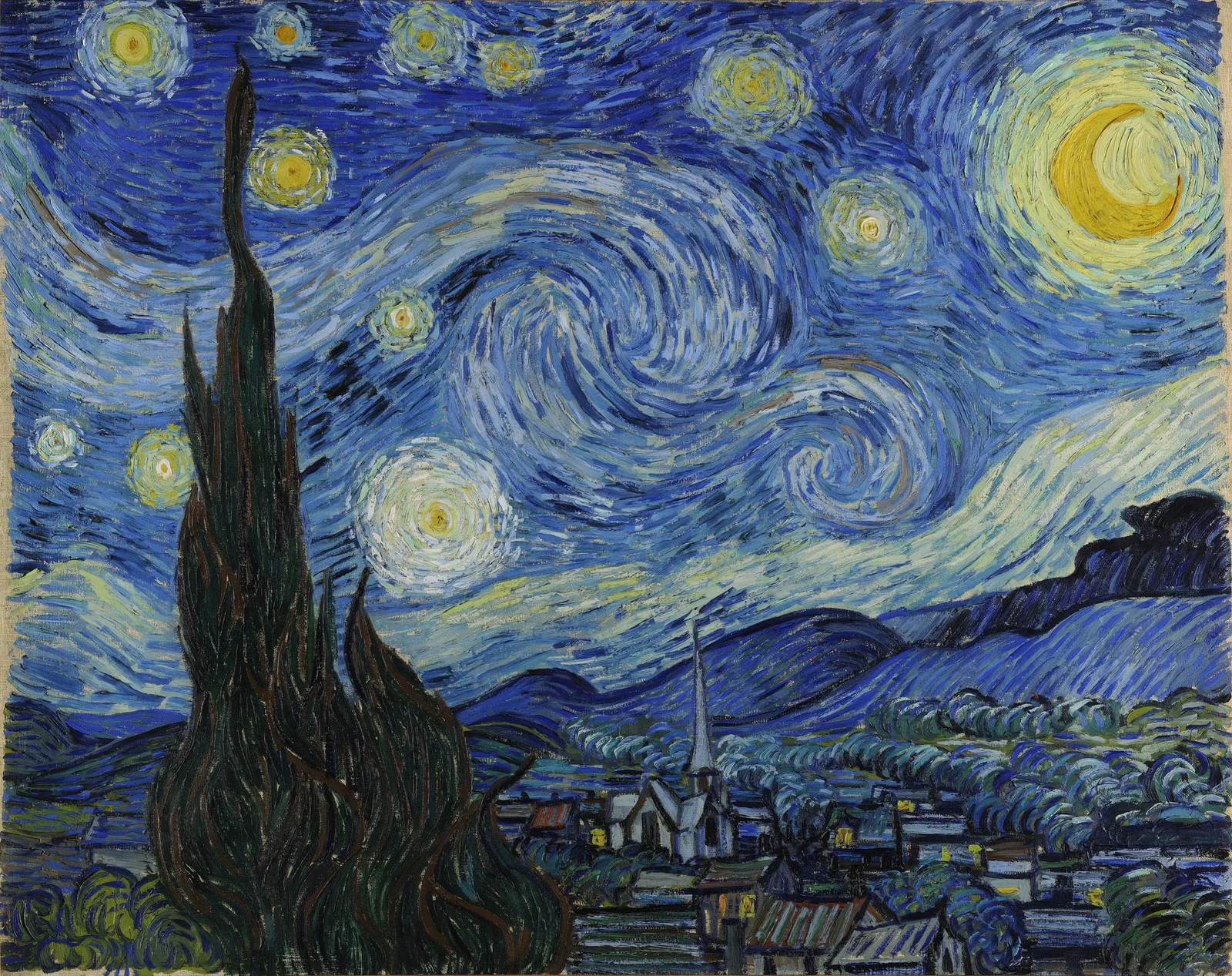
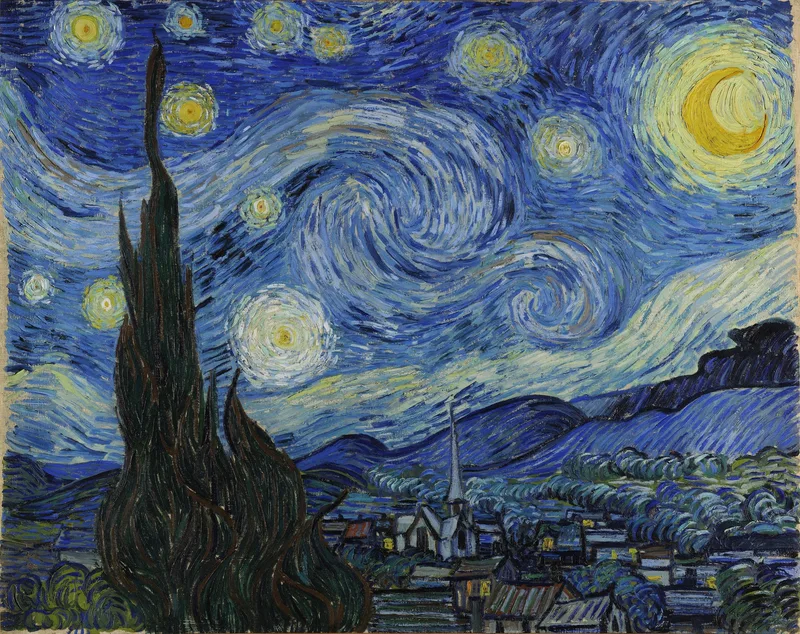
An art advisor's 2018 thought experiment put The Starry Night at a hypothetical $1 billion, but the painting has no market price: the Museum of Modern Art in New York has owned it since 1941 and has never sold it [8][1]. For scale, as of October 2026 the most anyone has paid for a Van Gogh at auction is $117.18 million, in 2022 [3][4].
Is The Starry Night really worth $1 billion?
That's the number Evan Beard, then the national art services executive at U.S. Trust, Bank of America Private Wealth Management, put on it in a 2018 piece for Artsy [8]. As a thought experiment, he asked several of the world's great collectors and dealers which pictures in American museums they most wanted to own, and how much they would pay [8]. The Starry Night came second on his list of what those pictures would bring in his “dystopian auction scenario,” just behind Picasso's Les Demoiselles d'Avignon at $1.2 billion [8].
His reasoning is easy to follow. He called it “the most iconic image of our most mythologized artist” and expected global, fierce bidding; one Asian billionaire told him he'd liquidate his global empire to own it [8]. Still, treat $1 billion as an informed guess. The painting hasn't changed hands since MoMA acquired it in 1941, so no buyer has ever tested that number [1].
Who owns The Starry Night, and what did they pay?
The Museum of Modern Art in New York. It catalogues the painting as object 472.1941: oil on canvas, 29 by 36 1/4 inches (73.7 by 92.1 centimeters), painted in Saint-Rémy in June 1889 [1]. When MoMA announced the acquisition in September 1941, it called the picture “the first canvas by van Gogh to enter the collection of a New York museum” [2].
As for what MoMA paid, there's no sum to quote. Its credit line reads “Acquired through the Lillie P. Bliss Bequest (by exchange),” and the provenance says the museum “acquired by exchange from Paul Rosenberg Gallery” [1]. Between 1889 and 1941 the canvas changed hands eight times, by inheritance, private purchase or exchange, never at auction, and the record names no prices [1]. If you'd like to stand in front of it, here's where The Starry Night hangs today.
What is the most anyone has paid for a Van Gogh?
The hardest number is the auction record: $117,180,000 for Orchard with Cypresses, a spring orchard painted in Arles in April 1888 and sold at Christie's in New York on November 9, 2022 [3]. It came from the collection of Microsoft co-founder Paul Allen and is one of the blossom paintings Van Gogh made soon after reaching Arles [4]. At 65.2 by 80.2 centimeters, it is a smaller canvas than The Starry Night [1][3].
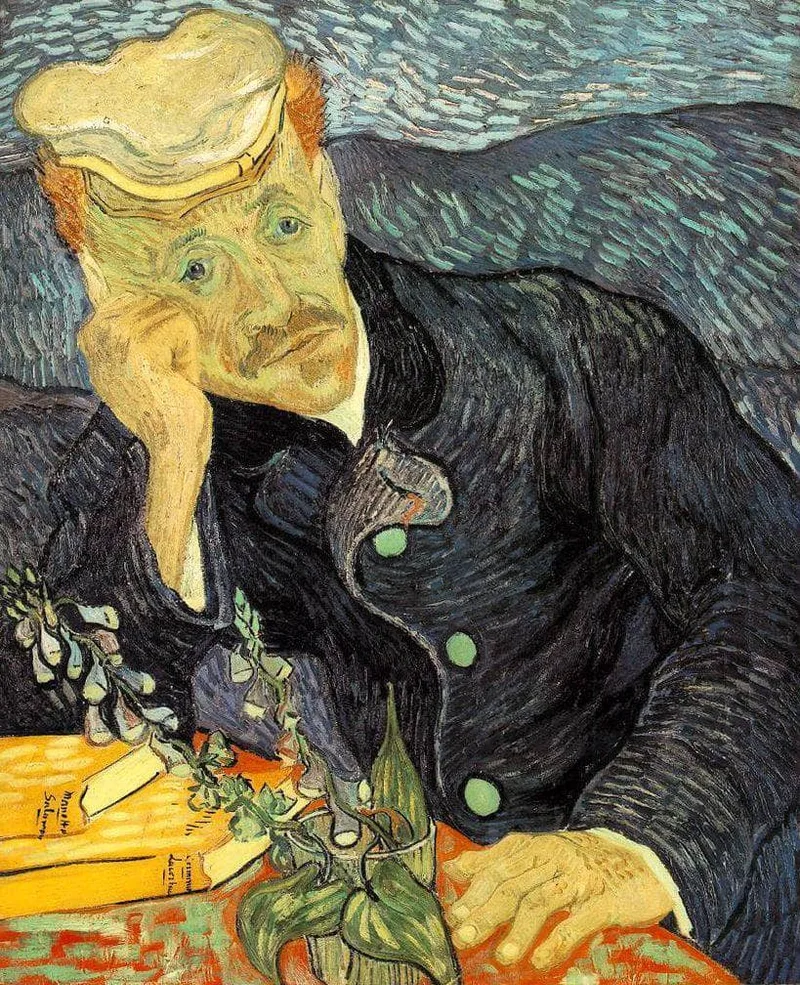
Adjusted for inflation, an older sale still leads. Portrait of Dr Paul Gachet fetched $83 million at Christie's in 1990, then the highest auction price for any artist, and The Art Newspaper puts that at about $210 million in today's money [4]. Its Van Gogh specialist, Martin Bailey, notes that in real terms it remains the most expensive Van Gogh [4].

Hand-painted in oilFrom $350See sizes
Where do Saint-Rémy paintings rank?
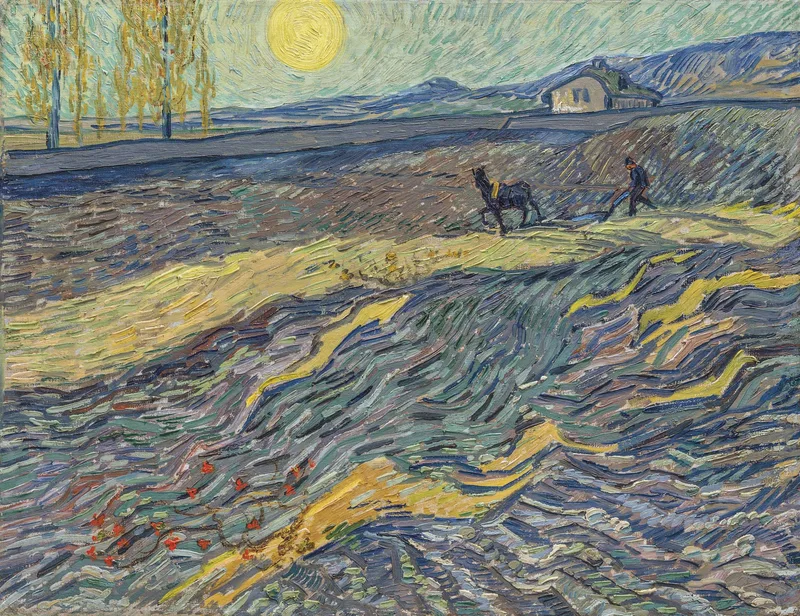
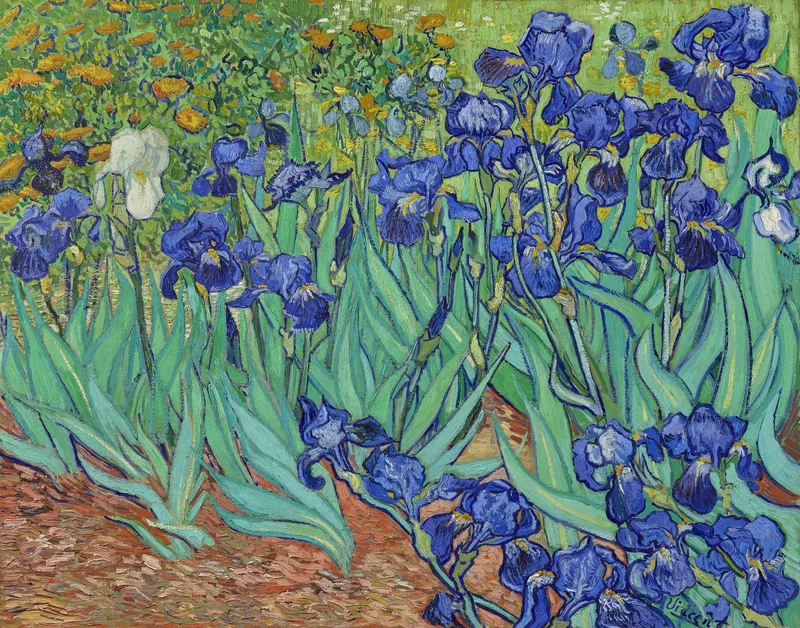
The Starry Night comes from the most prized stretch of his career. Four of the ten most expensive Van Goghs ever auctioned were painted during his year at the Saint-Rémy asylum, including Labourer in a Field (September 1889), $81 million in 2017, and Irises (May 1889), $54 million in 1987 [4]. Labourer was inspired by the view from his bedroom, with a ploughman at work beneath one of his powerful suns [4]. The same article puts that 1987 Irises price at $160 million in today's money [4].
Sunflowers has a similar story. The Tokyo version sold for $40 million in 1987, and Martin Bailey says it "would certainly go for several hundred million dollars" if sold again [4]. Heirs suing over that Sunflowers valued it at $250 million in a claim reported in January 2023, a claimants' figure rather than a sale [7]. For the whole list, see our ranking of the most expensive Van Gogh paintings, and for the Tokyo canvas, what the Sunflowers are worth.
Numbers like these make a nine-figure value easy to believe, but the exact figure stays a guess.
Hand-painted in oilFrom $350See sizes
Why does The Starry Night have no price tag?
A price is what a buyer pays when a painting changes hands, and this one has not changed hands since 1941 [1]. Van Gogh's pictures rarely come up at all: in a typical year fewer than a handful are auctioned, and the odd one sells privately, usually very discreetly [4]. Each sale is one buyer on one night, so even the best comparison is loose.
Van Gogh himself was modest about the canvas. He called it a “study” when he told Theo about it in June 1889 [5], and that November, writing to Emile Bernard, he seems to have had it in mind when he complained of painting “stars too big” and called it a “new setback” [6]. Our guide to Van Gogh's letters shows how to read these documents, and you can see how it differs from his other famous starry sky in The Starry Night and Starry Night Over the Rhône side by side.
“At last I have a landscape with olive trees, and also a new study of a starry sky.”
Can you own a hand-painted copy?
You can. A hand-painted copy is a new oil painting made by an artist, stroke by stroke, from the original image, not a print. It is priced by size, and the page below lists every size for The Starry Night. If you love the night scenes, Van Gogh's night paintings puts this one next to its companions.
Questions and answers
How much is Starry Night worth today?
How much did MoMA pay for The Starry Night?
Is The Starry Night worth more than Van Gogh's auction record?
Written and fact-checked by the Vincent van Gogh Paintings editorial desk8 sourcesUpdated
Sources
- The Museum of Modern Art: Vincent van Gogh, The Starry Night, 1889, 472.1941 (collection record and provenance)Accessed
- The Museum of Modern Art: press release, Museum of Modern Art Acquires Important Van Gogh (September 1941)Accessed
- Christie's: Vincent van Gogh, Verger avec cyprès, Visionary: The Paul G. Allen Collection Part I, lot resultAccessed
- The Art Newspaper: The ten most expensive Van Gogh paintings (Martin Bailey, revised July 17, 2026)Accessed
- Vincent van Gogh, letter 782 to Theo van Gogh, Saint-Rémy, on or about June 18, 1889Accessed
- Vincent van Gogh, letter 822 to Emile Bernard, Saint-Rémy, on or about November 26, 1889Accessed
- The Art Newspaper: Van Gogh's Tokyo Sunflowers: Was it a Nazi forced sale? And is the painting now worth $250m? (Martin Bailey, January 13, 2023)Accessed
- Artsy: What Billionaire Collectors Would Pay for the “Priceless” Art in U.S. Museums (Evan Beard, April 18, 2018)Accessed
Hand-painted oil reproductions
.jpg)

.jpg)