
Guide
25 Real Van Gogh Quotes, Checked Against His Letters
Every line comes from the museum’s English translation, with the letter number, the date and the person he was writing to.


These 25 Van Gogh quotes are real: each one is copied word for word from the museum’s English translation of his letters, mostly to his brother Theo, with the letter number and date [1]. Eight famous lines are checked too, because some of the most-shared ones are not his, or are worded differently in the letters [23].
How these quotes were checked
Every quote below is copied word for word from the museum’s English translation on the Van Gogh Letters website [1]. You get the letter number, who he was writing to, the place and the date, and one line of context. Most letters go to his brother Theo. Pair the words with the paintings in our Van Gogh gallery if you like.
One thing to know: translations change. The museum’s version is newer than the ones most quote sites copy, so a familiar line may read a little differently here, and when it does, we say so. New to the letters? Start with how to read his letters, or see how to match a letter to the painting it describes.
Quotes about art and painting (1 to 8)
1. “Many painters are afraid of the blank canvas, but the blank canvas is afraid of the truly passionate painter who dares […]” Letter 464, to Theo van Gogh, Nuenen, 2 October 1884 [1]. He is telling Theo that anyone who wants to be active must not be afraid of doing something wrong now and then. The sentence ends with a painter who “has once broken the spell of ‘you can’t’.”
2. “If something in you yourself says ‘you aren’t a painter’ […] IT’S THEN THAT YOU SHOULD PAINT, old chap, and that voice will be silenced too, but precisely because of that.” Letter 400, to Theo van Gogh, Nieuw-Amsterdam, 28 October 1883 [2]. Theo was thinking about becoming a painter, and Vincent warns him that well-meaning people may talk him out of it. The version you see online, “paint all the more,” is looser than this [30].
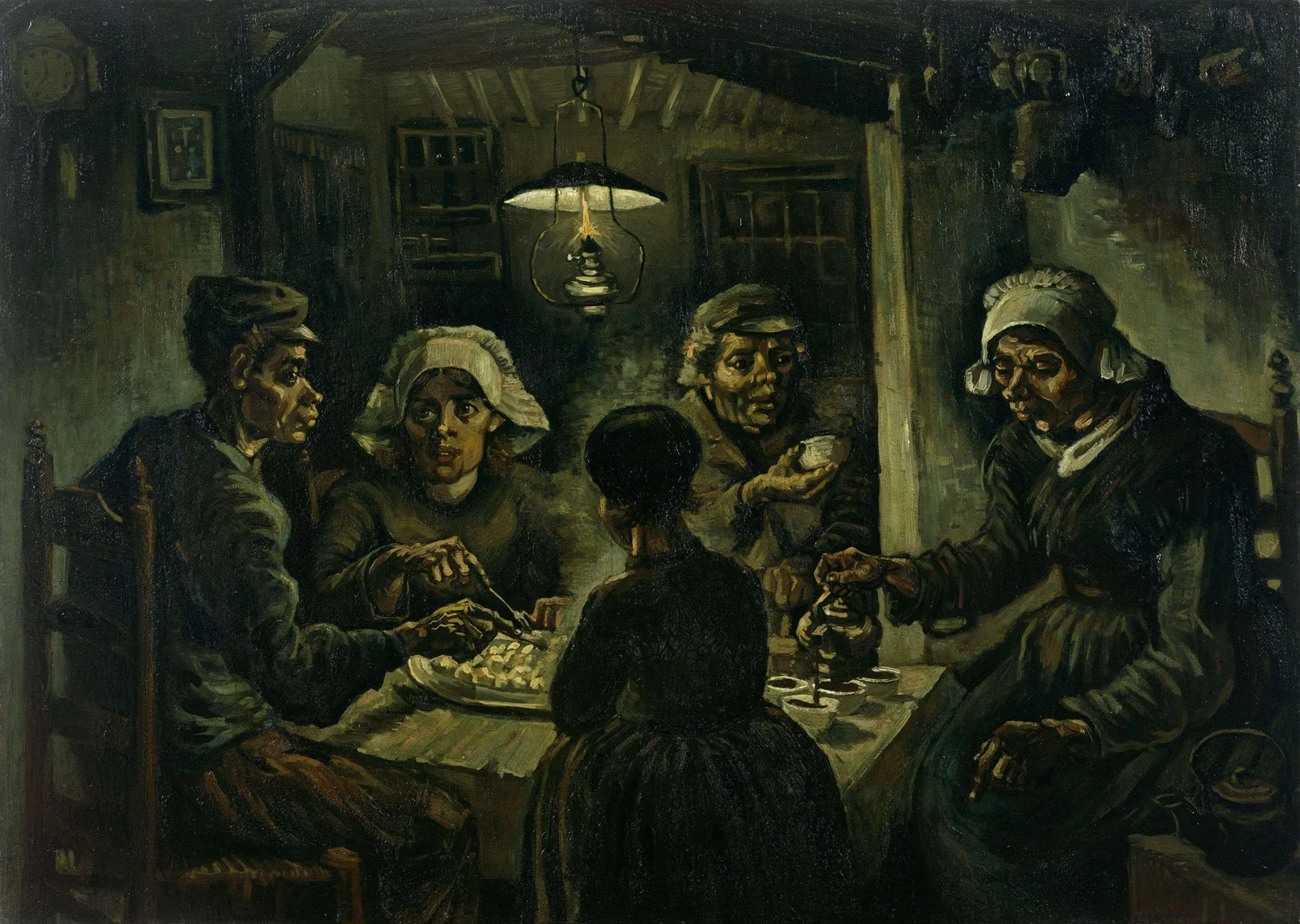
3. “But I keep on making what I can’t do yet in order to learn to be able to do it.” Letter 528, to Anthon van Rappard, Nuenen, on or about 18 August 1885 [3]. In the same letter he tells his friend that he tried to paint a cottage scene “carried away by the singular lighting of the dingy cottage.” That is The Potato Eaters.
4. “For the great doesn’t happen through impulse alone, and is a succession of little things that are brought together.” Letter 274, to Theo van Gogh, The Hague, 22 October 1882 [4]. He is arguing that principles only count when they turn into deeds. Drawing, he adds, is “working one’s way through an invisible iron wall that seems to stand between what one feels and what one can do.”
5. “don’t snuff out your inspiration and power of imagination, don’t become a slave to the model; and, the other, take a model and study it, for otherwise your inspiration won’t take on material form.” Letter 280, to Theo van Gogh, The Hague, 5 November 1882 [5]. He had just been reading what Dickens says about painters who copy their models too slavishly, and he calls these “two things that remain eternally true.”
6. “It isn’t the language of painters one ought to listen to but the language of nature.” Letter 249, to Theo van Gogh, The Hague, on or about 21 July 1882 [6]. He has had very little conversation with painters lately and “felt none the worse for that.” His reason: “Feeling things themselves, reality, is more important than feeling paintings.”
7. “It’s looking at things for a long time that matures you and makes you understand more deeply.” Letter 686, to Theo van Gogh, Arles, 23 or 24 September 1888 [7]. He is learning to see the colour of the south, including its women, and tells Theo he is in no hurry: “Even while working, I feel that I needn’t rush.”
8. “No blue without yellow and without orange, and if you do blue, then do yellow and orange as well, surely.” Letter 622, to Émile Bernard, Arles, on or about 7 June 1888 [8]. He has just spent a week at Saintes-Maries on the Mediterranean, where he saw “little green, red, blue boats, so pretty in shape and colour that one thought of flowers.”
Hand-painted in oilFrom $350See sizes
Quotes about love and people (9 to 13)
9. “It is good to love as much as one can, for therein lies true strength, and he who loves much does much and is capable of much, and that which is done with love is well done.” Letter 143, to Theo van Gogh, Amsterdam, 3 April 1878 [9]. This is the real source of “What is done in love is done well.” The popular line is a shortened, smoothed-out version of the end of this sentence.
10. “But without intending it, I’m always inclined to believe that the best way of knowing God is to love a great deal. Love that friend, that person, that thing, whatever you like, you’ll be on the right path to knowing more thoroughly, afterwards; that’s what I say to myself.” Letter 155, to Theo van Gogh, Cuesmes, between about 22 and 24 June 1880 [10]. A long letter in which he explains himself to his brother. The line you may know as “the best way to know God is to love many things” comes from here.
11. “You know, what makes the prison disappear is every deep, serious attachment. To be friends, to be brothers, to love; that opens the prison through sovereign power, through a most powerful spell.” Letter 155, to Theo van Gogh, Cuesmes, between about 22 and 24 June 1880 [10]. Same letter, further on. He uses “prison” for the feeling of being shut in and cut off, and friendship and love are the way out.
12. “the more I think about it the more I feel that there’s nothing more genuinely artistic than to love people.” Letter 682, to Theo van Gogh, Arles, 18 September 1888 [11]. He is thanking Theo for backing him. Two sentences later: “the fact is that we make them together,” meaning the paintings.
13. “People are worth more than things and for me, the more trouble I go to over paintings the more paintings as such leave me cold.” Letter 615, to Theo van Gogh, Arles, 28 May 1888 [12]. He is worried that Theo is wearing himself out and says he would rather they stay together: “The reason I try to make them is to be among artists.”
Quotes about courage and hard times (14 to 19)
14. “There is safety in the midst of danger. What would life be if we didn’t dare to take things in hand?” Letter 194, to Theo van Gogh, The Hague, 29 December 1881 [13]. After a violent argument with their father at Christmas, he had left home the same day and rented a studio in The Hague. This is the real source of “What would life be if we had no courage to attempt anything?”
15. “it is better to be fervent in spirit, even if one accordingly makes more mistakes, than narrow-minded and overly cautious.” Letter 143, to Theo van Gogh, Amsterdam, 3 April 1878 [9]. Same letter as quote 9. He would rather make honest mistakes than play it safe.
16. “Someone has a great fire in his soul and nobody ever comes to warm themselves at it, and passers-by see nothing but a little smoke at the top of the chimney and then go on their way.” Letter 155, to Theo van Gogh, Cuesmes, between about 22 and 24 June 1880 [10]. He is describing how it feels to have a great deal inside and no one who notices. His answer in the next lines: keep the fire alive, “have salt in ourselves, wait patiently.”
17. “The conscience is a man’s compass, and although the needle deviates sometimes, although above all one detects inaccuracies in one’s orientation, one must nevertheless do one’s best to set one’s course by it.” Letter 294, to Theo van Gogh, The Hague, between about 13 and 18 December 1882 [14]. He admits he can’t say which way of working is right: “But at all events one must work.”
18. “let’s not forget that small emotions are the great captains of our lives, and that these we obey without knowing it.” Letter 790, to Theo van Gogh, Saint-Rémy-de-Provence, 14 or 15 July 1889 [15]. He opens the letter with a sketch of the cicadas outside his window, and writes to a brother who is about to become a father.
19. “I still love art and life very much” Letter 896, to Theo and Jo van Gogh-Bonger, Auvers-sur-Oise, 2 July 1890 [16]. In the same letter he tells them not to worry too much about their baby son, and says that if his own illness came back, they would have to excuse him.
Quotes about nature and the long view (20 to 22)
20. “I feel so strongly that the story of people is like the story of wheat, if one isn’t sown in the earth to germinate there, what does it matter, one is milled in order to become bread.” Letter 805, to Theo van Gogh, Saint-Rémy-de-Provence, on or about 20 September 1889 [17]. The same letter says: “Today I attempted the Sheep shearer in a colour scale ranging from lilac to yellow.”
21. “I myself, returning from this reading, am always obliged to go and gaze at a blade of grass, a pine-tree branch, an ear of wheat, to calm myself.” Letter 785, to Willemien van Gogh, Saint-Rémy-de-Provence, 2 July 1889 [18]. He is telling his sister about reading Shakespeare’s history plays, and suggests she look at poppies instead.
22. “When I’d done those sunflowers I was seeking the contrary and yet the equivalent, and I said, it’s the cypress.” Letter 850, to Theo van Gogh, Saint-Rémy-de-Provence, 1 February 1890 [19]. A few lines earlier he says of the cypress landscapes: “Ah, that wouldn’t be easy.” See what else he wrote about sunflowers and other flowers.


Hand-painted in oilFrom $350See sizes


Hand-painted in oilFrom $350See sizes


Quotes about stars and night (23 to 25)
23. “But the sight of the stars always makes me dream in as simple a way as the black spots on the map, representing towns and villages, make me dream.” Letter 638, to Theo van Gogh, Arles, 9 or 10 July 1888 [20]. He goes on: “Just as we take the train to go to Tarascon or Rouen, we take death to go to a star.”
24. “And still to feel the stars and the infinite, clearly, up there. Then life is almost magical, after all.” Letter 663, to Theo van Gogh, Arles, 18 August 1888 [21]. He is telling Theo his health has recovered: “It’s the good heat that gives me strength.”
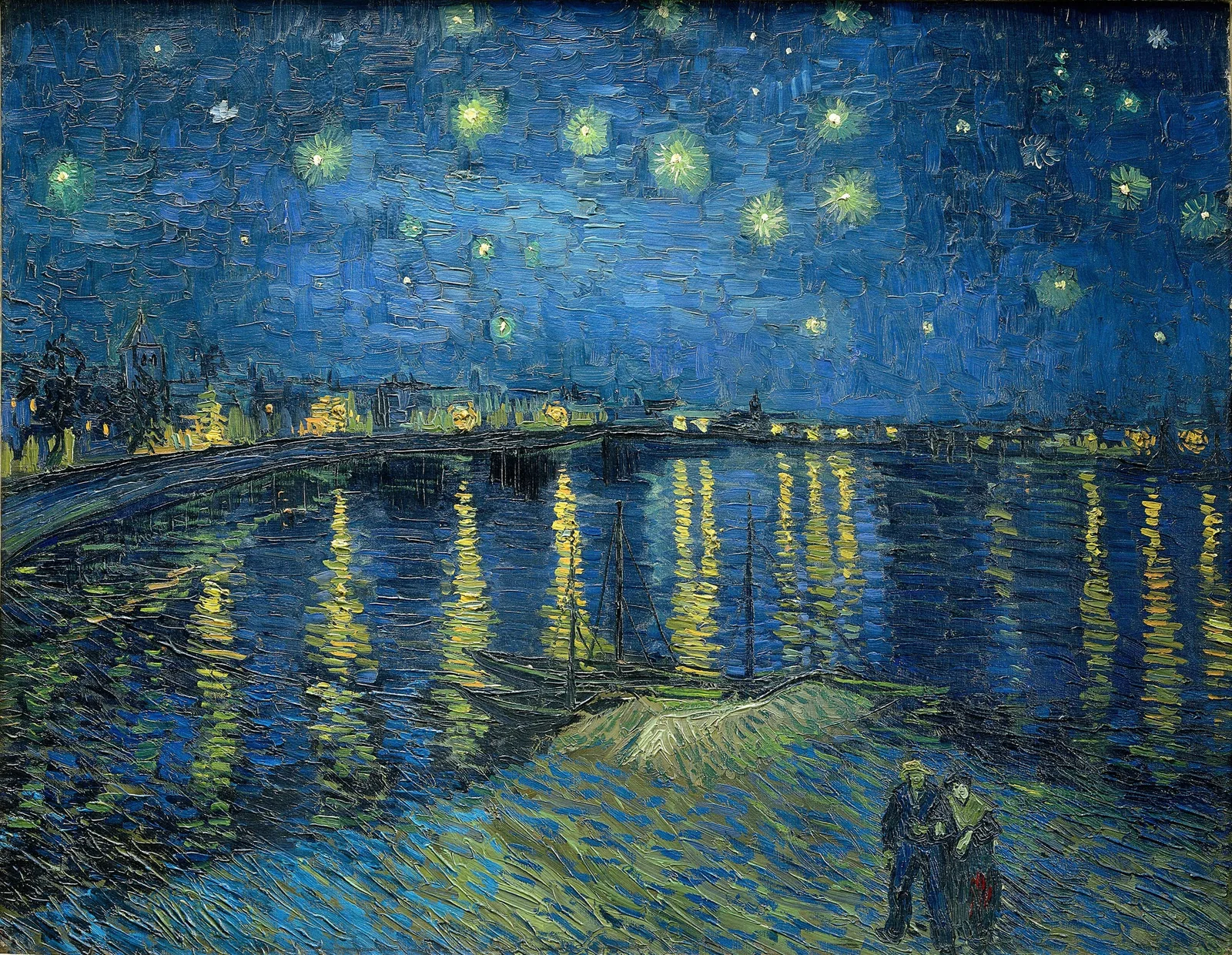
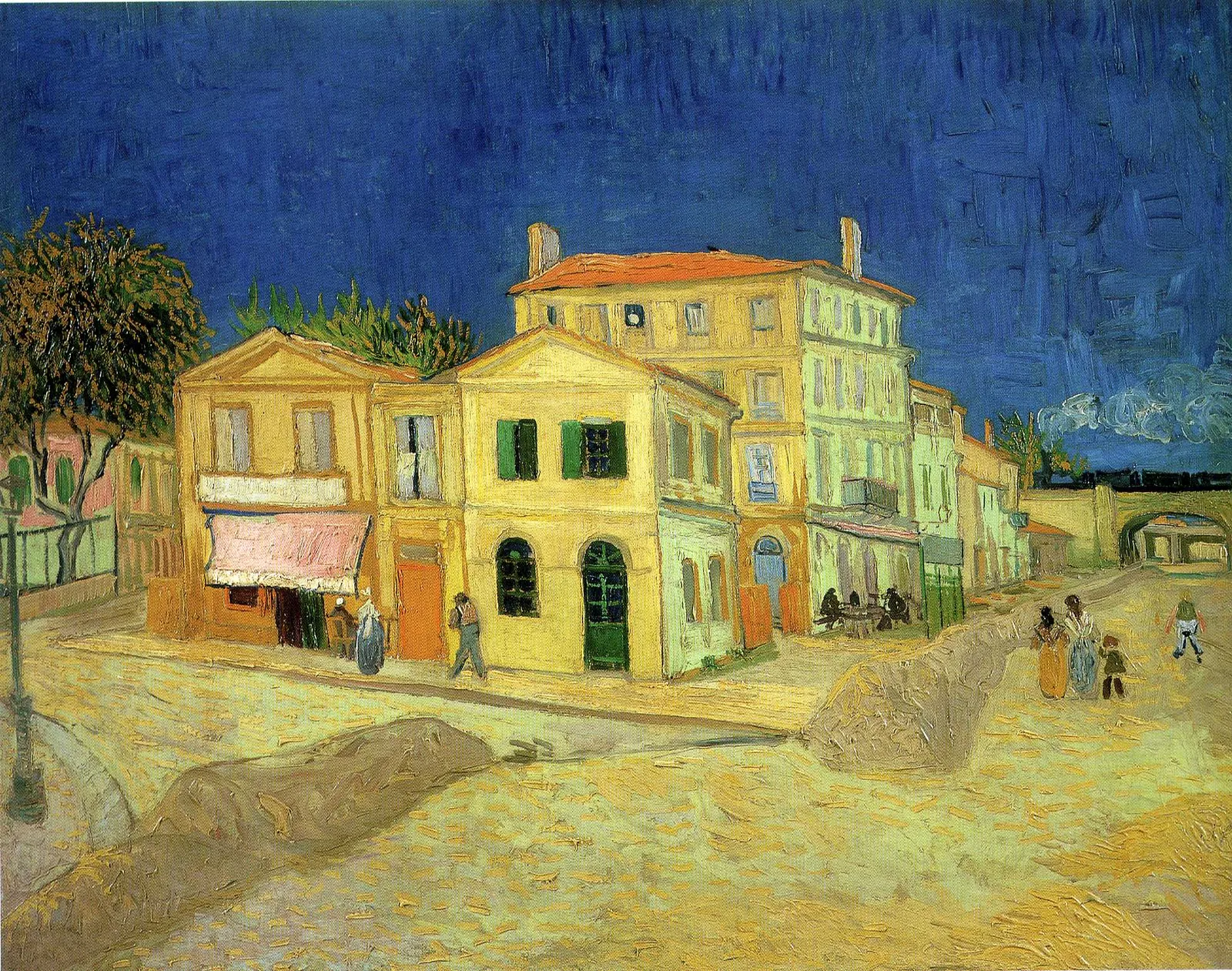
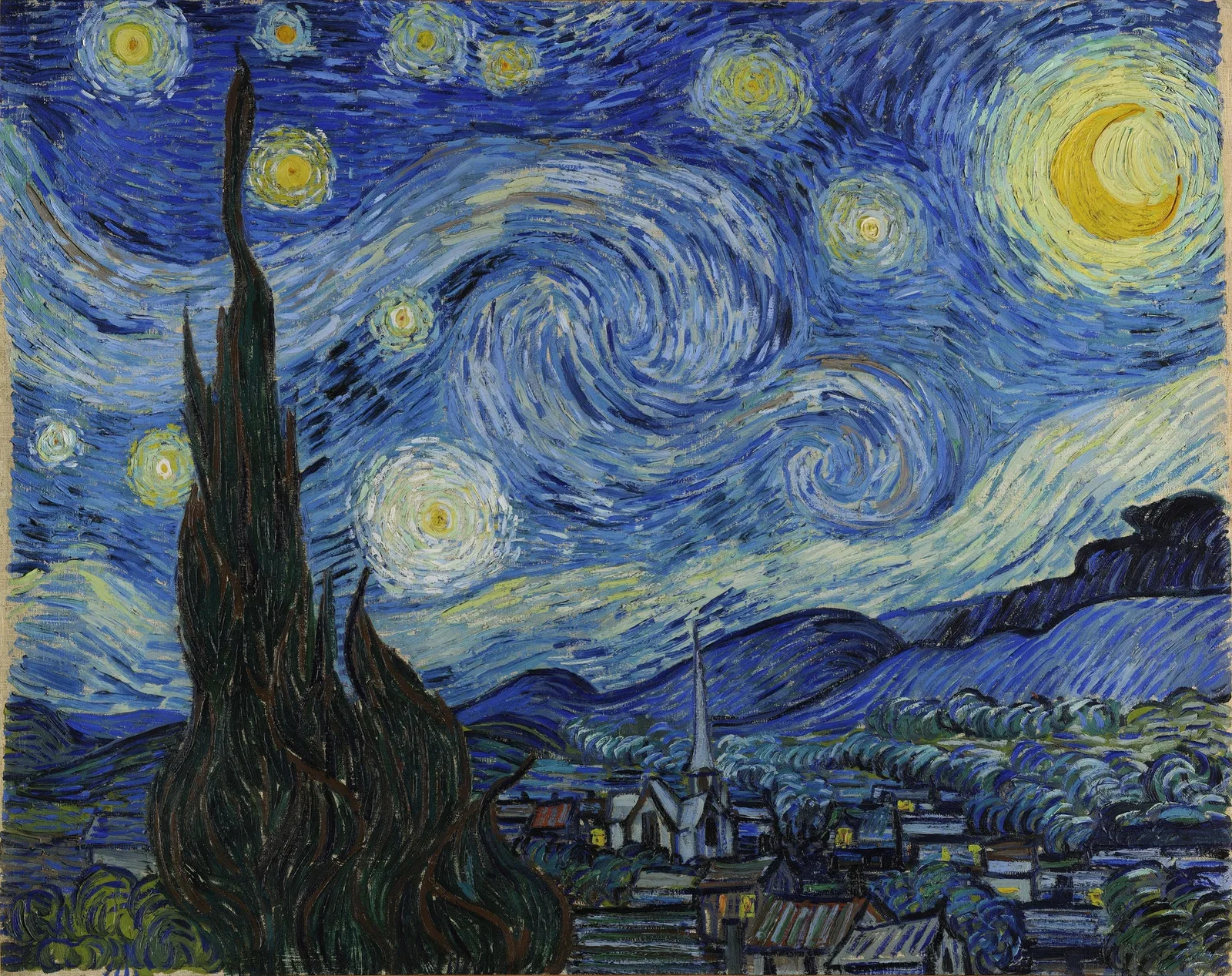
25. “so I go outside at night to paint the stars, and I always dream a painting like that, with a group of lively figures of the pals.” Letter 691, to Theo van Gogh, Arles, on or about 29 September 1888 [22]. Just before this he mentions a need for “religion,” and the same letter encloses sketches of “the starry sky at last, actually painted at night, under a gas-lamp” and the house “under a sulphur sun.” He adds that “the night café that I painted” stands to the left of the restaurant. Read more in Van Gogh’s night paintings.
Hand-painted in oilFrom $350See sizes
Hand-painted in oilFrom $350See sizes


Hand-painted in oilFrom $350See sizes
Famous quotes he never wrote, or wrote differently
Quote sites love a tidy line. Some of the most-shared ones are not in the letters at all, and others are real but reworded. Here is what the sources show, line by line. If a line is not here, check it before you share it.
| The line you see online | What the sources show |
|---|---|
| “Normality is a paved road: it’s comfortable to walk, but no flowers grow on it.” | Not in his letters. Quote Investigator could not find it in the museum’s letters database and traced it to the front flap of a 2009 Kunstmuseum Basel catalog, with no source. It would not credit it to him [23]. |
| “What would life be if we had no courage to attempt anything?” | Real, but reworded. The sentence is in letter 194 [13]. An older translation reads “What would life be if we hadn’t courage to attempt anything?” [27]. |
| “What is done in love is done well.” | Real, but shortened. Letter 143 says “that which is done with love is well done” [9]. |
| “I put my heart and my soul into my work, and have lost my mind in the process.” | A paraphrase at best. The nearest line is in a draft letter of 23 July 1890, which an older translation renders “my work to me, I risk my life on it, and my reason has half foundered” [28]. |
| “I would rather die of passion than of boredom.” | Zola’s line. In letter 464 Van Gogh copies it from a character in a Zola novel: “prefer to die of passion than to die of boredom!” [1]. Quote Investigator names Zola as the originator [24]. |
| “Great things are done by a series of small things brought together.” | Reworded from letter 274: “the great doesn’t happen through impulse alone, and is a succession of little things that are brought together” [4]. Quote Investigator notes that the two parts of the popular saying are both in the letter, but not next to each other [26]. |
| “The best way to know God is to love many things.” | Reworded from letter 155: “the best way of knowing God is to love a great deal” [10]. |
| “I am always doing what I cannot do yet in order to learn how to do it.” | Often credited to Picasso, but it is Van Gogh’s, from letter 528 in 1885 (quote 3 above) [3][25]. |
How to check a Van Gogh quote yourself
Search the exact sentence on the Van Gogh Letters site, which gives each letter in the museum’s translation with its date and recipient [1]. If nothing turns up, search a shorter piece. Older translations differ: the 1881 version of letter 194 says “hadn’t courage to attempt anything” where the museum’s says “didn’t dare to take things in hand” [27][13].
Still nothing? Be careful. Quote Investigator, a fact-checking site, searched the letters for the “paved road” line and could not find it [23]. For what the paintings mean in his own words, see what his paintings mean, and for the story of a famous night scene, Café Terrace at Night. The two starry nights have their own guide: The Starry Night and Starry Night over the Rhône.
Questions and answers
Did Van Gogh say “What is done in love is done well”?
Almost. In a letter to Theo of 3 April 1878 (letter 143) he wrote that “he who loves much does much and is capable of much, and that which is done with love is well done” [9]. The shorter modern wording is a paraphrase of that sentence.
What would life be if we had no courage to attempt anything?
What was Van Gogh’s famous quote?
Did Van Gogh say “Normality is a paved road”?
No source has been found. Quote Investigator searched the museum’s letters database without a match and traced the line to a 2009 Kunstmuseum Basel catalog, where it appears on the dust jacket with no citation [23].
Written and fact-checked by the Vincent van Gogh Paintings editorial desk30 sourcesUpdated
Sources
- Vincent van Gogh Letters, letter 464: To Theo van Gogh. Nuenen, 2 October 1884Accessed
- Vincent van Gogh Letters, letter 400: To Theo van Gogh. Nieuw-Amsterdam, 28 October 1883Accessed
- Vincent van Gogh Letters, letter 528: To Anthon van Rappard. Nuenen, on or about 18 August 1885Accessed
- Vincent van Gogh Letters, letter 274: To Theo van Gogh. The Hague, 22 October 1882Accessed
- Vincent van Gogh Letters, letter 280: To Theo van Gogh. The Hague, 5 November 1882Accessed
- Vincent van Gogh Letters, letter 249: To Theo van Gogh. The Hague, on or about 21 July 1882Accessed
- Vincent van Gogh Letters, letter 686: To Theo van Gogh. Arles, 23 or 24 September 1888Accessed
- Vincent van Gogh Letters, letter 622: To Emile Bernard. Arles, on or about 7 June 1888Accessed
- Vincent van Gogh Letters, letter 143: To Theo van Gogh. Amsterdam, 3 April 1878Accessed
- Vincent van Gogh Letters, letter 155: To Theo van Gogh. Cuesmes, between about 22 and 24 June 1880Accessed
- Vincent van Gogh Letters, letter 682: To Theo van Gogh. Arles, 18 September 1888Accessed
- Vincent van Gogh Letters, letter 615: To Theo van Gogh. Arles, 28 May 1888Accessed
- Vincent van Gogh Letters, letter 194: To Theo van Gogh. The Hague, 29 December 1881Accessed
- Vincent van Gogh Letters, letter 294: To Theo van Gogh. The Hague, between about 13 and 18 December 1882Accessed
- Vincent van Gogh Letters, letter 790: To Theo van Gogh. Saint-Rémy-de-Provence, 14 or 15 July 1889Accessed
- Vincent van Gogh Letters, letter 896: To Theo van Gogh and Jo van Gogh-Bonger. Auvers-sur-Oise, 2 July 1890Accessed
- Vincent van Gogh Letters, letter 805: To Theo van Gogh. Saint-Rémy-de-Provence, on or about 20 September 1889Accessed
- Vincent van Gogh Letters, letter 785: To Willemien van Gogh. Saint-Rémy-de-Provence, 2 July 1889Accessed
- Vincent van Gogh Letters, letter 850: To Theo van Gogh. Saint-Rémy-de-Provence, 1 February 1890Accessed
- Vincent van Gogh Letters, letter 638: To Theo van Gogh. Arles, 9 or 10 July 1888Accessed
- Vincent van Gogh Letters, letter 663: To Theo van Gogh. Arles, 18 August 1888Accessed
- Vincent van Gogh Letters, letter 691: To Theo van Gogh. Arles, on or about 29 September 1888Accessed
- Quote Investigator: Normality is a Well-Paved Street; It Is Good for Walking, But No Flowers Will Grow ThereAccessed
- Quote Investigator: I Would Rather Die of Passion Than of BoredomAccessed
- Quote Investigator: I Am Always Doing What I Can’t Do Yet in Order To Learn How To Do ItAccessed
- Quote Investigator: The Great Doesn’t Happen Through Impulse Alone, and Is a Succession of Little Things That Are Brought TogetherAccessed
- WebExhibits: Letter from Vincent van Gogh to Theo van Gogh, The Hague, 29 December 1881 (older English translation)Accessed
- WebExhibits: Letter from Vincent van Gogh to Theo van Gogh, Auvers-sur-Oise, 23 July 1890 (older English translation)Accessed
- MoMA: Vincent van Gogh, The Starry Night, Saint Rémy, June 1889Accessed
- Quote Investigator: If You Hear a Voice Within You Say, ‘You Cannot Paint,’ Then Paint All the More, and That Voice Will Be SilencedAccessed
Hand-painted oil reproductions
Paintings in this guide
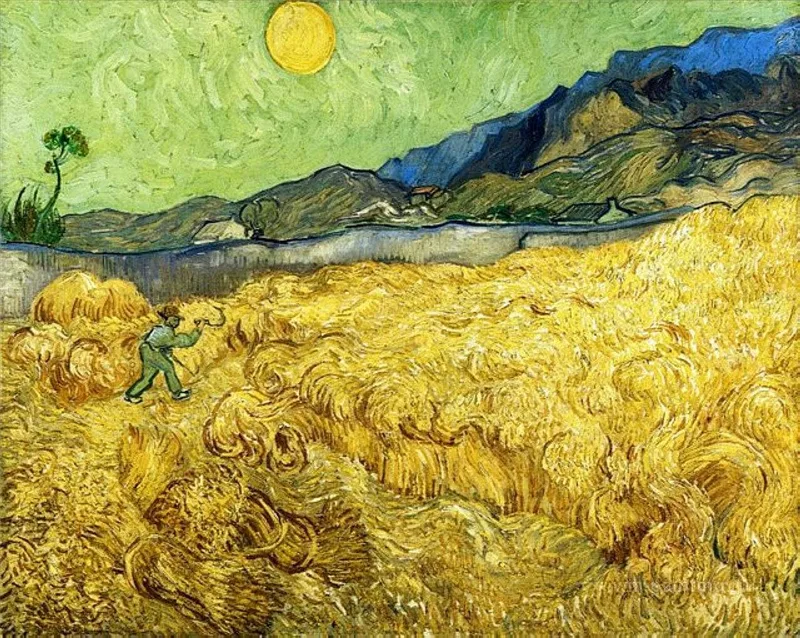 Wheat Field with Reaper and SunVincent van GoghFrom$350
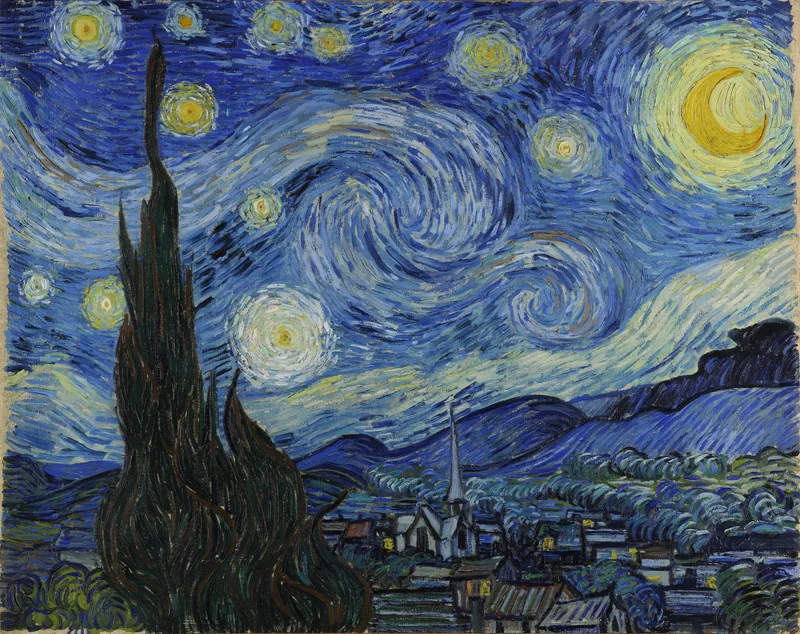 The Starry NightVincent van GoghFrom$350
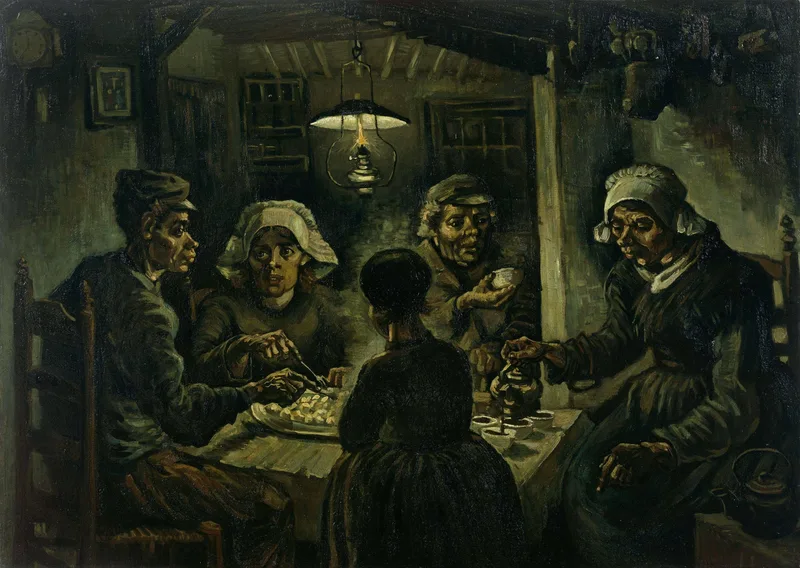 The Potato EatersVincent van GoghFrom$350
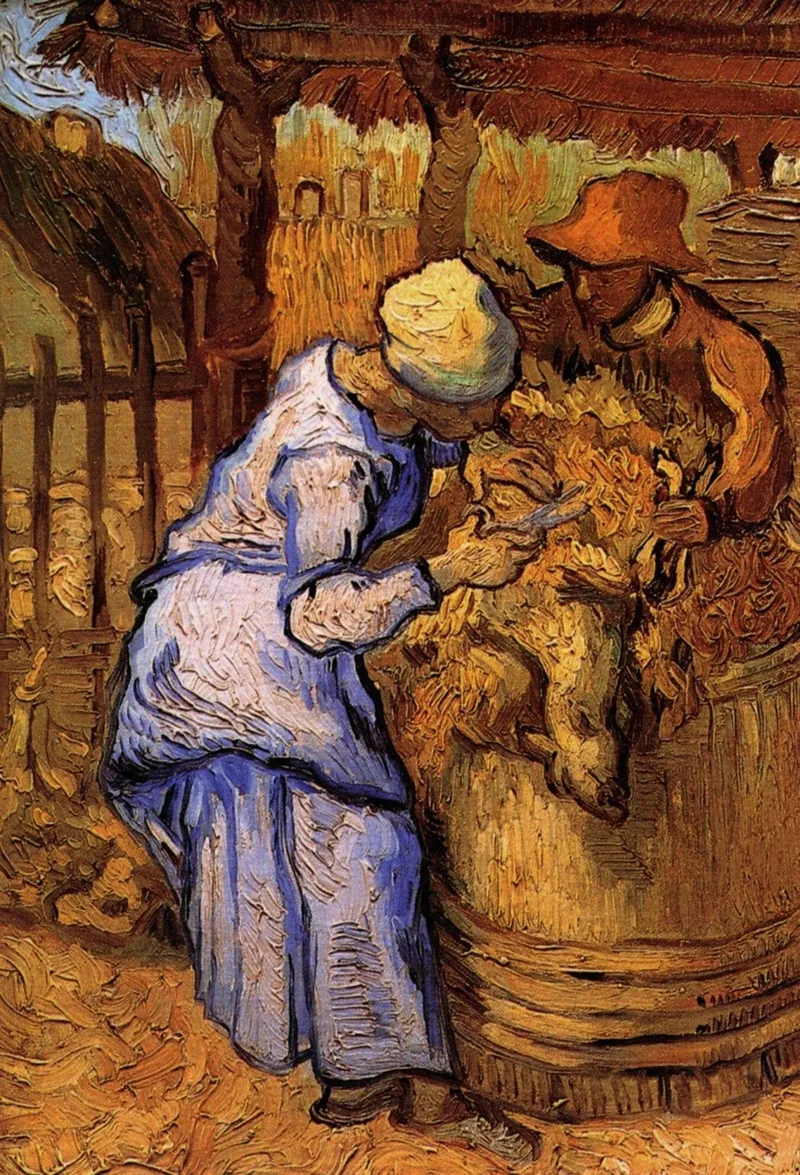 Sheep-Shearers, The after MilletVincent van GoghFrom$350
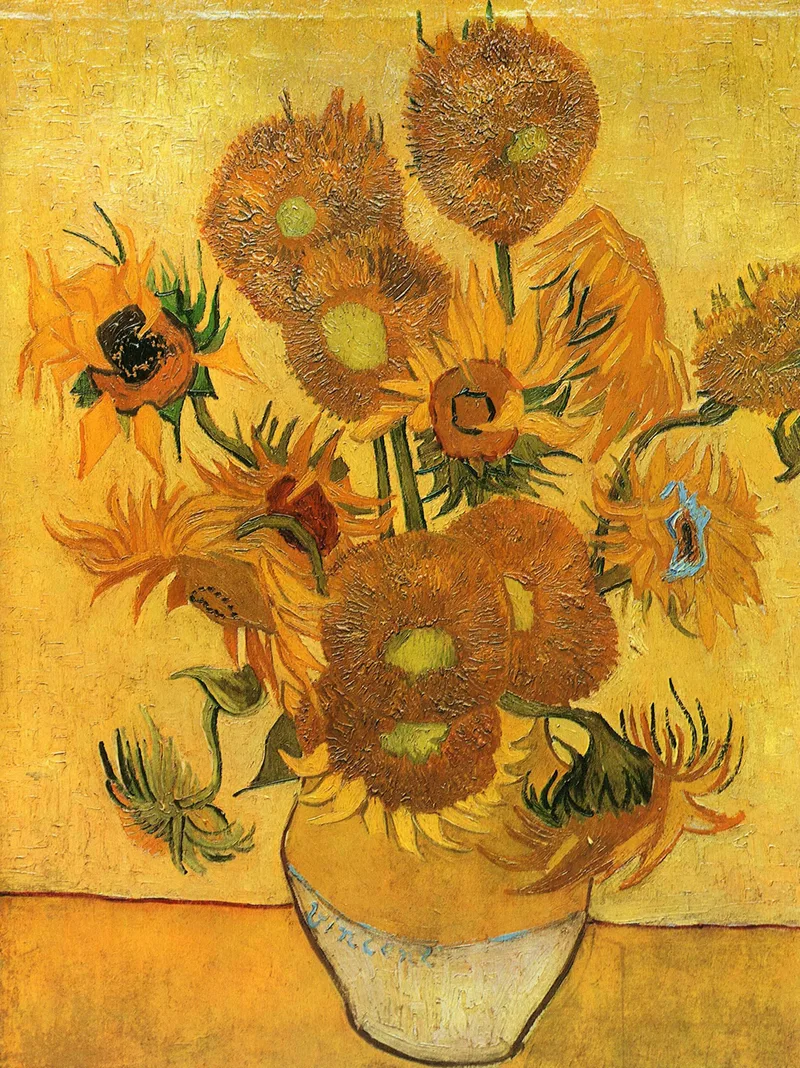 Still Life - Vase with Fifteen SunflowersVincent van GoghFrom$350
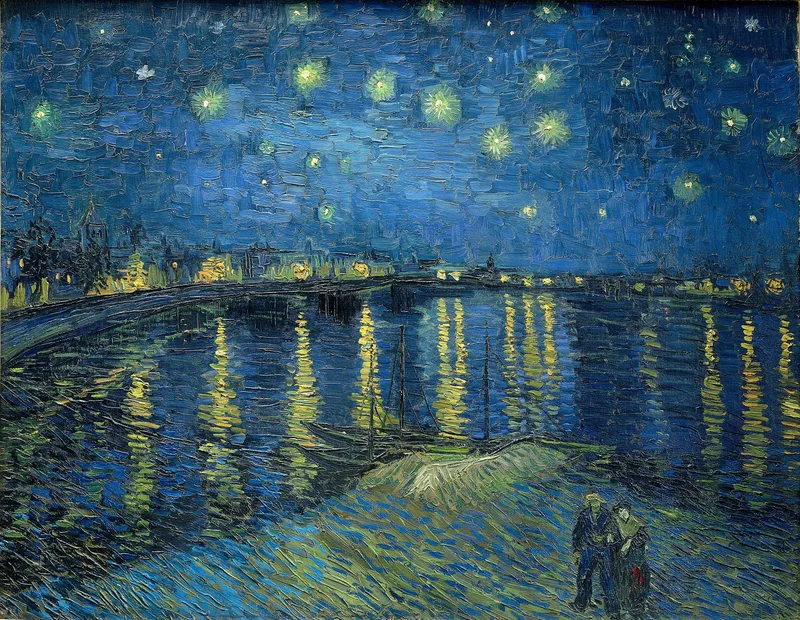 Starry Night Over the RhoneVincent van GoghFrom$350
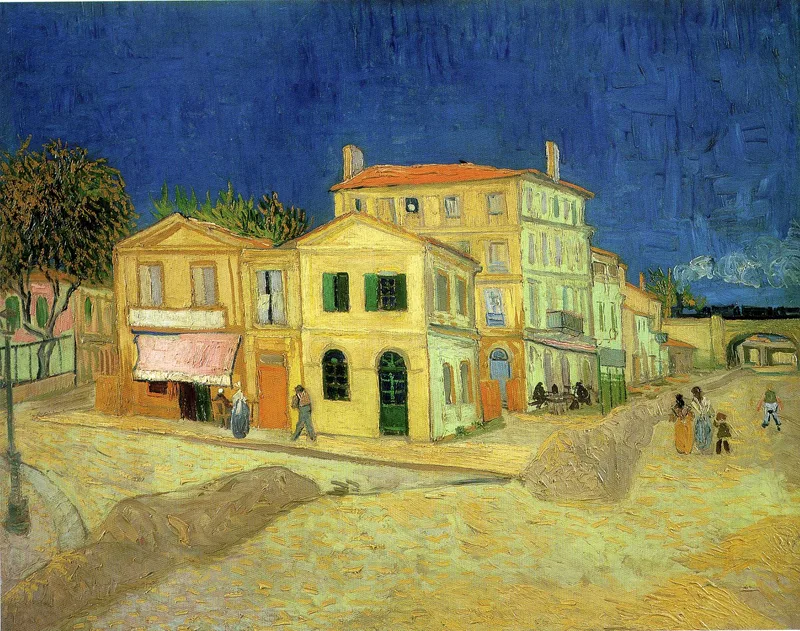 The Yellow HouseVincent van GoghFrom$350
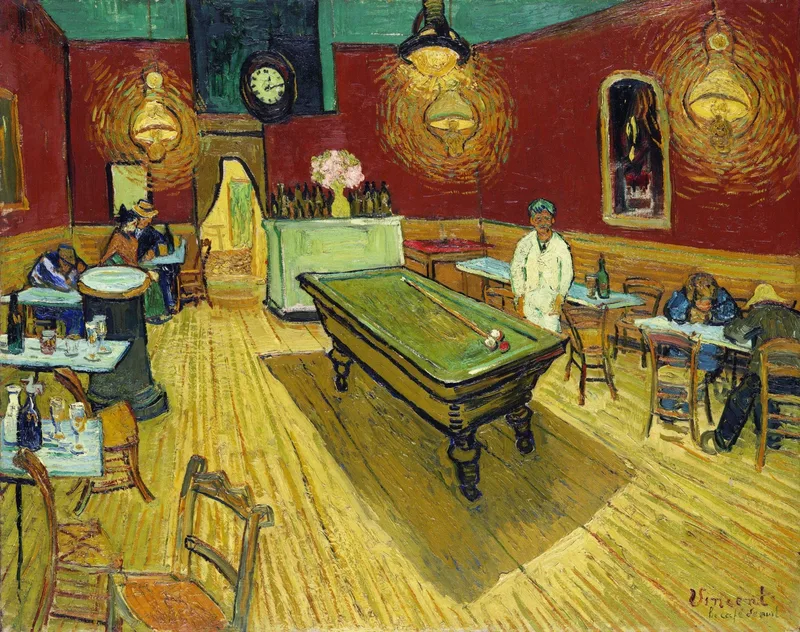 The Night CafeVincent van GoghFrom$350