
Guide
What Do Van Gogh's Paintings Mean? His Own Explanations
Fourteen pictures, each explained first by the painter in his letters and only then by museums and critics


Van Gogh's paintings mean what he said they meant in his letters, at least for many of the famous ones: The Potato Eaters shows peasants who had "honestly earned their food" [1], and his bedroom was meant to "rest the mind" [4]. Later readings, such as the cypress in The Starry Night as a bridge between life and death, come from museums and critics [5].
His words first, then the museum, then everyone else
Van Gogh wrote about his pictures as he painted them, so for many of them we do not have to guess. This guide goes work by work and keeps three layers apart: what he wrote, quoted from the scholarly English edition of the letters with the letter number; what a museum records; and interpretation by curators and editors, labeled as such.
The layers can disagree. He described the walls of his bedroom as violet, while the Van Gogh Museum explains that the blue we see today is the result of discoloration [2][4]. To read more of the letters, start with how to read Van Gogh's letters, or use the letters-and-paintings method to tie a passage to one canvas.
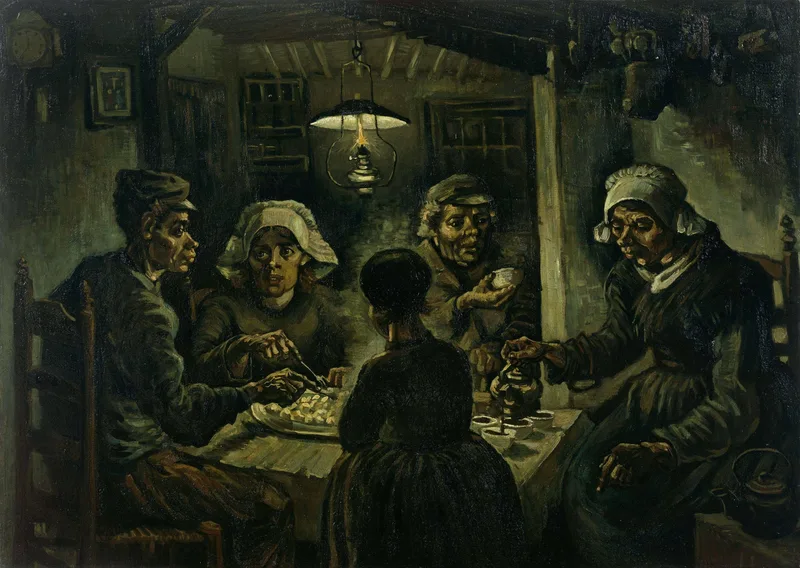
The Potato Eaters (1885)
On 30 April 1885, in Nuenen, Van Gogh told Theo in letter 497 what The Potato Eaters was for. He wanted people to see that "these folk, who are eating their potatoes by the light of their little lamp, have tilled the earth themselves with these hands they are putting in the dish" [1]. They had "honestly earned their food", and the picture should suggest "a wholly different way of life from ours" [1].
The rough style is the point, not a lack of skill. His rule: "one must paint the peasants as if one were one of them, as feeling, thinking as they do themselves." [1]
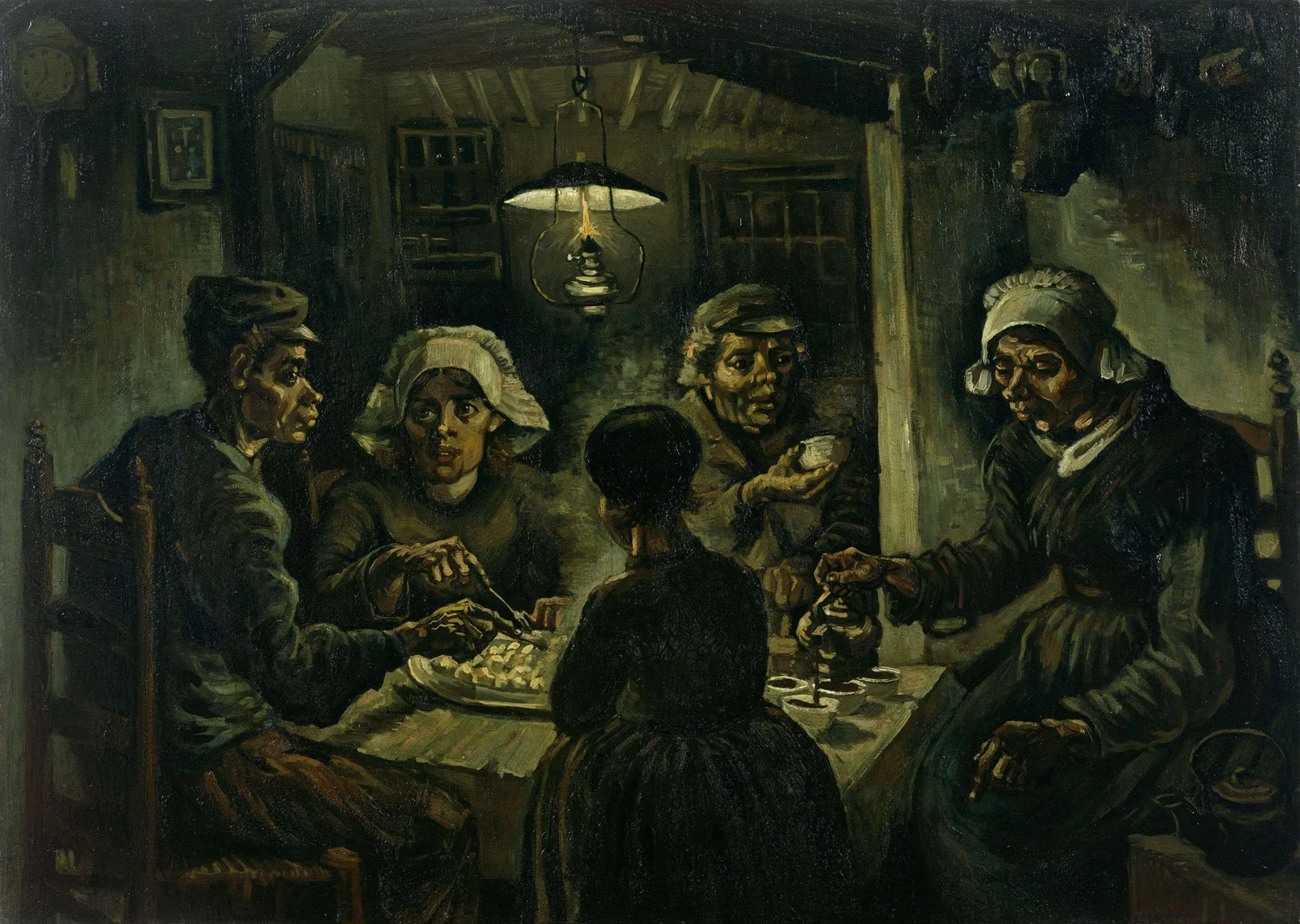
“But a peasant painting mustn’t become perfumed.”
Sower with Setting Sun (1888)
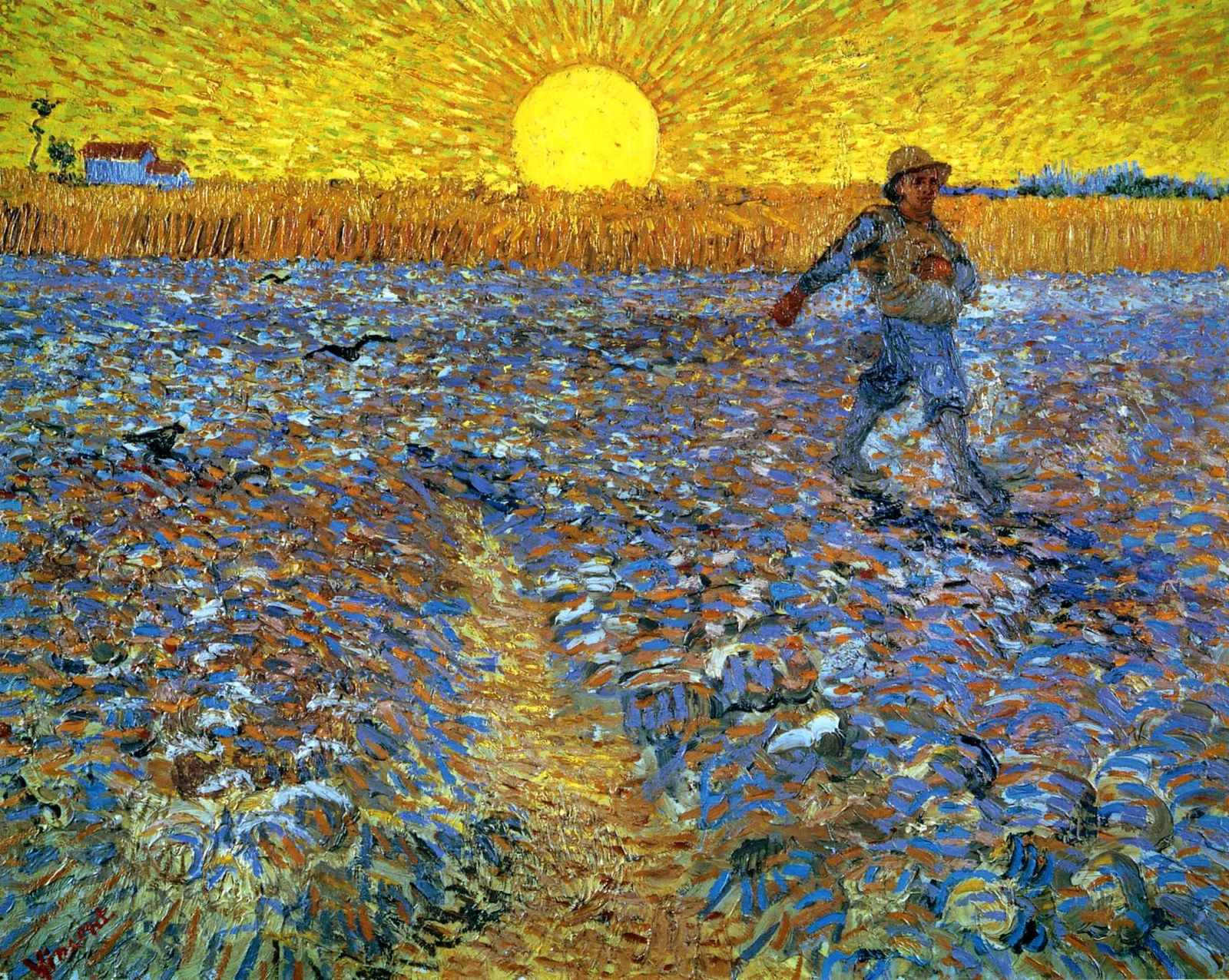
In Arles in September 1888 he took stock of his work for Theo and was strict about it. Most of it, he said, was study. "Because there’s still hardly more than the sower and the night café that are attempts at composed paintings." [7] So when he made a sower with a huge yellow sun, he counted it among his few pictures built on purpose, not just copied from a view. The letters give no further reading of its meaning, and this guide does not invent one.
Hand-painted in oilFrom $350See sizes
Sunflowers (1888 and 1889)
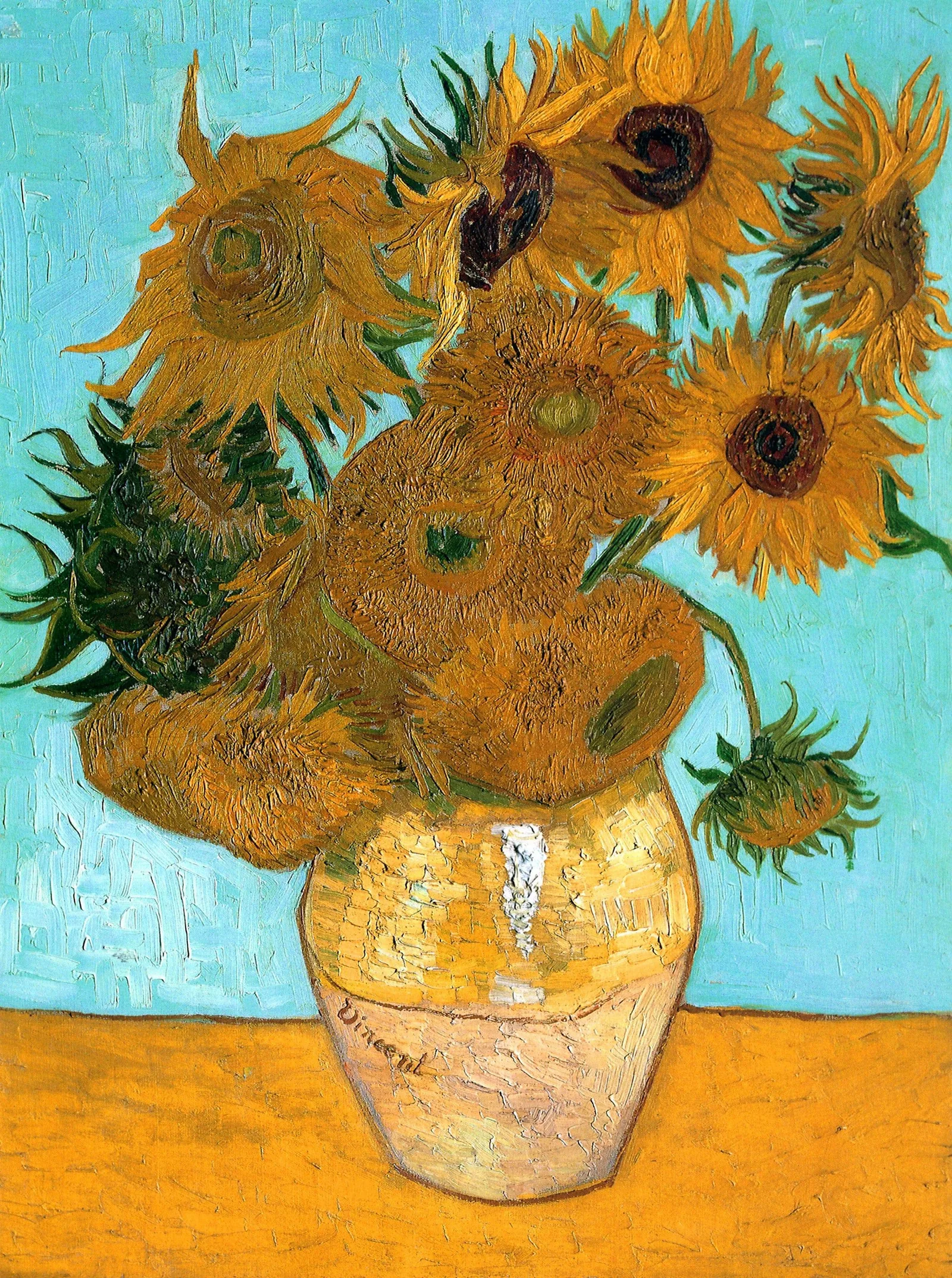
The Van Gogh Museum records that he painted five large canvases of sunflowers in a vase in Arles in 1888 and 1889, with three shades of yellow "and nothing else", and that the paintings communicated "gratitude", he wrote [3]. The letters add the plan. On 9 September 1888 he told Theo the guest room, "which will be Gauguin’s if Gauguin comes", would have "a decoration of large yellow sunflowers on its white walls" [7].
In January 1889, with Gauguin gone, he wrote to him that he had indeed taken the sunflower before other painters: "if Jeannin has the peony, Quost the hollyhock, I indeed, before others, have taken the sunflower." [10] Read together, the meaning is less a hidden symbol than a welcome for a friend. The versions are sorted out in how many Sunflowers he painted, and his other remarks are in what he wrote about flowers.
Gauguin painted Van Gogh at work on them. In September 1889 Vincent asked Theo whether he had seen it: "My face has lit up after all a lot since, but it was indeed me, extremely tired and charged with electricity as I was then." [11]

Hand-painted in oilFrom $350See sizes


Hand-painted in oilFrom $350See sizes


The Yellow House (1888)
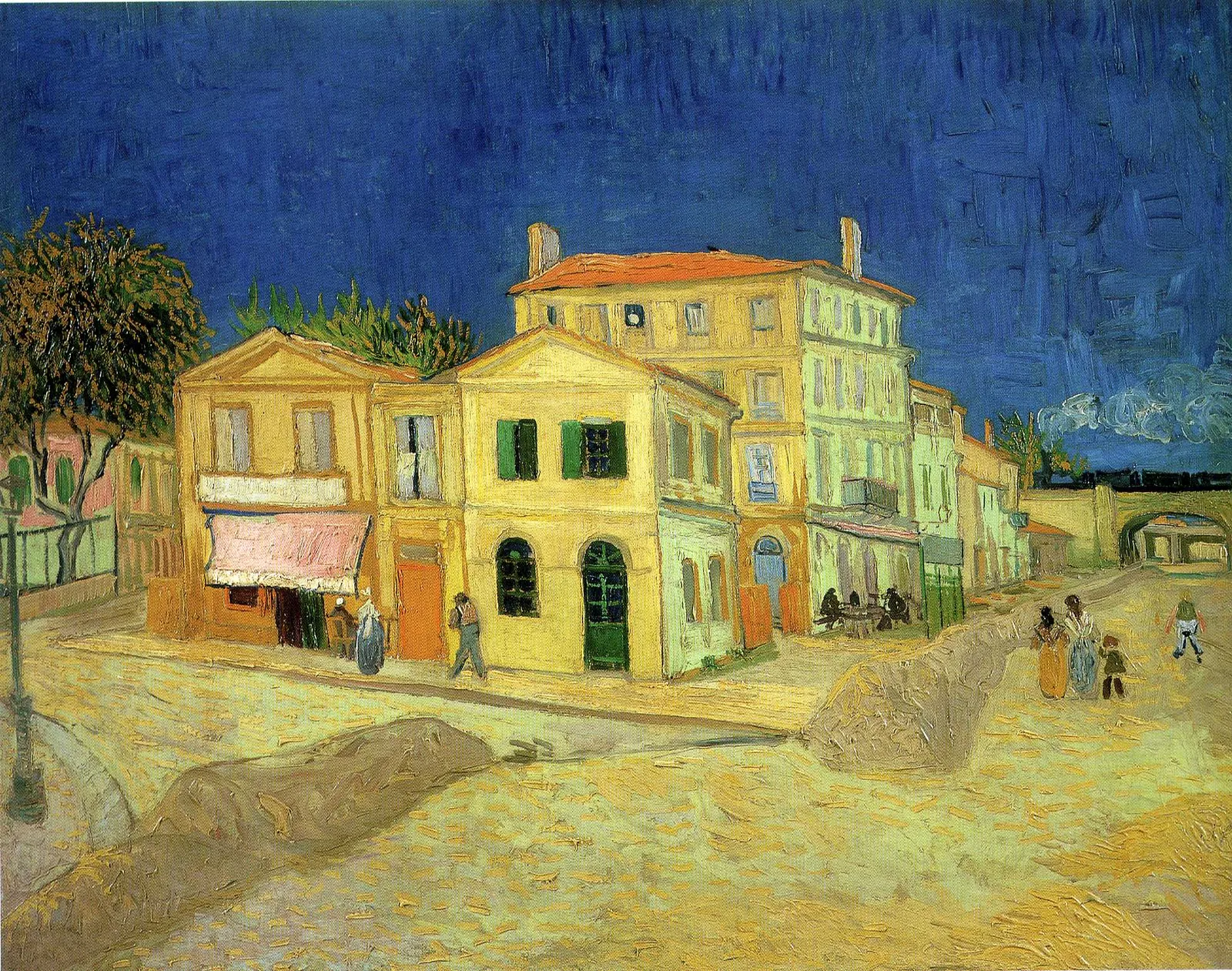
The house was part of the plan. In letter 678 he described "the yellow of fresh butter, with garish green shutters" in the full sun of the square, and added: "Inside, I can live and breathe, and think and paint." [8] On about 29 September he sent Theo a sketch of the painting, showing the house "under a sulphur sun, under a pure cobalt sky" [9].
He knew it was hard and wanted it anyway: "Because it’s tremendous, these yellow houses in the sunlight and then the incomparable freshness of the blue." [9] You can look at The Yellow House in detail on its page.

Hand-painted in oilFrom $350See sizes
The Night Café (1888)
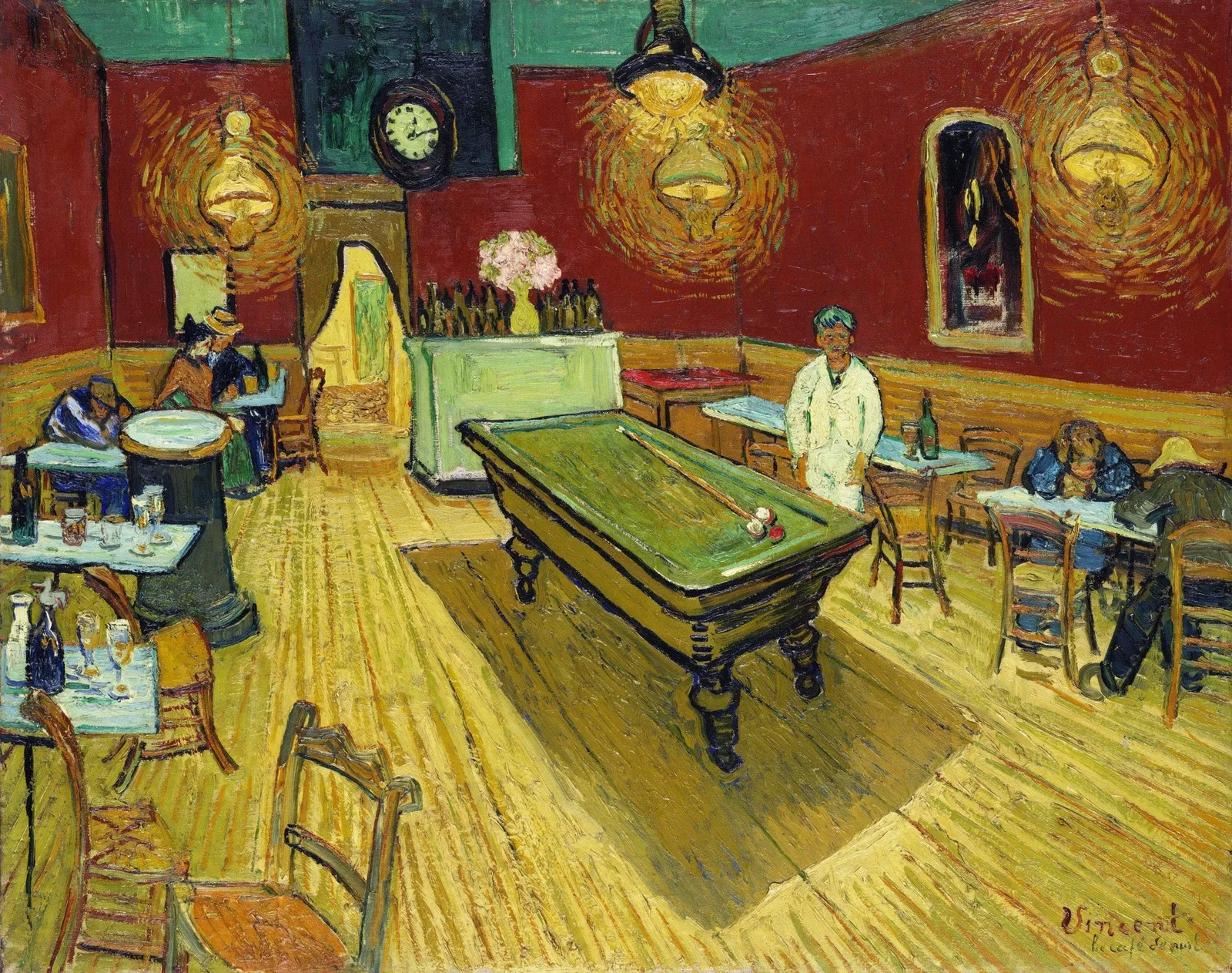
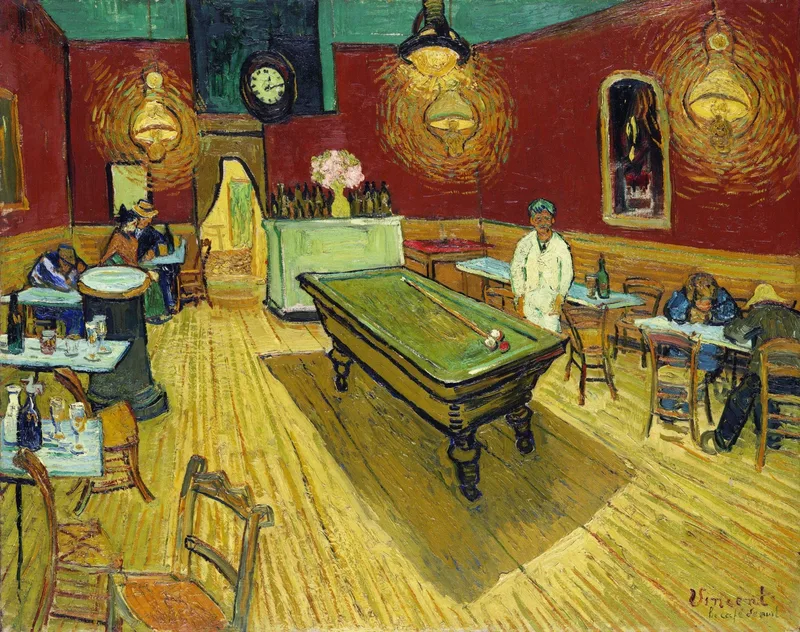
This is the darkest explanation he ever gave of a picture, and it is his own. On 9 September 1888 he wrote that he had tried to express "the idea that the café is a place where you can ruin yourself, go mad, commit crimes" [7]. The tools were color: "contrasts of delicate pink and blood-red and wine-red", with greens that clash, "in an ambience of a hellish furnace, in pale sulphur" [7].
He also wanted "the power of the dark corners of a grog-shop", yet "with the appearance of Japanese gaiety" [7]. He expected his old dealer Tersteeg to call it "a full-blown case of delirium tremens" [7]. The story of this and other grim pictures continues in 8 dark Van Gogh paintings.

Hand-painted in oilFrom $350See sizes
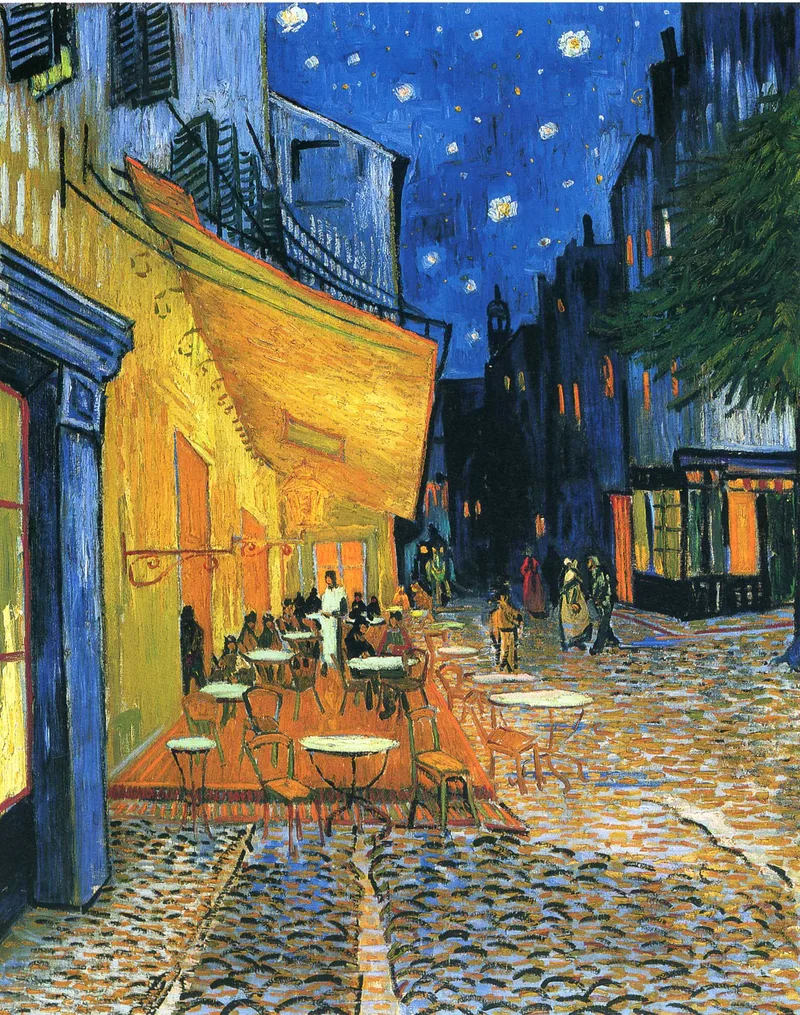
Café Terrace at Night (1888)
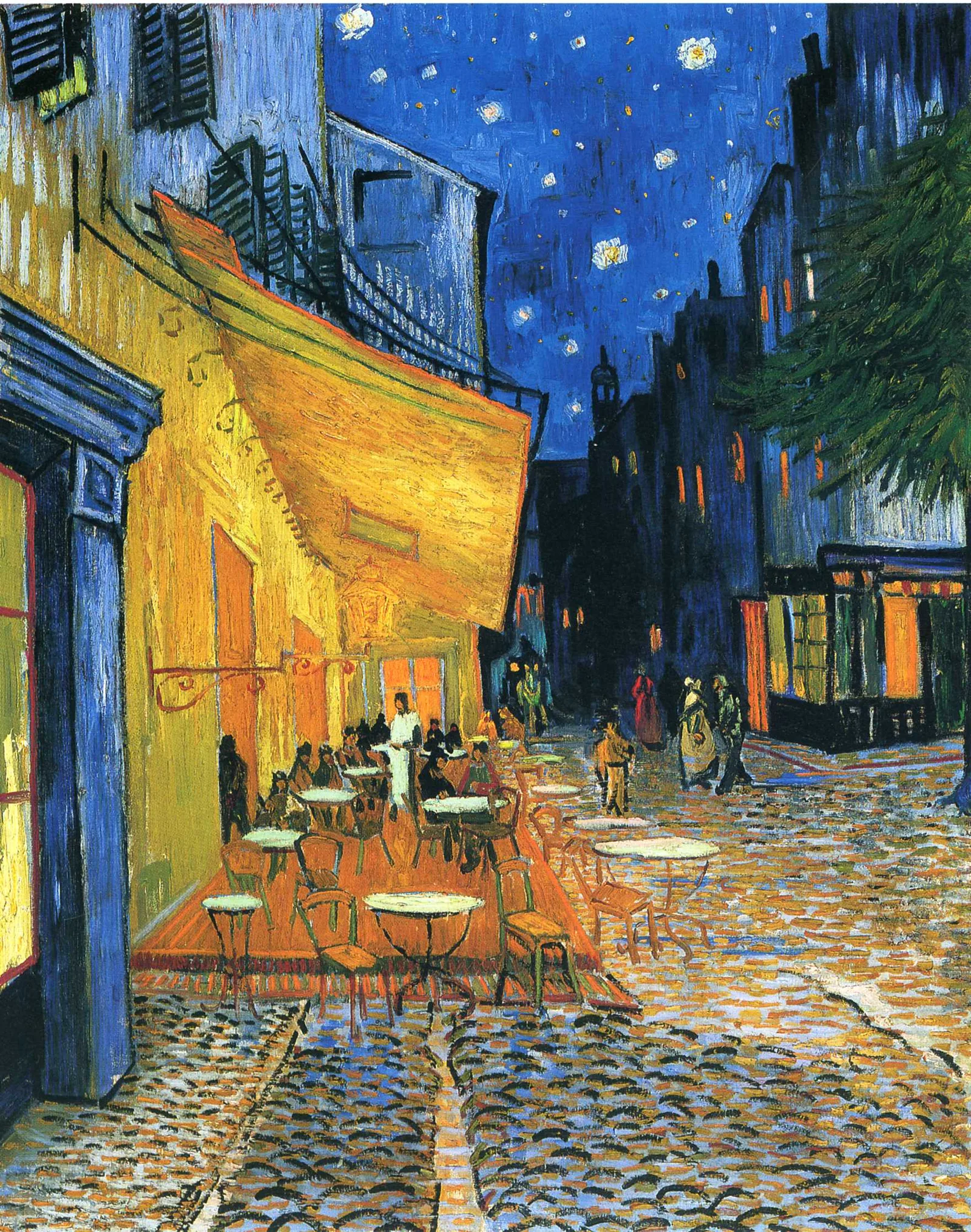
The same week he painted the opposite mood. In a letter to his sister Willemien, written between 9 and 14 September 1888, he describes the new picture: "A huge yellow lantern lights the terrace, the façade, the pavement", with "the blue sky studded with stars" above [8]. His claim: "Now there’s a painting of night without black." [8]
He painted it on the spot after dark, and knew the risk: he might "take a blue for a green in the dark". But it was "the only way of getting away from the conventional black night" [8]. A few lines earlier he had written: "It often seems to me that the night is even more richly coloured than the day." [8] For where the café terrace sits among his skies, see Van Gogh's night paintings.

Starry Night Over the Rhône (1888)
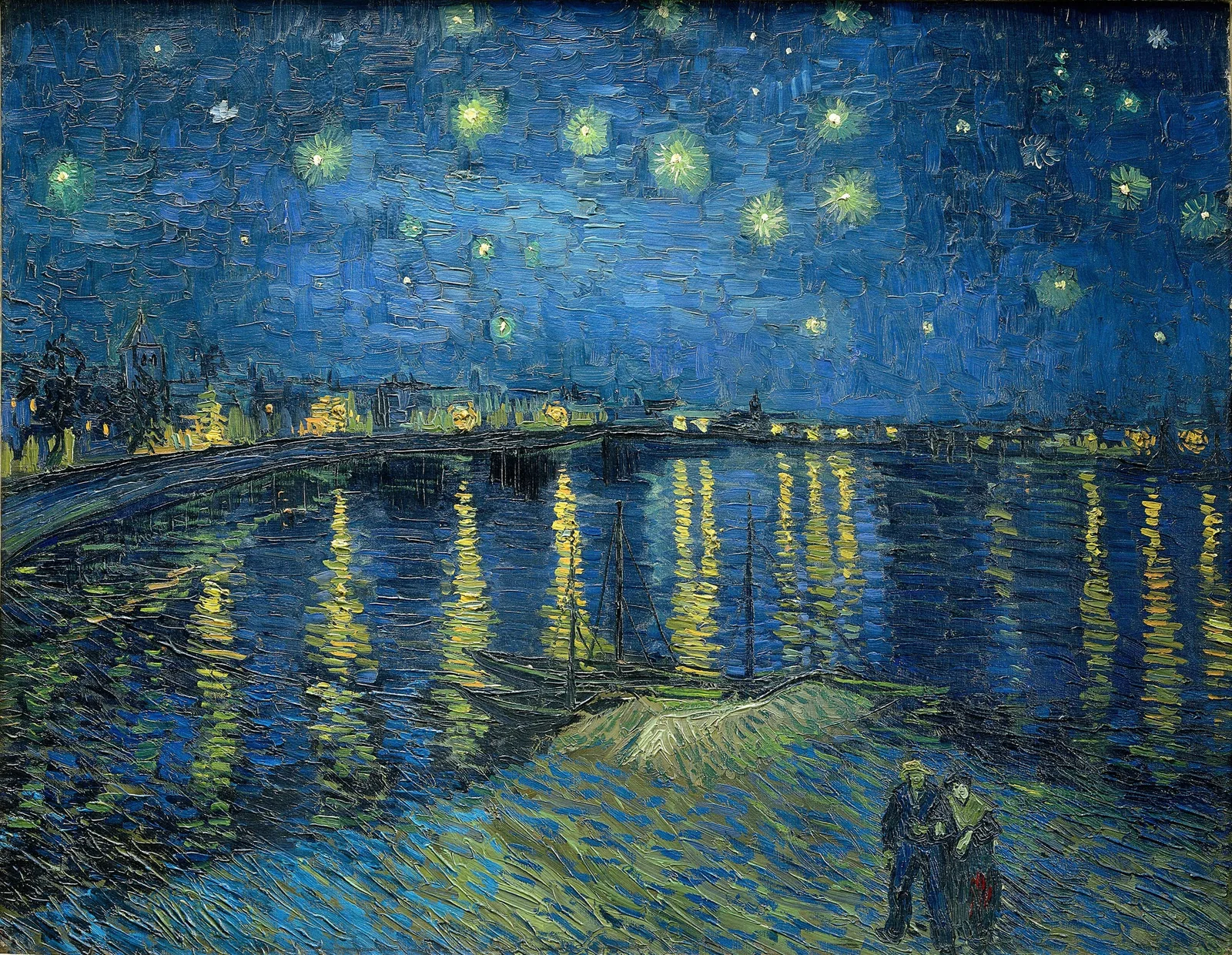
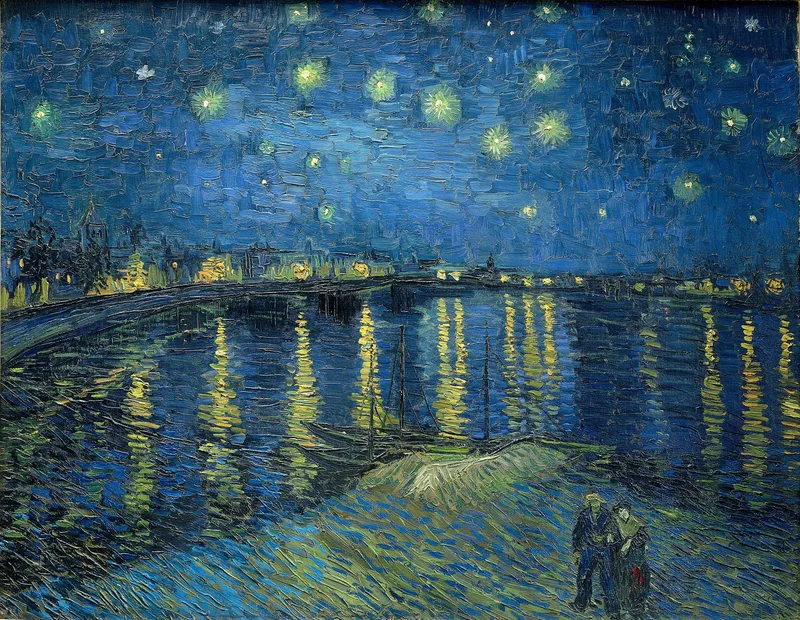
His first real starry sky was this one, and he announced it to Theo around 29 September 1888 as "the starry sky at last, actually painted at night, under a gas-lamp" [9]. He listed the colors like a recipe: "The sky is green-blue, the water is royal blue, the areas of land are mauve." [9] The Great Bear "has a green and pink sparkle whose discreet paleness contrasts with the harsh gold of the gaslight" [9].
In the foreground, he added, are "two small coloured figures of lovers" [9]. This is the Starry Night Over the Rhône, not the better-known New York picture.

Hand-painted in oilFrom $350See sizes
Self-Portrait Dedicated to Paul Gauguin (1888)
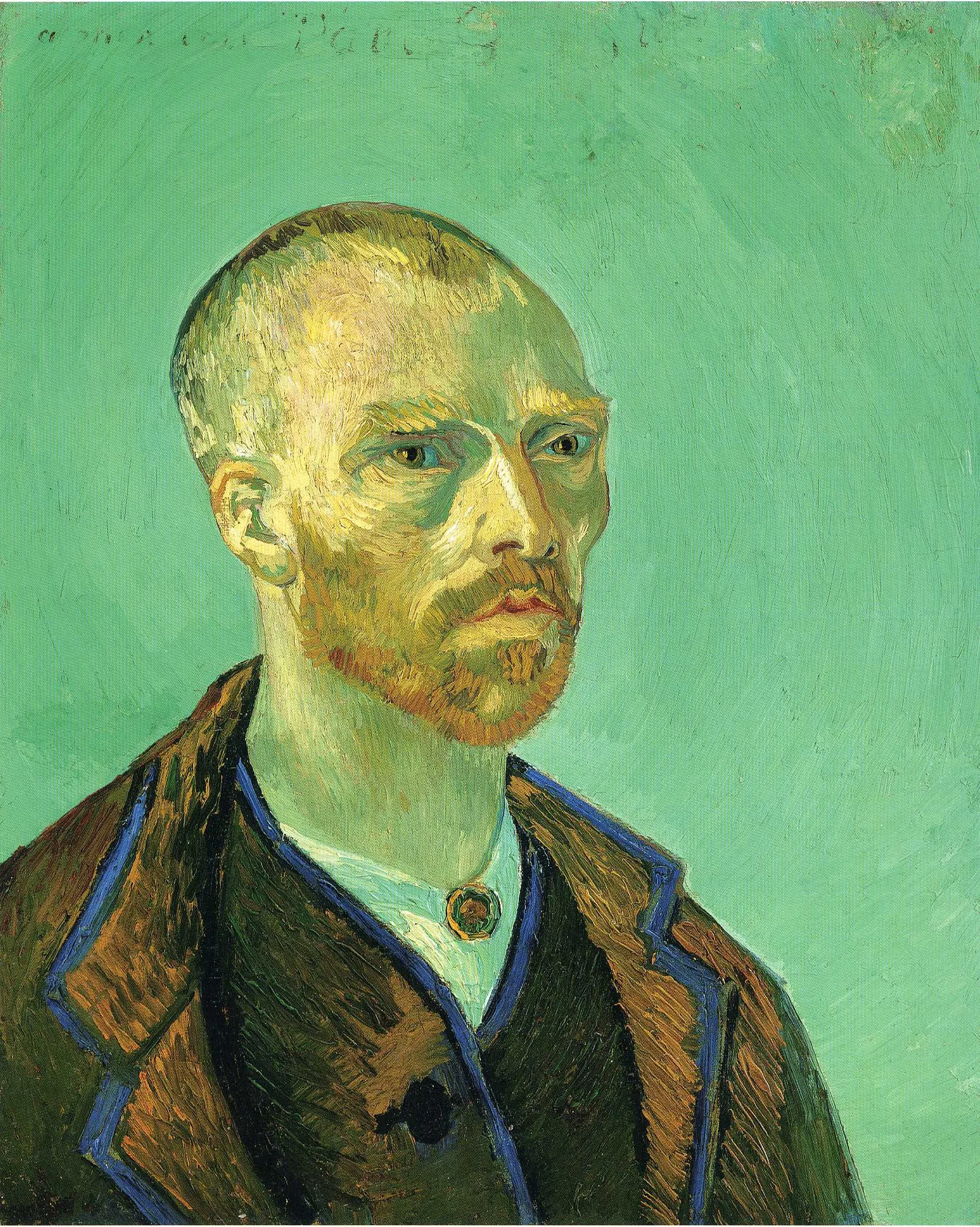
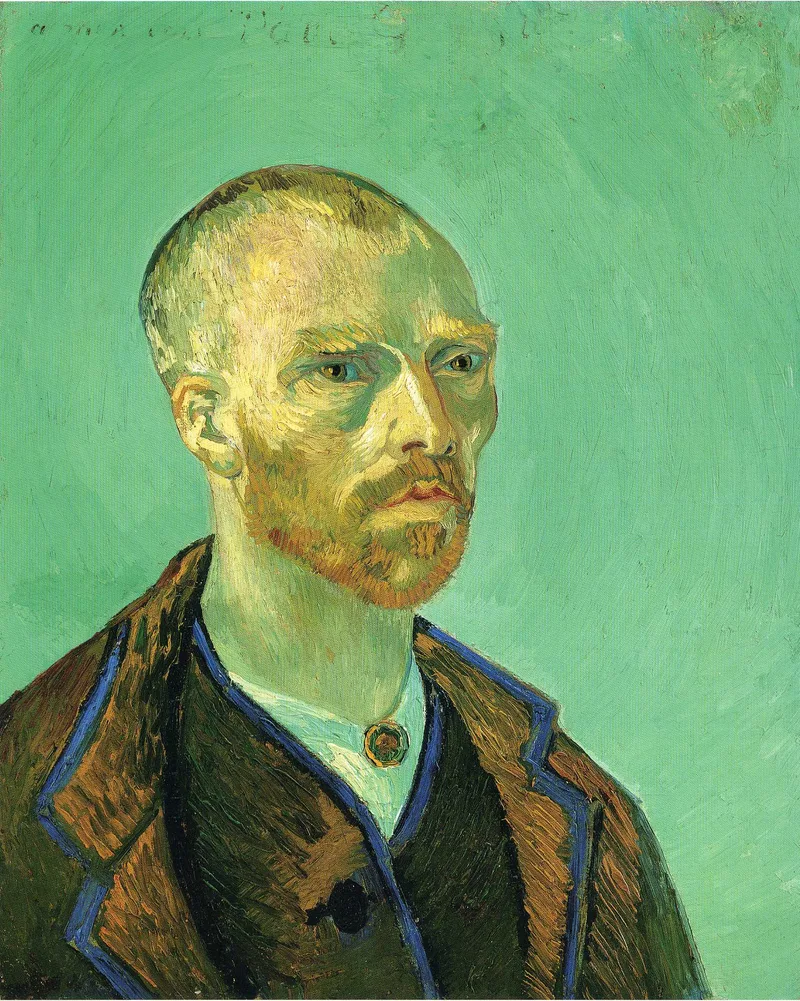
In the same letter to Willemien about the café at night, he adds: "I’ve also done a new portrait of myself, as a study, in which I look like a Japanese." [8] The letter does not name the picture, but the editors identify it as F 476, the portrait he dedicated to Gauguin, shown here [8]. Japanese prints were a constant reference for his flat colors and strong outlines.

Hand-painted in oilFrom $350See sizes
The Bedroom (1888)
On 16 October 1888 he sent Theo letter 705 with a sketch of the bedroom and said what it should do. The color was "to be suggestive here of rest or of sleep in general" [4]. "The walls are of a pale violet", the bed and chairs "fresh butter yellow", the blanket "scarlet red" [4]. Even the furniture had a job: "The solidity of the furniture should also now express unshakeable repose." [4] And a personal reason: "This to take my revenge for the enforced rest that I was obliged to take." [4]
The museum adds what the letter cannot. The strong contrasts we see today come from discoloration, and the walls and doors were originally purple rather than blue [2]. The odd angle of the rear wall is not a mistake: the corner of the room really was skewed [2].


“In short, looking at the painting should rest the mind, or rather, the imagination.”
La Berceuse (1889)
On 21 January 1889 he wrote to Gauguin that he had restarted his portrait of Augustine Roulin, the postman's wife, with the reds moving "through to pure oranges" and marrying "with the olive and Veronese greens" [10]. Then comes the meaning: placed in a boat, even one of Icelandic fishermen, "there would be some who would feel the lullaby in it" [10]. His aim was to make of painting what music had been: "a consolatory art for distressed hearts" [10].
Months later he said the same thing about the picture's people: he would have liked to paint "portraits of saints and of holy women from life" who "would be citizens of the present day" [11]. That is the La Berceuse he wanted, a modern icon.


Self-Portrait (1889)
In the same letter 801, written on 10 September 1889 from Saint-Rémy, he compared the hospital orderly he had just painted with himself. The orderly has "something military about him", while in his own portrait "the gaze is vague and veiled" [11]. The editors identify that portrait as F 627 [11]. It is his own description of the face, written by a man recovering from an attack, and it fits what you see: a stare turned half inward, in a sea of swirling blue-green. More faces are in Van Gogh's self-portraits.


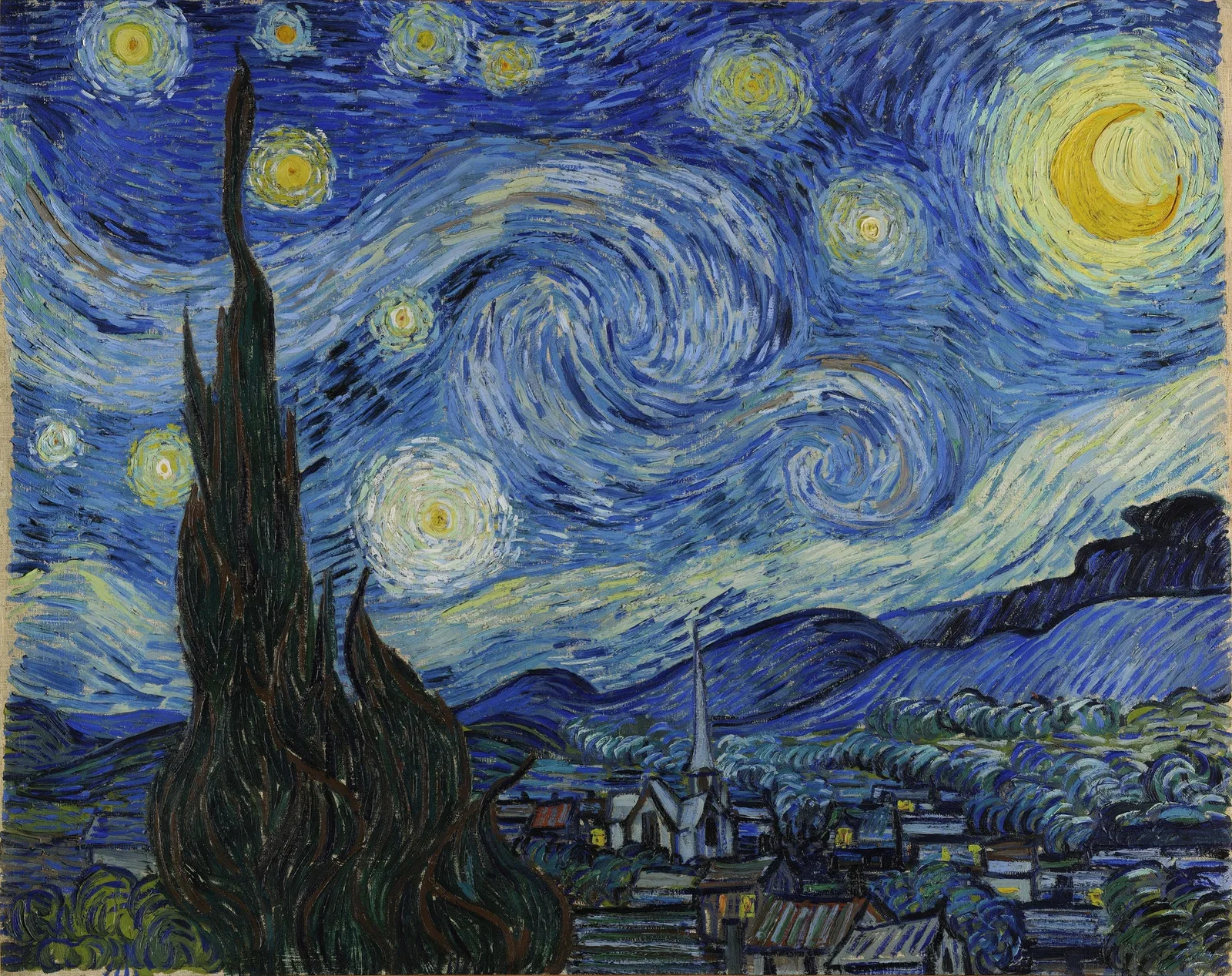
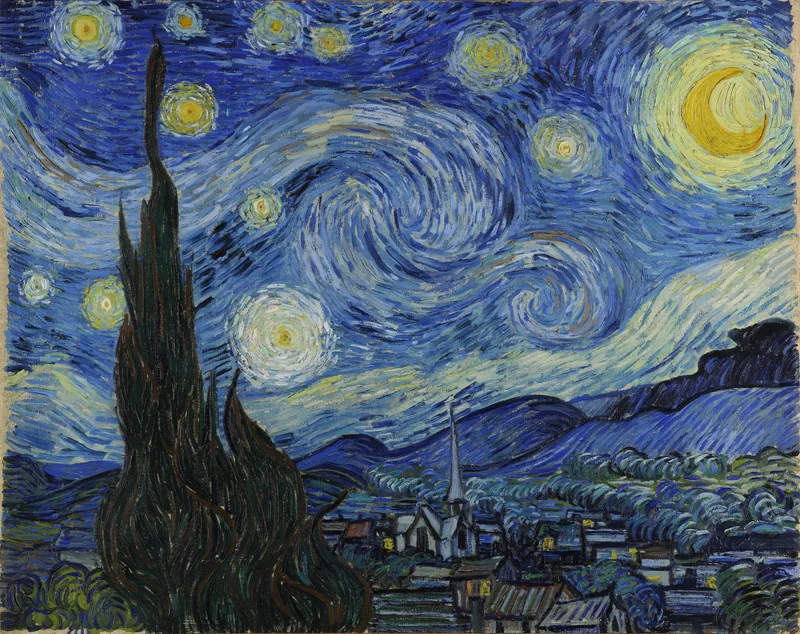
The Starry Night (1889)
Here the painter and the museum part ways. Writing to Emile Bernard around 26 November 1889, in letter 822, he recalled being led into "abstraction" while Gauguin was in Arles, and called it "enchanted ground" [6]. Then: "However, once again I’m allowing myself to do stars too big, &c., new setback, and I’ve enough of that." [6] The editors note that he seems to mean The Starry Night, and that in earlier letters he had defended it to Theo [6]. What he wanted now was "immersing oneself in reality again, with no plan made in advance" [6].
MoMA supplies the facts and a reading. The facts: the picture was inspired by the view from his window at the Saint-Paul-de-Mausole asylum, painted in several sessions during the day, with a village based on other views [5]. The reading: MoMA writes that he "assigned an emotional language to night and nature that took them far from their actual appearances", and suggests the cypress "could be seen as a bridge between life, as represented by the earth, and death, as represented by the sky" [5]. Those are interpretations, not Van Gogh's words. Where it hangs is in where The Starry Night is today.
Wheatfield with Crows (1890)
A letter to Theo and Jo around 10 July 1890, written in Auvers-sur-Oise, is the nearest thing to his own explanation of these pictures. He had painted three large canvases: "They’re immense stretches of wheatfields under turbulent skies, and I made a point of trying to express sadness, extreme loneliness." [12] Then the other half: "these canvases will tell you what I can’t say in words, what I consider healthy and fortifying about the countryside." [12]
The letters' editors say the most likely candidates for the two wheatfield canvases are Wheatfield under Thunderclouds and Wheatfield with Crows, an inference from his description, not his naming [12]. He does not call the crows an omen. The darker legend came later, and the quote shows he meant both things at once: loneliness and health.


Daubigny's Garden (1890)
The third canvas in the same letter is a different mood. "Now the third canvas is Daubigny’s garden, a painting I’d been thinking about ever since I’ve been here." [12] The letter says no more about it. The editors say the version meant in the letter is the first of two large canvases [12]. It shows that the same week that produced the stormy skies also produced a quiet, green garden.


Questions and answers
What is the meaning behind The Starry Night painting?
What is the deeper meaning behind Vincent van Gogh's paintings?
Did Vincent van Gogh believe in Jesus?
Faith mattered to him. On 10 September 1889 he told Theo, "in the very suffering religious thoughts sometimes console me a great deal", and he described painting a copy of Delacroix's Pietà, saying such works edify him [11]. He was also disturbed by the women at the asylum who believed in the Virgin of Lourdes [11].
Why did Van Gogh paint so many sunflowers?
Written and fact-checked by the Vincent van Gogh Paintings editorial desk12 sourcesUpdated
Sources
- Vincent van Gogh, The Letters: letter 497 to Theo van Gogh, Nuenen, 30 April 1885, with notesAccessed
- Van Gogh Museum: The Bedroom, s0047V1962Accessed
- Van Gogh Museum: Sunflowers, s0031V1962Accessed
- Vincent van Gogh, The Letters: letter 705 to Theo van Gogh, Arles, 16 October 1888, with notesAccessed
- The Museum of Modern Art: Vincent van Gogh, The Starry Night, 472.1941Accessed
- Vincent van Gogh, The Letters: letter 822 to Emile Bernard, Saint-Rémy, on or about 26 November 1889, with notesAccessed
- Vincent van Gogh, The Letters: letter 677 to Theo van Gogh, Arles, 9 September 1888, with notesAccessed
- Vincent van Gogh, The Letters: letter 678 to Willemien van Gogh, Arles, 9 to about 14 September 1888, with notesAccessed
- Vincent van Gogh, The Letters: letter 691 to Theo van Gogh, Arles, about 29 September 1888, with notesAccessed
- Vincent van Gogh, The Letters: letter 739 to Paul Gauguin, Arles, 21 January 1889, with notesAccessed
- Vincent van Gogh, The Letters: letter 801 to Theo van Gogh, Saint-Rémy, 10 September 1889, with notesAccessed
- Vincent van Gogh, The Letters: letter 898 to Theo and Jo van Gogh-Bonger, Auvers-sur-Oise, on or about 10 July 1890, with notesAccessed
Hand-painted oil reproductions
Paintings in this guide
 The Potato EatersVincent van GoghFrom$350
 Café Terrace at Night (Place du Forum, Arles)Vincent van GoghFrom$350
 The Starry NightVincent van GoghFrom$350
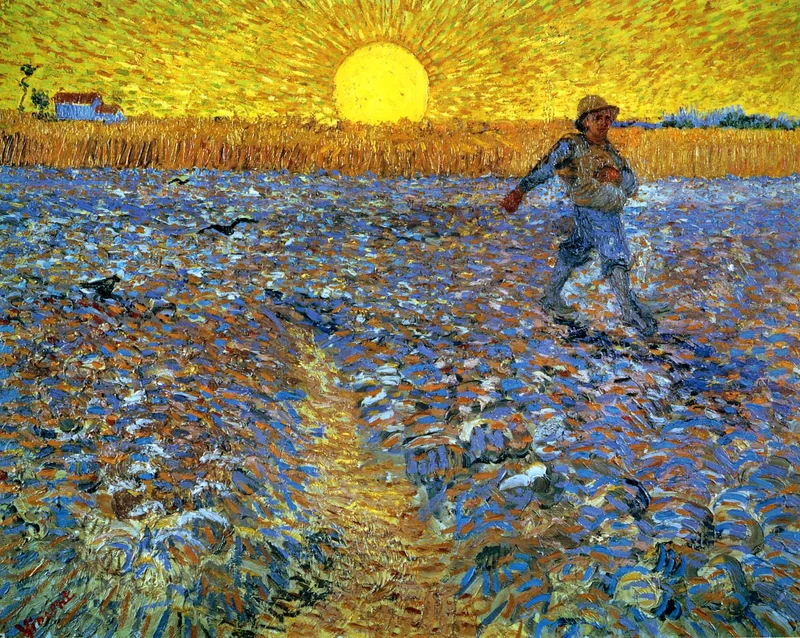 The Sower (Sower with Setting Sun)Vincent van GoghFrom$350
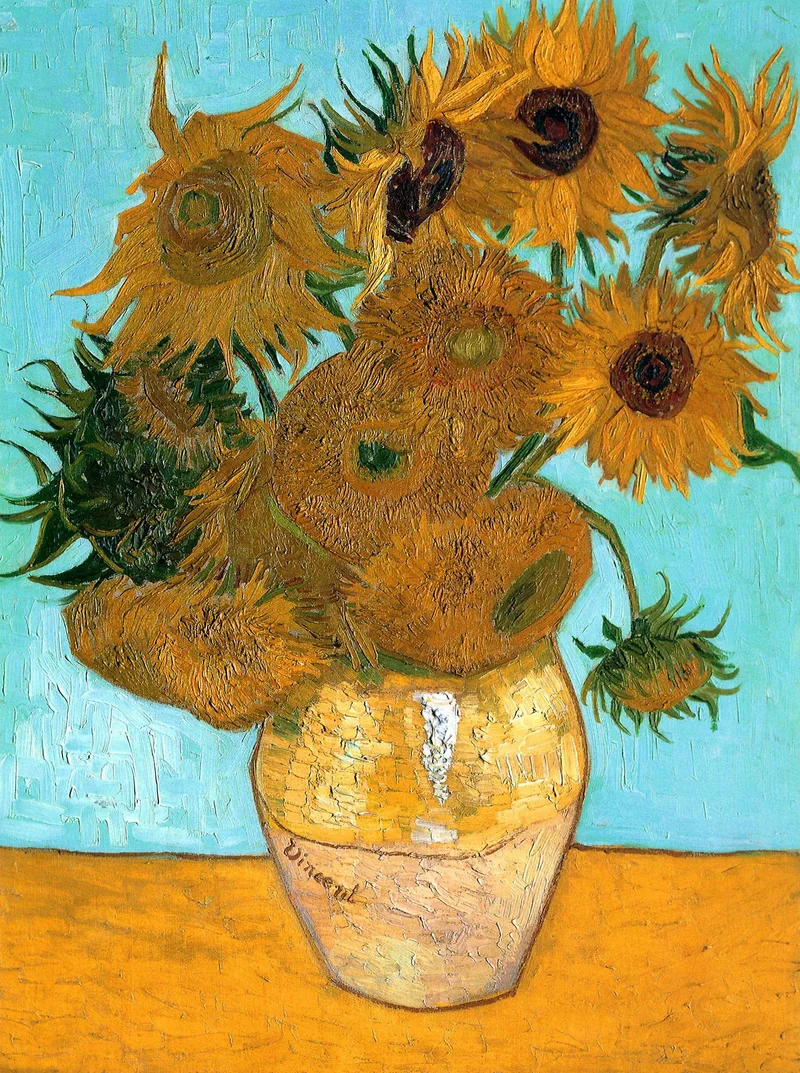 Still Life - Vase with Twelve SunflowersVincent van GoghFrom$350
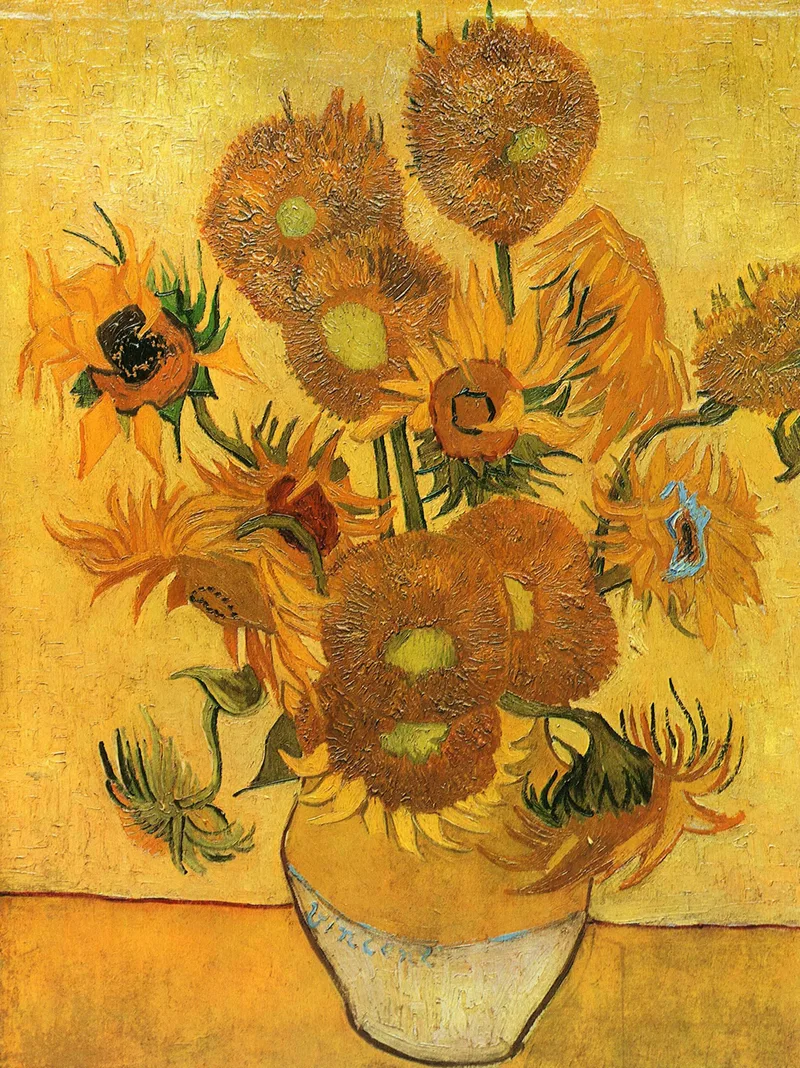 Still Life - Vase with Fifteen SunflowersVincent van GoghFrom$350
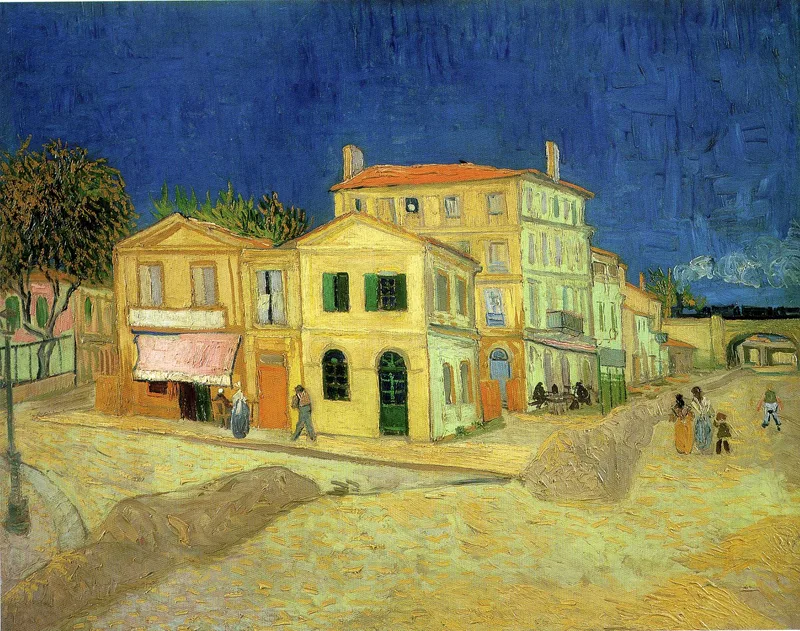 The Yellow HouseVincent van GoghFrom$350
 The Night CafeVincent van GoghFrom$350
 Starry Night Over the RhoneVincent van GoghFrom$350
 Self Portrait Dedicated to Paul GauguinVincent van GoghFrom$350