Guide
Is Van Gogh's Art in the Public Domain? What You Can Use
Short answer, yes. Here are real paintings you can get from museum sites, and the few modern layers that still have rules.
Yes: Van Gogh died in 1890, and the copyright in Van Gogh’s paintings, drawings and letters ran out long ago in the EU and the US, apart from edge cases. [1][2][3] What can still carry conditions are newer layers on top, such as a museum’s image files and trademarks. Below are paintings four museums offer online, with their policies as of October 2026. Not legal advice.
Why is Van Gogh’s work in the public domain?
Because the term ran out. In the European Union, an author’s rights “shall run for the life of the author and for 70 years after his death,” and every term is counted from the first day of January of the year after the event that starts it. [2] Van Gogh died in 1890. [1] Counting 70 years from January 1, 1891, protection under that rule ended at the end of 1960.
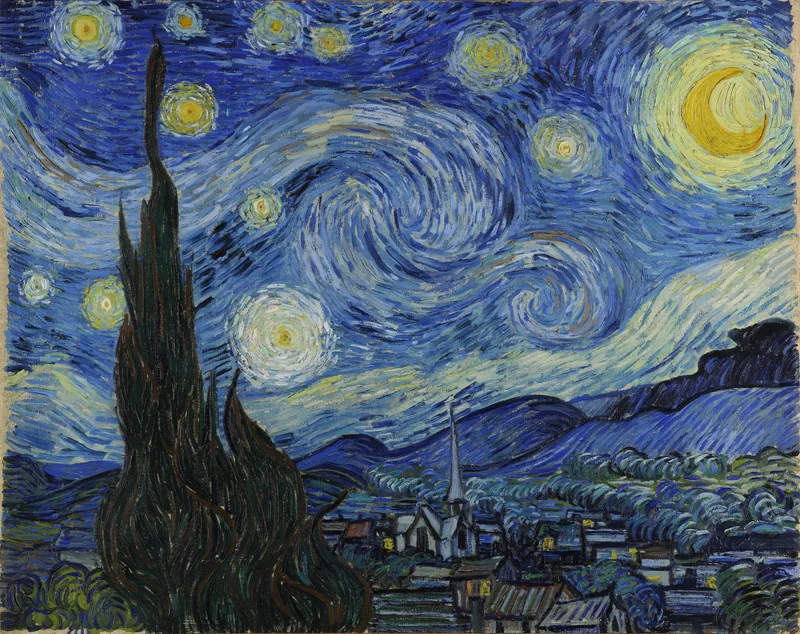
The United States uses different rules for older works. The Copyright Office states that “all works published in the United States before January 1, 1931, are in the public domain.” Works that were neither published nor registered before 1978 generally run for life plus 70 years, with a guaranteed minimum that ran to December 31, 2002. [3] Either way, his paintings, The Starry Night included, are outside copyright today, apart from the edge cases below, and the Cleveland Museum of Art shares its Van Gogh among the public-domain artworks it offers under CC0. [1][7]
What does public domain let you do?
In the words of the EU’s 2019 copyright directive, the end of the term “entails the entry of that work into the public domain and the expiry of the rights that Union copyright law provides in relation to that work.” [5] So painting a new version of Café Terrace at Night or turning Almond Blossom into a quilt pattern raises no question of Van Gogh’s own copyright.
New additions can be protected. The US Copyright Office says a derivative visual art work “may be registered if the author of that work contributed a sufficient amount of new authorship,” and lists lithographs based on paintings as an example. The new material “must be original and copyrightable in itself,” and “mere coloration or mere variations in coloring alone” do not qualify. [4] The Van Gogh underneath stays free for everyone, including anyone working through our easy Van Gogh paintings to copy.
What you can use, museum by museum
Public domain describes the painting. The picture file you download comes from a museum, and each one explains its own terms. Here is how four of them describe their Van Gogh images, as of October 2026. [1][6][7][9][10][11]
Pick a museum below to see the paintings it releases and the wording it uses. For a wider tour of the artist’s best-known canvases, start with 15 famous Van Gogh paintings.
| Museum | What it says about images | Paintings shown here |
|---|---|---|
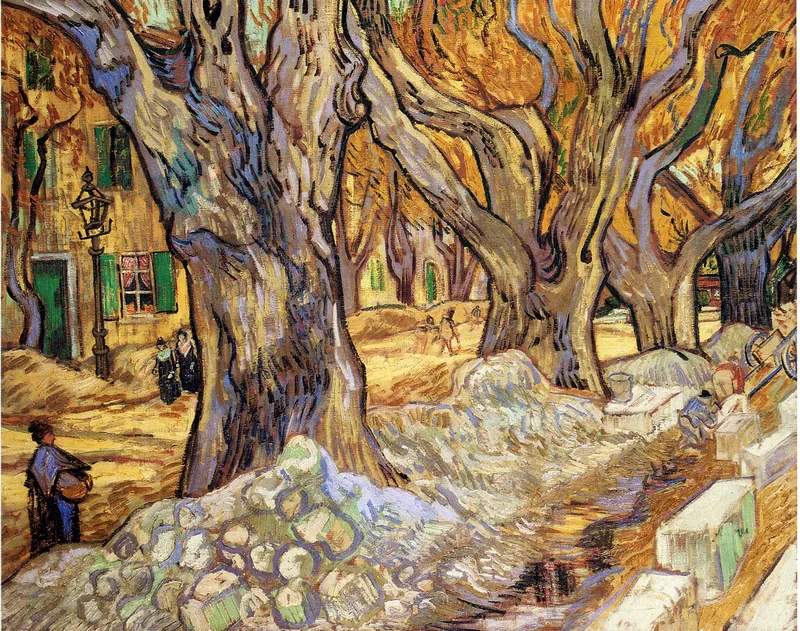
| Cleveland Museum of Art | Public-domain works released under Creative Commons Zero; no permission needed [7] | The Large Plane Trees |
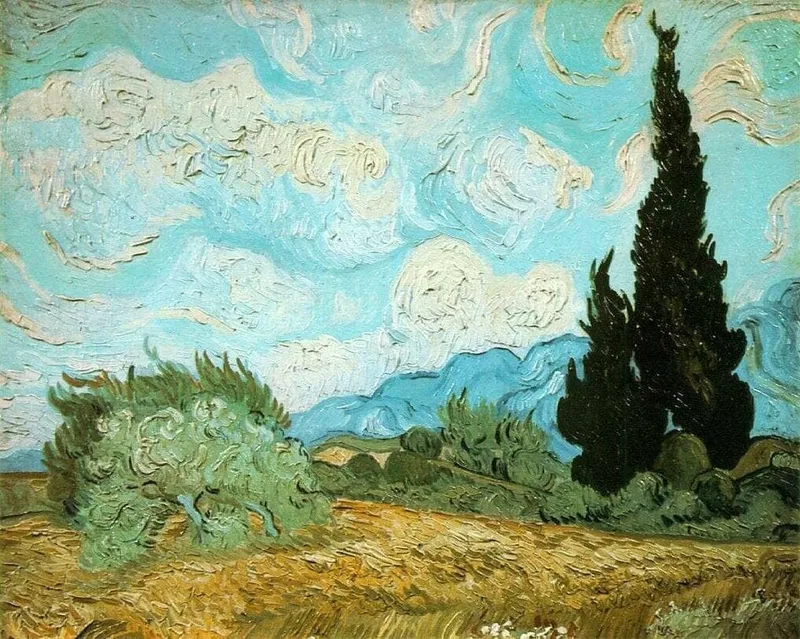
| The Metropolitan Museum of Art | Open Access works carry a CC0 icon; the API serves public-domain images [9][10] | Wheat Field with Cypresses, Cypresses, Irises, Sunflowers |
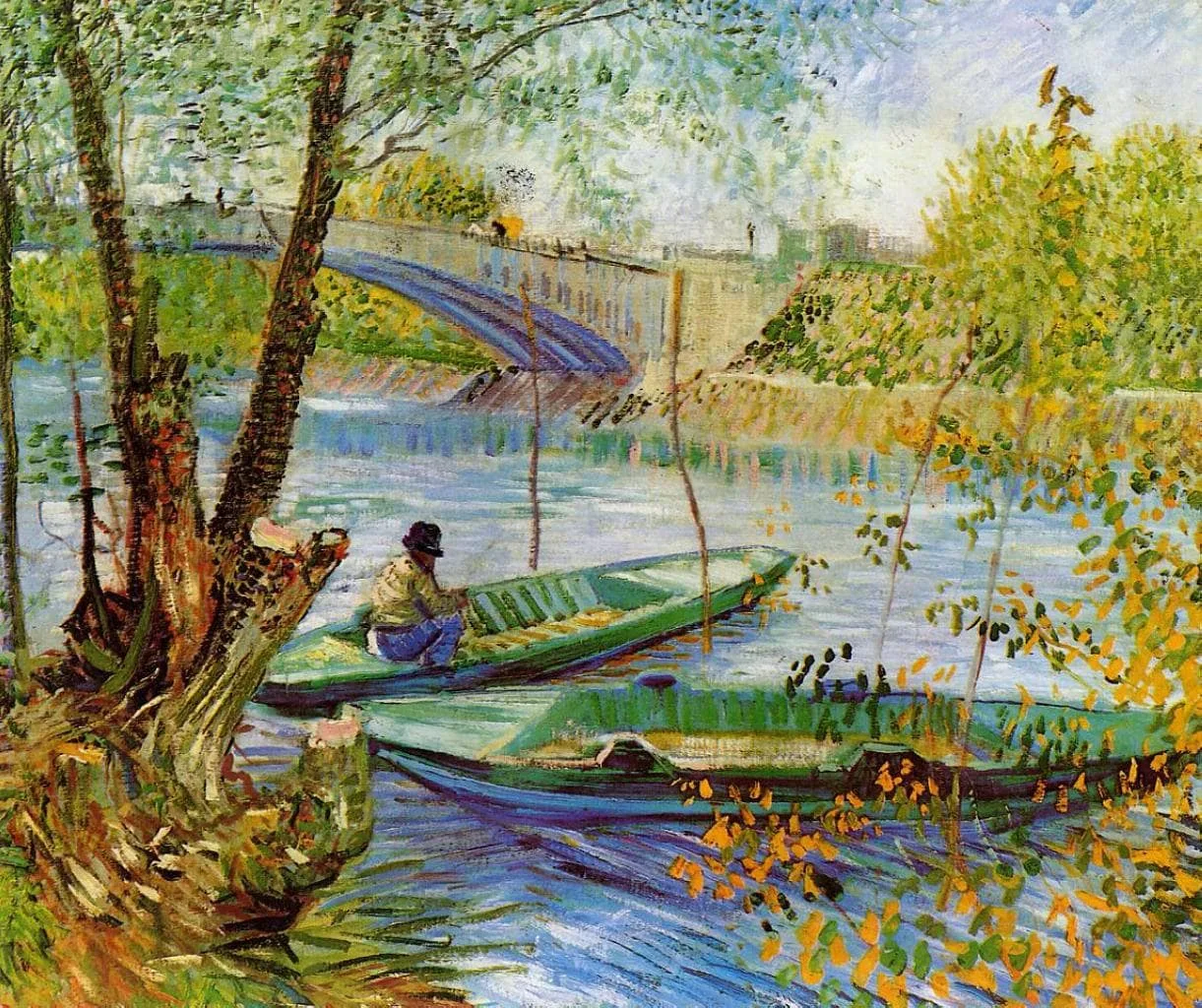
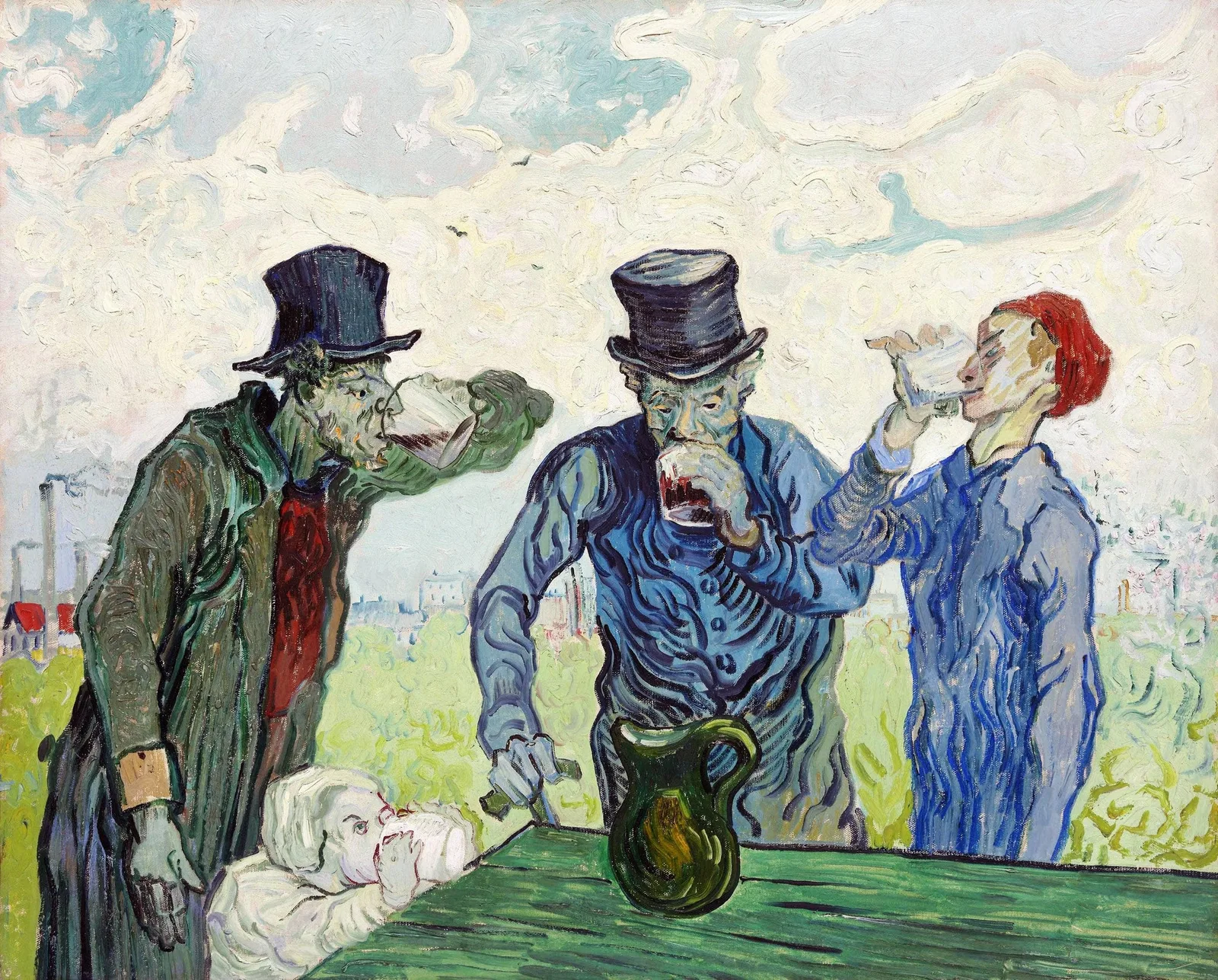
| Art Institute of Chicago | API tags each artwork as public domain or not; other terms are on its licensing pages [11] | Self-Portrait, Fishing in Spring, The Drinkers, The Poet’s Garden, The Bedroom |
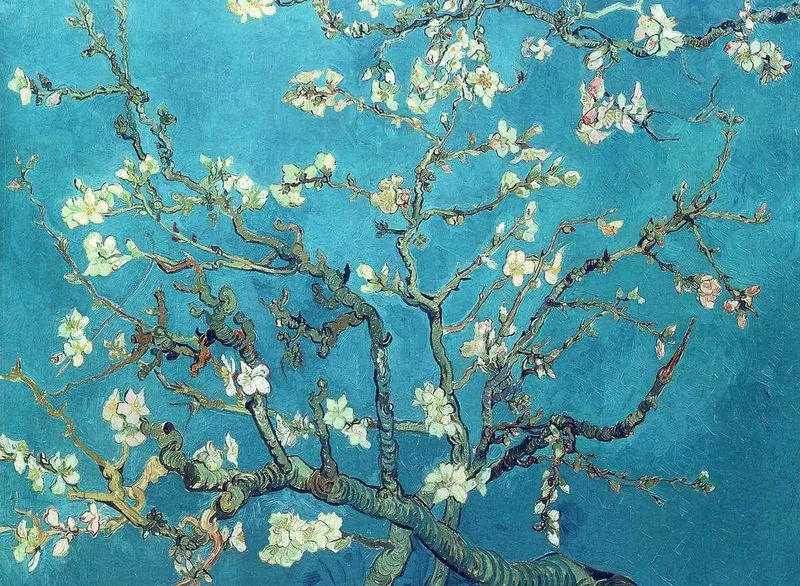
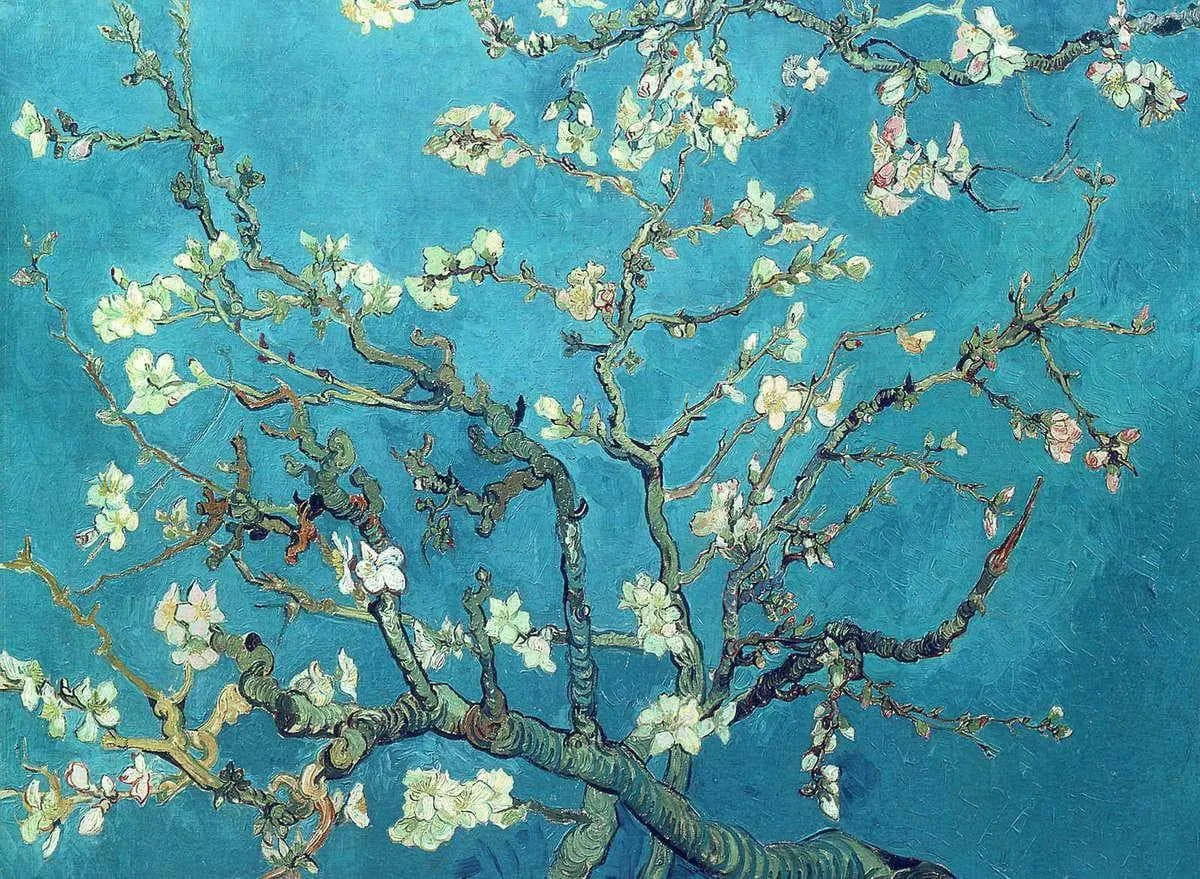
| Van Gogh Museum | Free download for non-commercial use with full credits; commercial use by request [6] | Almond Blossom |
A summary of each museum’s published wording, not legal advice. [6][7][9][10][11]
Cleveland Museum of Art: CC0 for its public-domain works
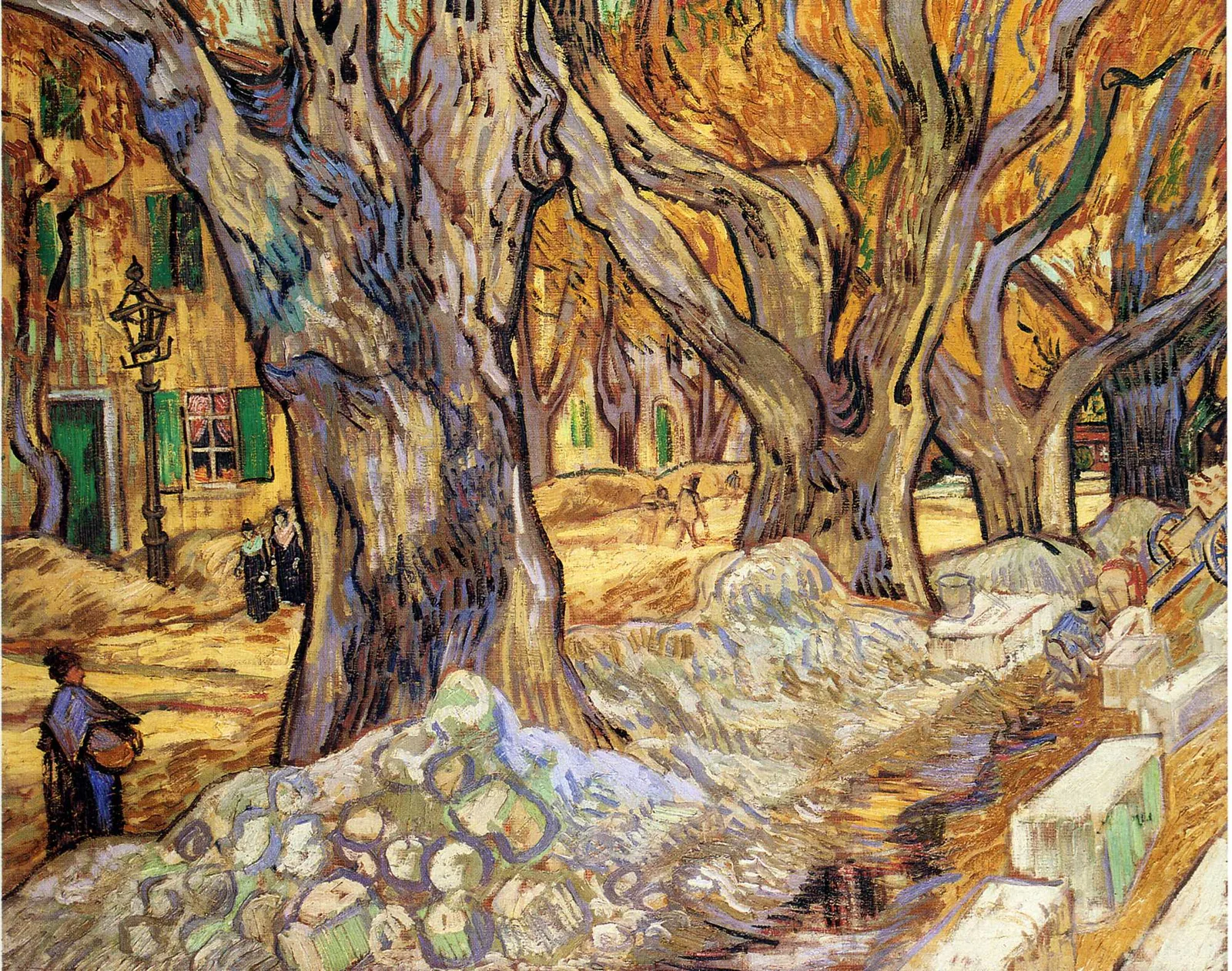
The Cleveland Museum of Art releases images of its public-domain artworks under Creative Commons Zero, so people can download, share, remix and reuse them “all without asking permission.” [7] Its record for The Large Plane Trees says: “You can copy, modify, and distribute this work, all without asking permission.” [1]
CC0 content needs no attribution or citation, but Cleveland’s terms say that citing its CC0 content does not grant permission to use the museum’s trademarks without prior approval. [7] Whether the name Van Gogh can be used on a product is a trademark question, not a copyright one, and this page does not try to settle it.
Hand-painted in oilFrom $350See sizes
The Met: Open Access paintings with a CC0 icon
The Metropolitan Museum of Art waives its rights in its Open Access datasets using Creative Commons Zero, and identifies the covered artworks on its collection pages “with the Creative Commons Zero (CC0) icon.” [9] Its API describes access to “corresponding high resolution images (JPEG format) that are in the public domain,” and each object record has an isPublicDomain field. [10]
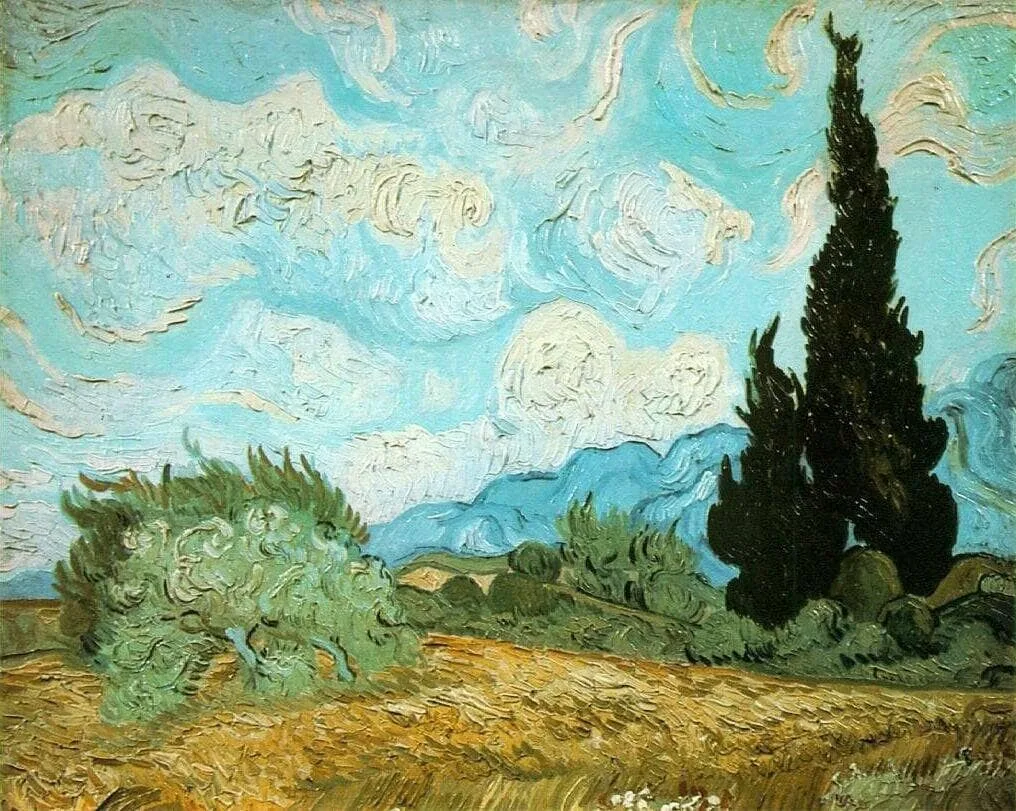
As of October 2026, the Met’s records flag these Van Gogh paintings, among others, as public domain: Wheat Field with Cypresses (1889), Cypresses (1889), Irises (1890) and Sunflowers (1887). [10] The Met’s own page on image use was not reachable when this guide was written, so check its Open Access page before a large project. For the fading of yellows in the sunflower paintings, see why Van Gogh’s sunflowers are fading.


Art Institute of Chicago: paintings tagged public domain
The Art Institute of Chicago’s API tags each artwork as public domain or not, and its developer documentation recommends “only using images from artworks that are tagged as public domain.” [11] For those works it also offers a larger image size, and it says the data in its artwork records, apart from the description field, is under a Creative Commons Zero designation. [11] The museum also warns that some images reachable through its image service are not public domain, and that “it is up to you to determine whether or not you are allowed to use these images.” [11]
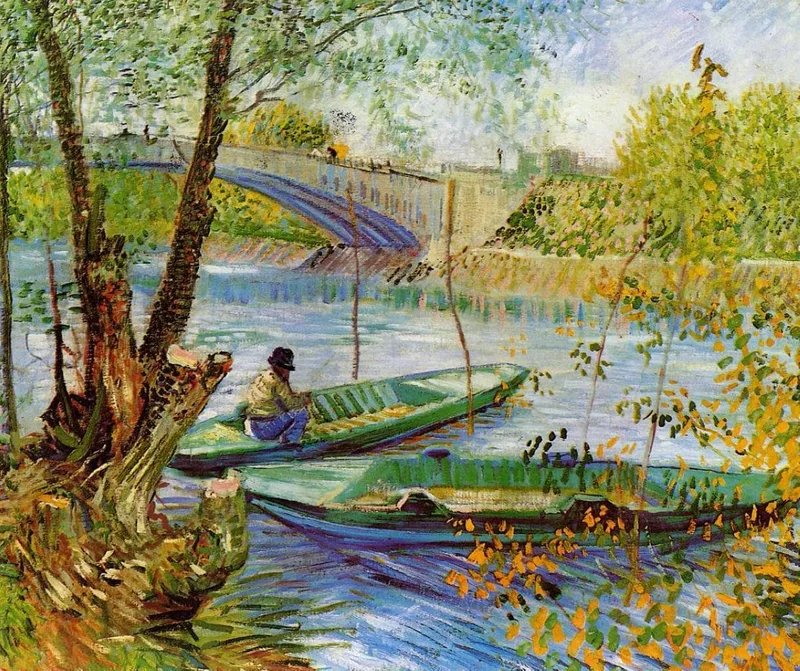
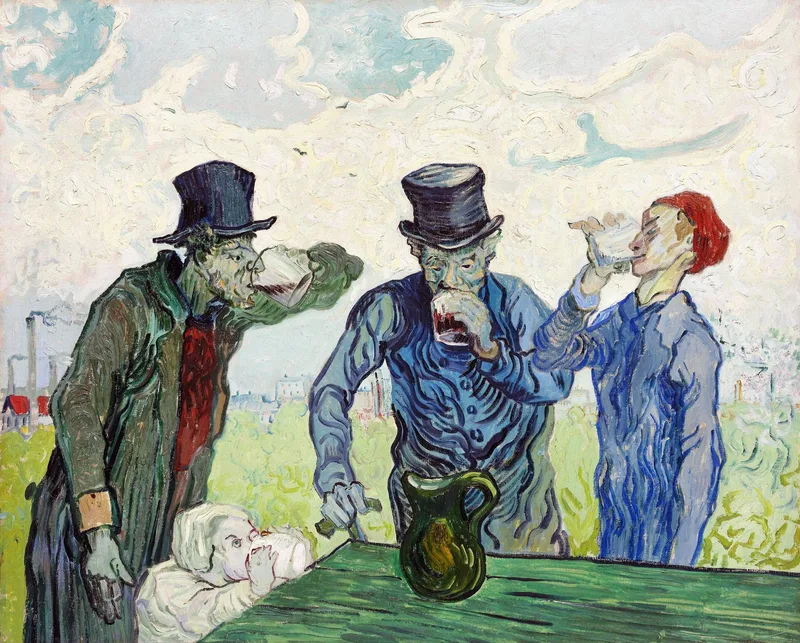
As of October 2026, the API tags these Van Gogh paintings as public domain: Self-Portrait (1887), Fishing in Spring, the Pont de Clichy (1887), The Drinkers (1890), The Poet’s Garden (1888) and The Bedroom (1889). [11] The museum’s image-licensing pages were not reachable here, and the API says it defers to them “in all legal respects,” so read them for any real project. [11] For the Amsterdam collection, see the Van Gogh Museum’s best paintings. For the people in his portraits, see Van Gogh’s self-portraits.

Hand-painted in oilFrom $350See sizes
Hand-painted in oilFrom $350See sizes


Van Gogh Museum: free for non-commercial use
The Van Gogh Museum sets conditions on how its images are used. Images on its website “can be downloaded for free for non-commercial use,” such as research, private study, non-profit publications, personal websites, blogs and social media, and you must “always include the full credits.” [6] Commercial use goes through a request to the museum. [6]
Almond Blossom, painted in Saint-Rémy in February 1890, carries the credit line the museum asks you to state: “Van Gogh Museum, Amsterdam (Vincent van Gogh Foundation).” [12] The painting is public domain either way; the rule above is about the museum’s image file.
Do museum photos of his paintings have their own copyright?
A faithful photo usually adds none. The US Copyright Office will not register a photograph that is “merely a ‘slavish copy’ of a painting, drawing, or other public domain or copyrighted work,” and says “merely scanning and digitizing existing works” is not creative enough either. [4]
The EU wrote the same idea into law in 2019. Once the term of a work of visual art has expired, “any material resulting from an act of reproduction of that work is not subject to copyright or related rights,” unless that material is original in the sense that it is the author’s own intellectual creation. [5] The directive adds that this “should not prevent cultural heritage institutions from selling reproductions, such as postcards.” [5]
Two limits remain. Most photographs do qualify for copyright, so one with enough creative expression of its own can be a new work. And these are US registration practice and EU law; other countries can treat museum photography differently. [4][5]
Are there any exceptions?
A few edge cases exist. In the US, works created before 1978 but not published or registered by then had a guaranteed term to December 31, 2002, and if one was published before that date, “the term extends another 45 years, through the end of 2047.” [3] In the EU, anyone who first lawfully publishes a previously unpublished work after copyright has expired gets protection “equivalent to the economic rights of the author” for 25 years. [2] A newly published sketch or letter is the kind of case to take to a lawyer; for rediscoveries, see lost Van Gogh paintings that were found.
Moral rights are a national matter, too: the EU term directive is “without prejudice to the provisions of the Member States regulating moral rights.” [2] For any specific project, the answer depends on the country, the material and the use.
Questions and answers
Is Starry Night still copyrighted?
Not the painting itself. The Starry Night is Van Gogh’s own work of 1889, now in the Museum of Modern Art in New York. [8] His rights ended under the same rules as the rest of his work: life plus 70 years in the EU, and the US rules for older works. [2][3] A given photo or file of it can still carry its holder’s terms. [6][7]
What famous paintings are copyright free?
Any painting whose copyright term has run out. In the EU that term is generally the author’s life plus 70 years [2], and in the US every work published there before January 1, 1931, is in the public domain. [3] Museums such as the Met and Cleveland share such works with a CC0 icon or designation. [7][9]
If Van Gogh is in the public domain, why are there restrictions on museum images?
Can you download Van Gogh paintings in high resolution for free?
Written and fact-checked by the Vincent van Gogh Paintings editorial desk12 sourcesUpdated
Sources
- Cleveland Museum of Art: Vincent van Gogh, The Large Plane Trees (Road Menders at Saint-Rémy), 1889, 1947.209Accessed
- Directive 2006/116/EC on the term of protection of copyright and certain related rights (Articles 1, 4, 8 and 9)Accessed
- U.S. Copyright Office, Circular 15A: Duration of Copyright (revised 04/2026)Accessed
- U.S. Copyright Office, Compendium of U.S. Copyright Office Practices, Third Edition, Chapter 900: Visual Art Works (sections 906.3, 907.1 and 909.3(A))Accessed
- Directive (EU) 2019/790 on copyright and related rights in the Digital Single Market (Article 14 and recital 53)Accessed
- Van Gogh Museum: Use and Permissions of Collection ImagesAccessed
- Cleveland Museum of Art: Open AccessAccessed
- Vincent van Gogh, The Letters: letter 782 to Theo, Saint-Rémy, on or about 18 June 1889, with note 8Accessed
- The Metropolitan Museum of Art: Open Access (metmuseum/openaccess README)Accessed
- The Met Collection API documentation and object records 436524, 436528, 436535, 437980Accessed
- Art Institute of Chicago API documentation and artwork records 14586, 28560, 79349, 80607, 109314Accessed
- Van Gogh Museum: Almond Blossom (s0176V1962)Accessed
Hand-painted oil reproductions