
Guide
Van Gogh Paintings Found in Attics, Bags and Under Paint
One came out of an attic, one home in a shopping bag, and some were hiding under other paintings all along


Van Gogh paintings do turn up, but rarely: Sunset at Montmajour came out of a Norwegian attic in 2013, a stolen canvas came home in an IKEA bag in 2023, and X-rays keep finding older pictures under the paint [1][5][6][8]. These are chosen cases, grouped by where the painting was hiding, plus one claim that failed [3]. They are all part of the story of Van Gogh's paintings.
In an attic: Sunset at Montmajour
This is the big one, and it is the painting at the top of this page. Van Gogh described it in a letter to Theo the day after he made it, which dates it to July 4, 1888, in his months in Arles [1]. It was listed in Theo's collection in 1890, sold in 1901, and bought by a Norwegian collector in 1908. When it was declared a fake, he banished it to his attic [1].
Its owners took it to the Van Gogh Museum in 1991 and were privately told it was not authentic; the museum had rejected it partly because it was not signed [1][2]. A second opinion changed everything. In 2013 the museum declared it authentic, after research into its style, technique, paint, canvas, the letters and its provenance, and exhibited it in Amsterdam from September 24, 2013 [1][2].
In a bag: The Parsonage Garden in an IKEA bag
In March 2020 a masked man used a sledgehammer to break two layers of glass at the Singer Laren museum and walked out with The Parsonage Garden at Nuenen in Spring (1884), a painting owned by the Groninger Museum [6]. On September 11, 2023, a man dropped off a bright blue IKEA bag at the home of the art sleuth Arthur Brand. Inside was the painting, in bubble wrap, tucked in a blood-stained pillow [6].
The conservator Marjan de Visser then restored it and even removed details another artist had added to the woman's face later, perhaps to make it more attractive to buyers [6]. It is back on public display [6].


In a gang's hands: two stolen paintings back in Amsterdam
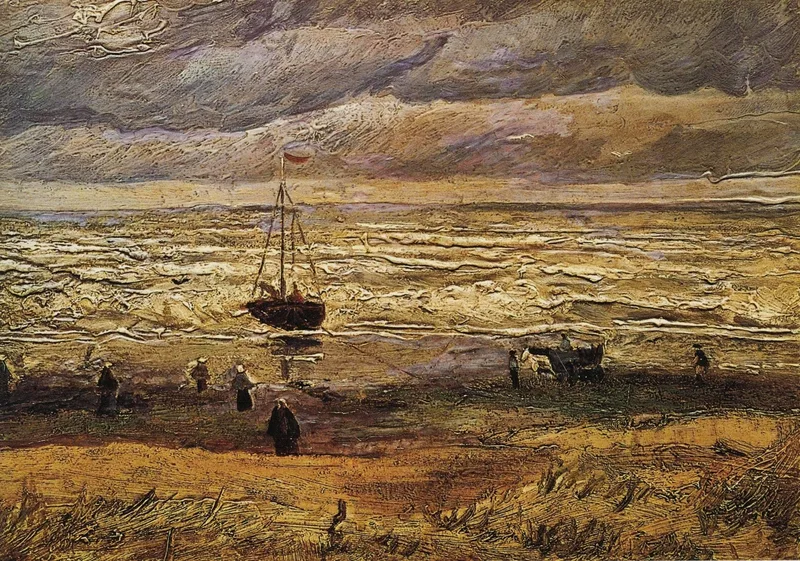
View of the Sea at Scheveningen (1882) and Congregation Leaving the Reformed Church in Nuenen were stolen from the Van Gogh Museum in 2002. They were recovered from an Italian mafia-style gang on the outskirts of Naples, and after conservation they went back on display in Amsterdam on 17 April 2019 [4].
A missing corner of the seascape, around 7 cm high and 2 cm wide, was rebuilt using a 3D-printed mould [4]. The church scene shows the place where Vincent's father was the minister [4].
Hand-painted in oilFrom $350See sizes
Under paint: Poplars near Nuenen
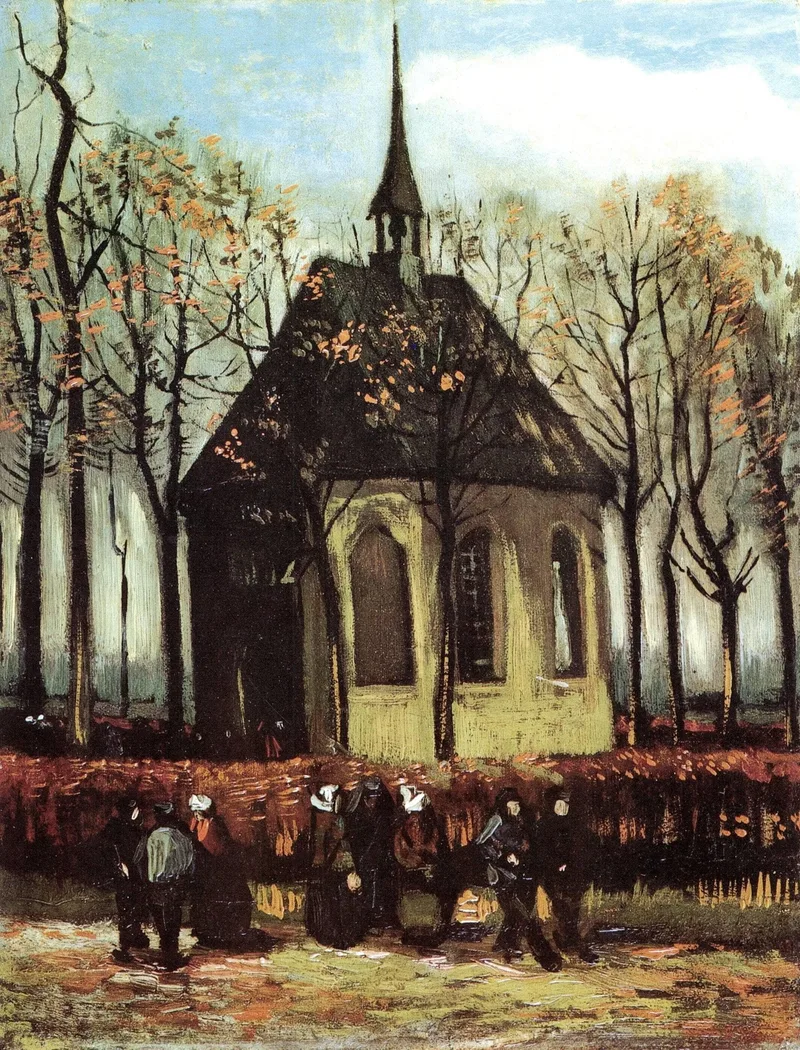
The newest find is not a new canvas but a painting inside one. After years of technical analysis, Rotterdam's Museum Boijmans Van Beuningen showed that Poplars near Nuenen has three phases: beneath the autumn poplars of 1885 lies an image of two churches in Nuenen from 1884 [5]. Then, in Paris in 1886, Van Gogh came back to it and added brighter touches with modern paints such as cobalt and cerulean blue and viridian green [5].
The museum has owned it since 1903, when 26 Rotterdam art lovers gave it [5]. As of October 2026, it is on view in the museum's Depot until 7 February 2027, in a display that lets you look under the paint surface [5]. Both layers come from his Nuenen years.
Under paint: a lost painting beneath Ravine
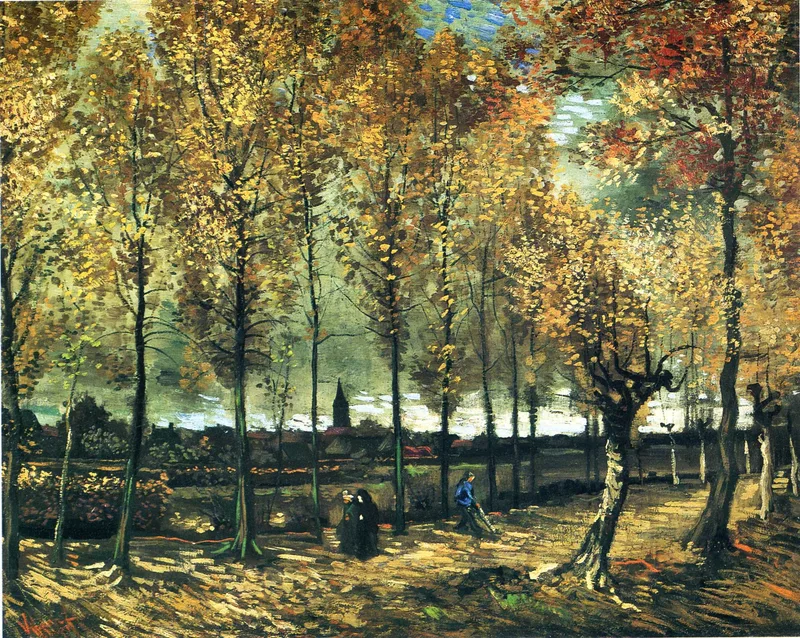
While studying x-rays of Ravine at the Museum of Fine Arts, Boston, the conservator Meta Chavannes found a second painting under the surface [8]. Louis van Tilborgh of the Van Gogh Museum linked it to a drawing called Wild Vegetation that Van Gogh sent Theo in mid-1889. Nobody had known which painting the drawing was based on, so a lost painting had been rediscovered; the two published the find in The Burlington Magazine in August 2007 [8].
The hidden picture was probably painted in June 1889, early in his stay at the asylum in Saint-Rémy, and painted over that October [8]. Why reuse it? Theo was late sending supplies, and Vincent had completely run out of canvas [8].


Under paint, on the back: a hidden self-portrait
Conservators at the National Galleries of Scotland were x-raying Van Gogh's Head of a Peasant Woman of 1885 for a catalogue when they found a self-portrait on the back of the canvas [7]. It had been covered by cardboard for years, probably since an exhibition in the early twentieth century [7].
Why paint on the back? Van Gogh often reused canvases to save money, and sometimes he simply turned the canvas around [7]. Experts date the hidden face to after his move to Paris in 1886, and uncovering it will take delicate conservation [7]. Our guide to Van Gogh's self-portraits covers the ones you can see.

.jpg)
In plain sight: doubted canvases accepted after all
Some finds were hiding in plain sight, in museums. Bailey listed nine works once dismissed as likely fakes that had been reattributed, or were close to it, mainly thanks to systematic study by Van Gogh Museum specialists [2]. All date from 1886 to 1890, most from his two years in Paris [2].
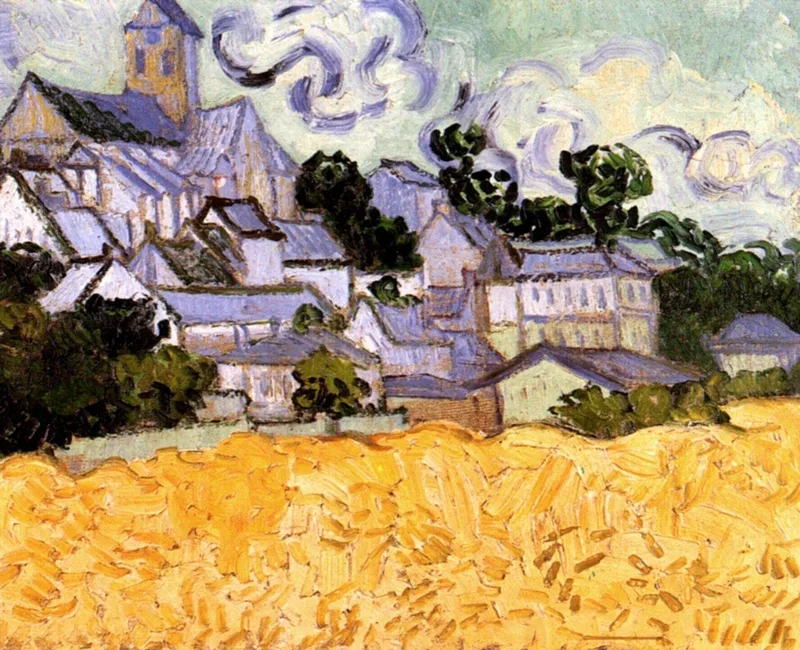
Vase of Poppies at the Wadsworth Atheneum in Hartford was authenticated in March 2019 after 30 years in storage, and research confirmed View of Auvers-sur-Oise at the Rhode Island School of Design in 2016 [2]. Still Life with Mackerels in Winterthur was still in limbo [2]. Not everyone agrees: the Zurich specialist Walter Feilchenfeldt believes many of these works are not authentic [2].

.jpg)
A claim that failed: the garage-sale portrait Elimar
This is the claim you may have seen in the news. A portrait of a fisherman smoking a pipe surfaced in 2016 at a garage sale in Minnetonka, Minnesota, reportedly for less than $50 [3]. The New York-based LMI Group argued it was painted in 1889 at the asylum near Saint-Rémy, published a 458-page report, and press reports valued it at over $15m [3].
The Van Gogh Museum, which Martin Bailey of The Art Newspaper calls the ultimate authority, said no. On 31 January 2025 a spokesperson said: “we maintain our view that this is not an authentic painting by Vincent van Gogh.” [3] Bailey also points to a gap in the story, since there is no provenance before 2016, and to a rival theory: the word “Elimar” may be the signature of a minor Danish painter, Henning Elimar (1928 to 1989) [3]. If you want to know what a real one is worth, see how much a Van Gogh painting is worth.
How to tell a real find from a false alarm
Look for three things. First, provenance: Sunset at Montmajour could be traced to Theo's collection, while Elimar has no history before 2016 [1][3]. Second, the experts: the Van Gogh Museum normally does not comment on new discoveries, so when it speaks, it matters [3]. Third, the science, from x-rays to paint analysis, which turned up three of the finds above [5][7][8].
Remember, too, that Van Gogh sold only a handful of works in his lifetime, which is why so much of his art stayed with his family [9]. Our guide to how many paintings Van Gogh sold tells that side of the story.
Questions and answers
Was there a new Van Gogh painting recently found?
The latest news is a painting found inside another one: as of October 2026, Rotterdam's Museum Boijmans Van Beuningen has shown that Poplars near Nuenen was painted over an 1884 picture of two churches [5]. The best-known recent claim, a portrait reportedly bought at a garage sale for less than $50, was rejected again by the Van Gogh Museum in 2025 [3].
Where was Sunset at Montmajour found?
In the attic of a Norwegian home. A collector bought it in 1908 and, after it was declared a fake, put it away there. It stayed hidden for decades until the Van Gogh Museum declared it authentic in 2013 [1].
Who owns the Van Gogh painting found in an IKEA bag?
The Groninger Museum in the Netherlands. The painting, The Parsonage Garden at Nuenen in Spring, was stolen from the Singer Laren museum in March 2020 and recovered by the art sleuth Arthur Brand in September 2023. It is back on public display [6].
Was the garage-sale Van Gogh real?
The Van Gogh Museum says no. It said on 31 January 2025 that it maintains its view that the portrait called Elimar is not an authentic painting by Vincent van Gogh, and there is no provenance for it before 2016 [3].
Written and fact-checked by the Vincent van Gogh Paintings editorial desk9 sourcesUpdated
Sources
- NPR, The Two-Way: 'New' Van Gogh painting identified; was in a Norwegian attic (9 September 2013)Accessed
- The Art Newspaper: Nine Van Gogh 'fakes' that have emerged as the real thing (24 January 2020)Accessed
- The Art Newspaper: Was a new Van Gogh really discovered at a garage sale? (7 February 2025)Accessed
- The Art Newspaper: Two stolen Van Goghs go back on display after 14-year ordeal (18 April 2019)Accessed
- Museum Boijmans Van Beuningen: Restoration reveals layered Van Gogh masterpiece (2026)Accessed
- Smithsonian Magazine: This Vincent van Gogh painting was found wrapped in an Ikea bag and a blood-stained pillow (10 April 2026)Accessed
- University of Edinburgh: Experts unearth hidden Van Gogh self-portrait (2 August 2022)Accessed
- Museum of Fine Arts, Boston: A Missing Van Gogh DiscoveredAccessed
- Van Gogh Museum: Where is The Starry Night?Accessed
Hand-painted oil reproductions