
Guide
7 Easy Van Gogh Paintings to Copy, With Step-by-Step Tips
Seven small, simple pictures, each with four steps you can follow at your own easel
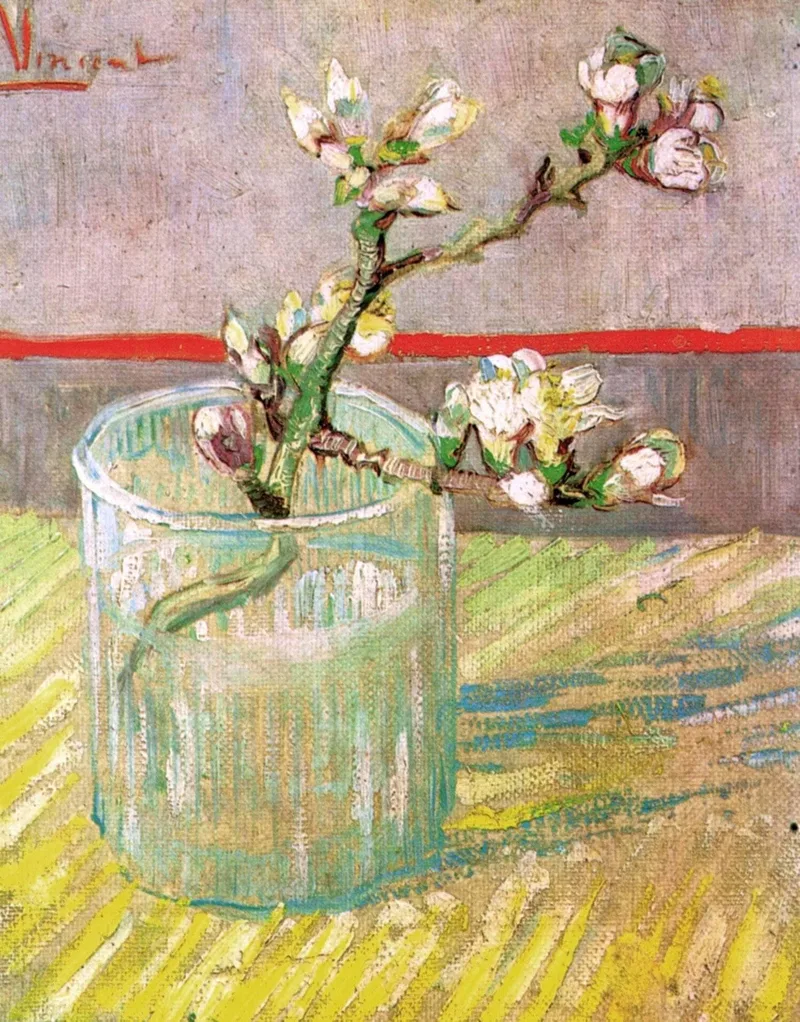
The easiest Van Gogh paintings to copy are small pictures with one subject and a plain background, like Sprig of Flowering Almond in a Glass, a 24.5 by 19.5 cm canvas from 1888. [1] Here are seven, from easiest to hardest, each with the museum's real size and four steps, before you take on the more famous Van Gogh paintings.
The seven paintings at a glance
A Van Gogh is easy to copy when it has one subject, a simple background and a short list of colors. All seven below are in the Van Gogh Museum, so you can check the real size and date instead of guessing. If you are brand new, start with the first three and save the self-portrait for when you want to practice brushstrokes.
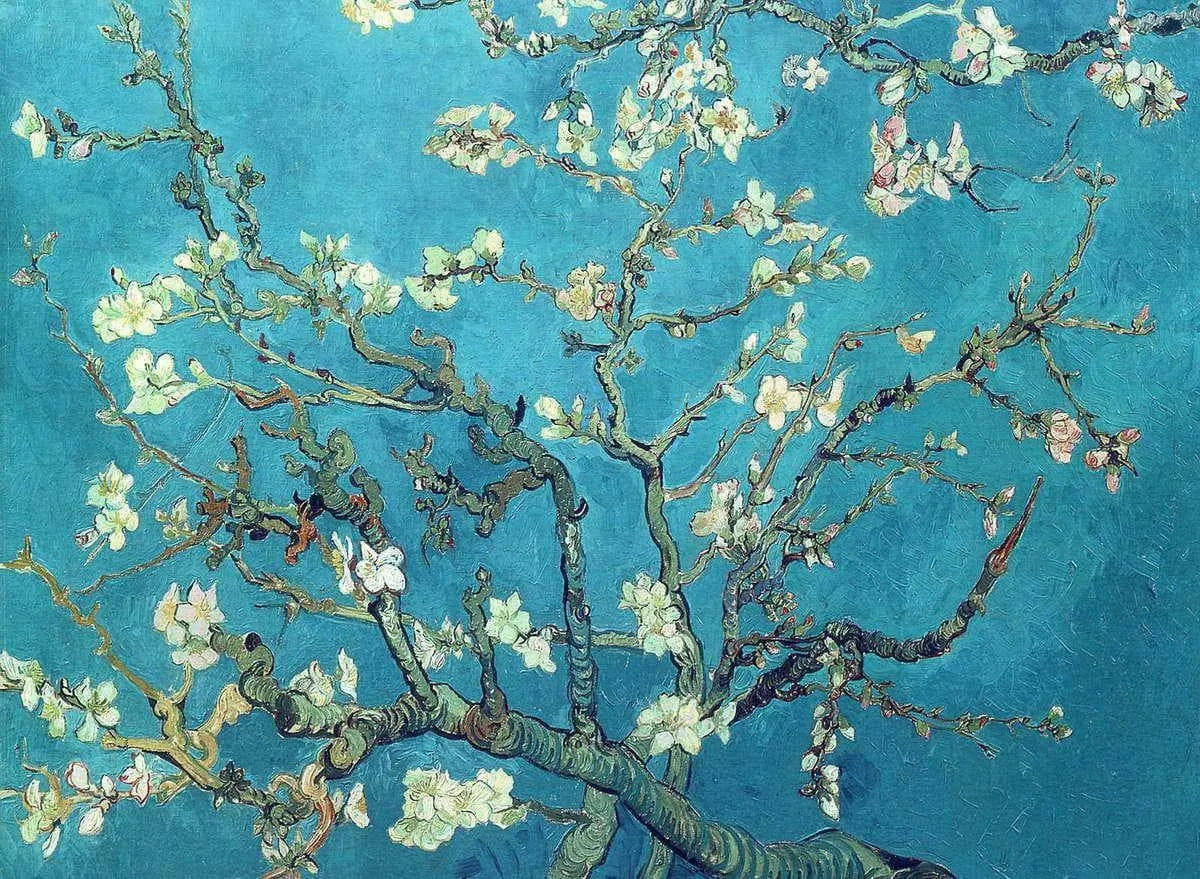
Match your canvas to the shape of the original before you draw anything. Sprig of Flowering Almond is taller than it is wide; Almond Blossom is wider than it is tall. [1][4] Then rule a light pencil grid over your reference picture and a matching one on your canvas, and copy one square at a time.
| Painting | Date and place | Size (cm) | Why it suits beginners |
|---|---|---|---|
| Sprig of Flowering Almond in a Glass | March 1888, Arles [1] | 24.5 × 19.5 [1] | One object and one dividing line |
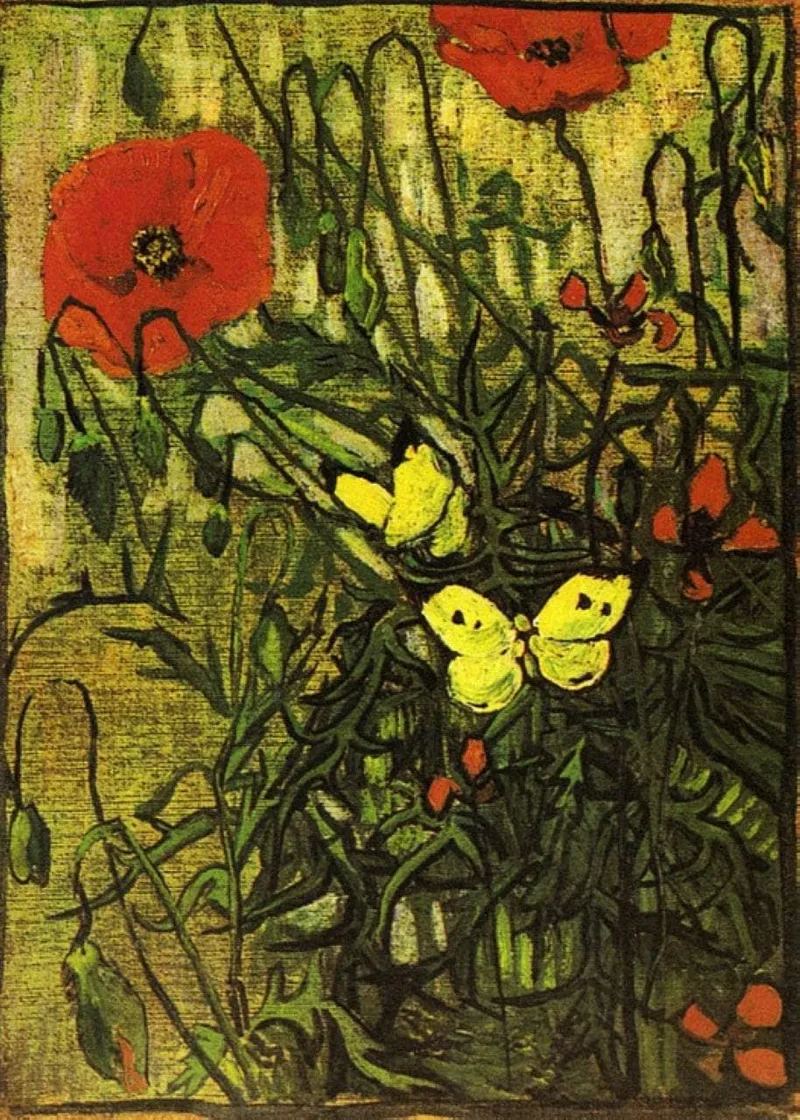
| Butterflies and Poppies | May–June 1889, Saint-Rémy [2] | 35 × 25.5 [2] | Motif first, background last |
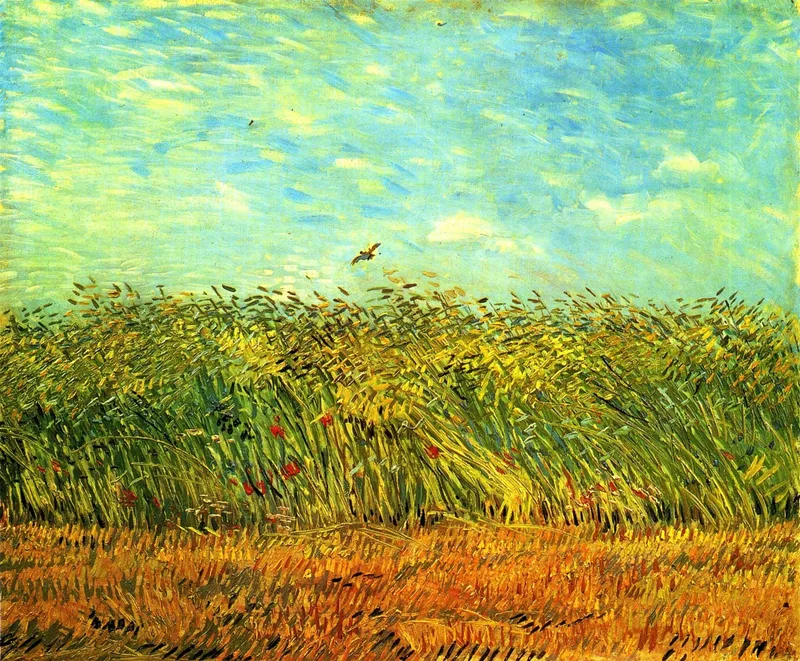
| Wheatfield with Partridge | June–July 1887, Paris [3] | 53.7 × 65.2 [3] | Three horizontal bands |
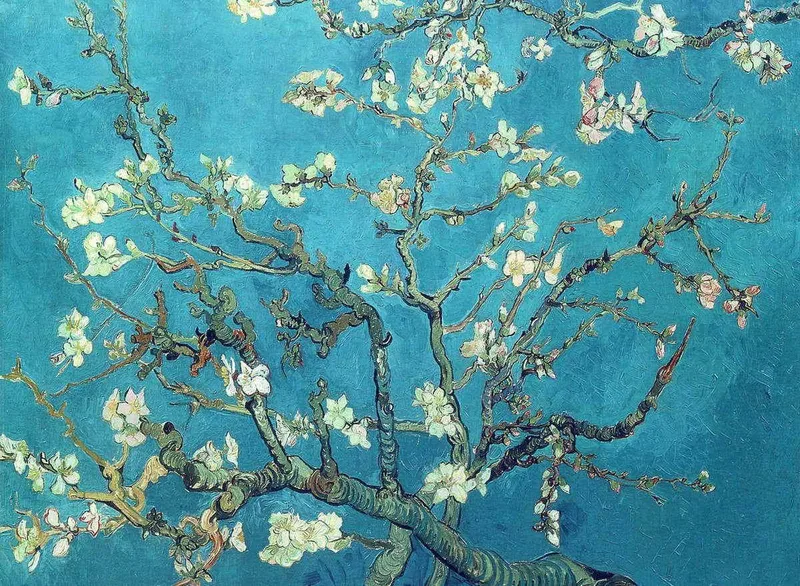
| Almond Blossom | February 1890, Saint-Rémy [4] | 73.3 × 92.4 [4] | Outlines on a flat sky |
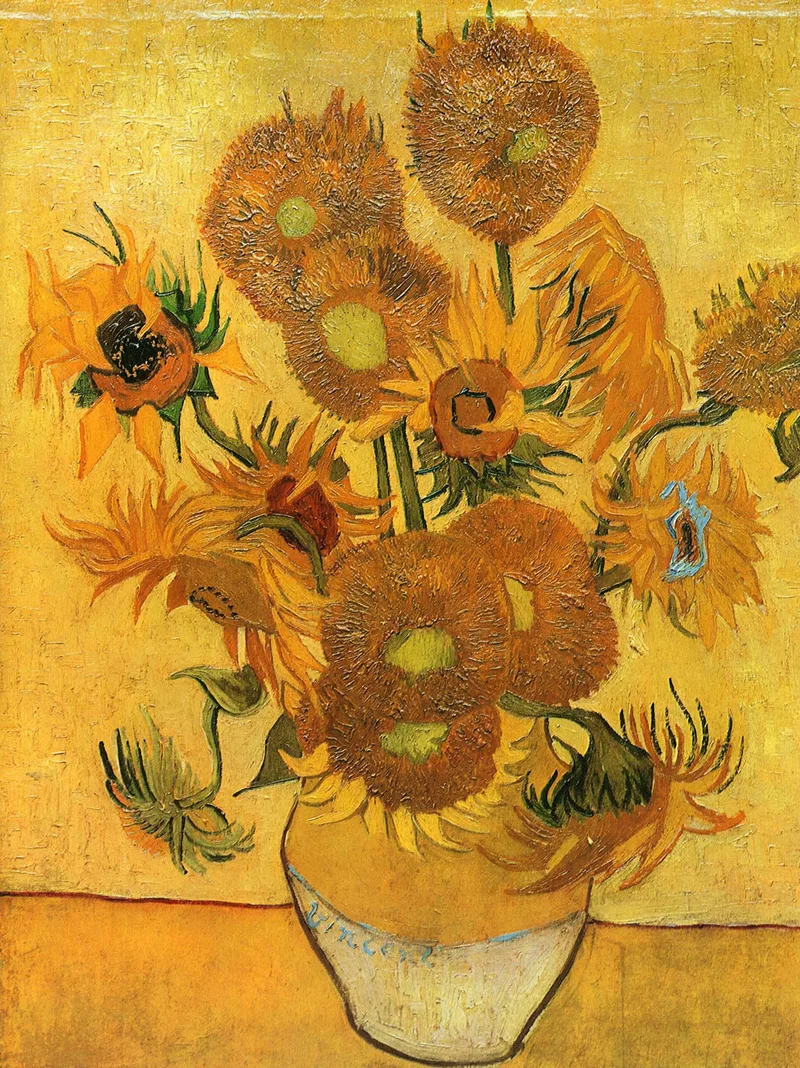
| Sunflowers | January 1889, Arles [5] | 95 × 73 [5] | Three yellows only |
| The Bedroom | October 1888, Arles [6] | 72.4 × 91.3 [6] | Flat colors, no shadows |
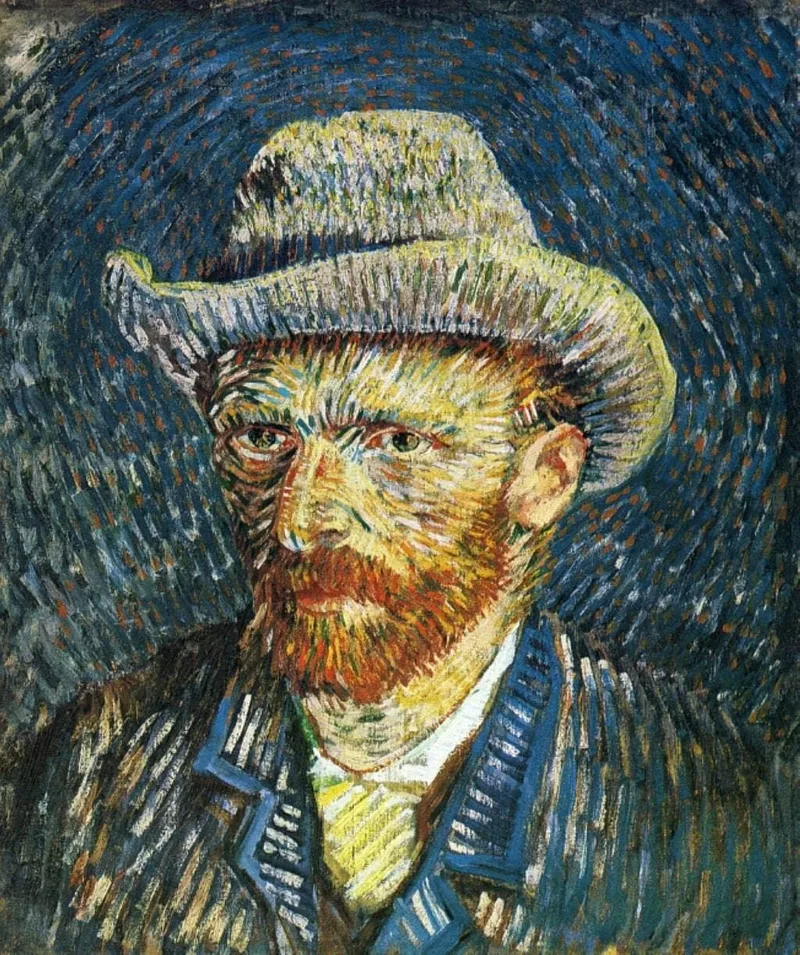
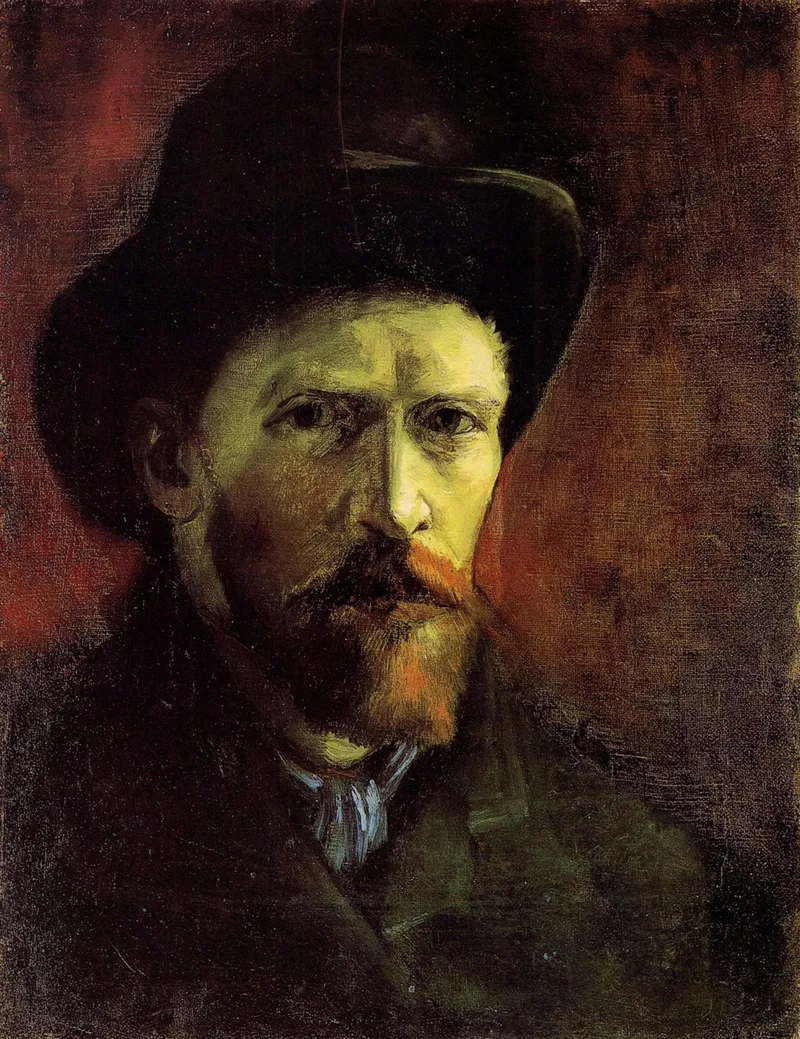
| Self-Portrait with Grey Felt Hat | September–October 1887, Paris [8] | 44.5 × 37.2 [8] | Brushstroke practice |
Dates, places and sizes come from the Van Gogh Museum's collection records [1][2][3][4][5][6][8].
1. Sprig of Flowering Almond in a Glass (1888)
The simplest picture here is a glass, a twig and a red line across the wall; Van Gogh even signed it in the same red. [1] On 2 March 1888, a little over a week after he reached Arles, he told Theo about “2 little studies of a branch of an almond tree that’s already in flower despite everything.” [1] Our page on this almond sprig shows it in detail.
Step 1. Pick a small panel, about 10 by 8 inches, close to the original's 24.5 by 19.5 cm. [1]
Step 2. Rule the red line across the upper part of the wall before anything else. It holds the whole picture together.
Step 3. Fill the table with pale yellow and green strokes, then paint the glass with thin, almost clear blue-white.
Step 4. Add the blossoms last, in white and pale pink, and sign in the same red, as he did. [1]
2. Butterflies and Poppies (1889)
This small canvas shows his order of work. He painted the flowers and butterflies first and filled in the blue background afterwards, which is why broad blue strokes sometimes cover the green stems. [2] He even left part of the canvas unpainted, with the bare cloth showing. [2] You can see it on our page for Butterflies and Poppies.
Step 1. Sketch the poppies and the two butterflies loosely, leaving room around them.
Step 2. Paint the red poppies and yellow butterflies first.
Step 3. Use several shades of green for the stems and leaves; that is how he gave the tangle its depth. [2]
Step 4. Lay the blue in last with wide strokes, let it cut into the edges, and stop before you cover the whole cloth.
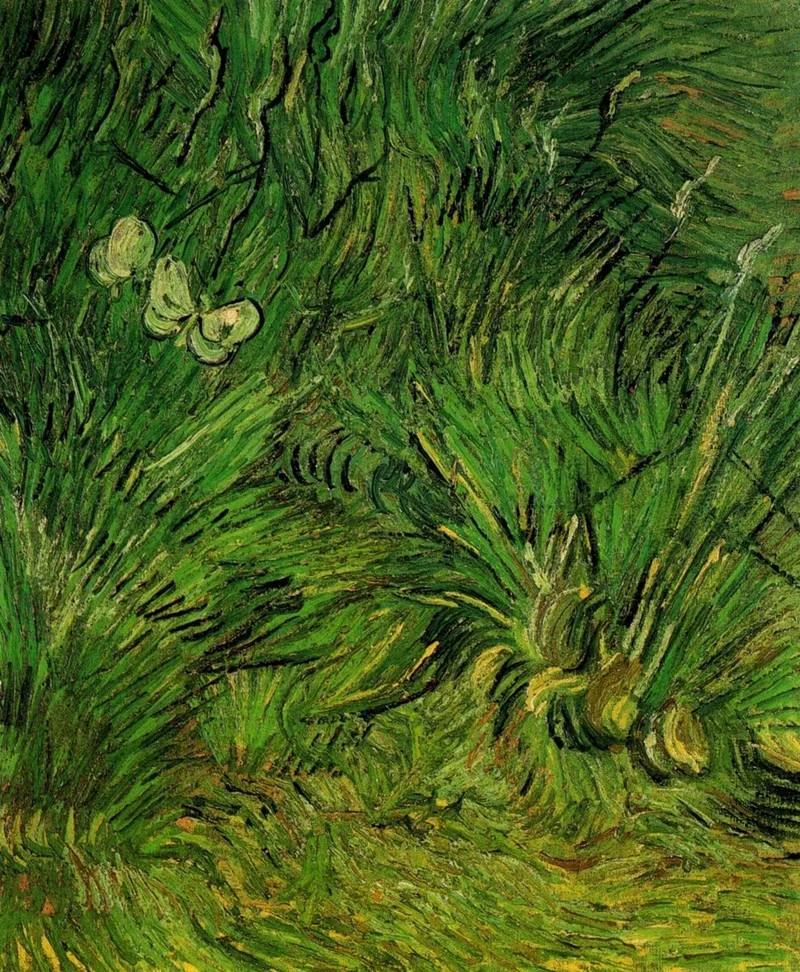
When that feels easy, try the grass in Garden with Butterflies, a 54.8 by 45.7 cm canvas from spring 1890 with two pale butterflies in a thicket of short strokes. [10]
Hand-painted in oilFrom $350See sizes
3. Wheatfield with Partridge (1887)
Painted in Paris, this is a summer wheat field built from three bands: stubble, wheat and sky. Looking at it, you feel as if you are right next to the field, because of the low point of view. [3] Amid the waving wheat he added poppies and cornflowers, and a partridge flying away. [3] Our catalog lists it as Wheat Field with a Lark.
Step 1. Divide the canvas into three horizontal bands and keep the horizon low.
Step 2. Paint the sky first in light blue and white, with short strokes that all lean the same way.
Step 3. Fill the wheat with upright green and gold strokes, then the stubble in warm ochre.
Step 4. Dot in a few poppies and cornflowers, and finish with the tiny flying bird.
Hand-painted in oilFrom $350See sizes
4. Almond Blossom (1890)
The painting at the top of this page has no ground and no horizon to worry about. Van Gogh borrowed the subject, the bold outlines and the placing of the tree from Japanese printmaking. [4] He made it for his brother Theo and sister-in-law Jo, who had just had a baby son named Vincent Willem. [4] Our page on Japonism in Van Gogh's art shows where that look came from, and you can look closer at Branches with Almond Blossom.
Step 1. Cover the canvas with a flat turquoise-blue sky.
Step 2. Draw the main branches as dark, confident lines that run off the edges.
Step 3. Dab the blossoms in white and cream along the branches, then add pink in the buds.
Step 4. Stop when the branches read clearly from across the room. The flat sky is part of the picture.
5. Sunflowers (1889)
Sunflowers looks hard but is easy to plan, because he limited his colors. The museum says he used three shades of yellow “and nothing else,” to show that a whole picture could come from variations of one color. [5] This Amsterdam canvas is a replica: Van Gogh painted four versions in August 1888, such as the London one below, and three replicas in January 1889. [5][11] The Sunflowers versions guide shows how they differ, and you can see the Amsterdam picture on the Sunflowers page.
Step 1. Mix three yellows, one light, one medium, one orange-leaning, and keep them on the palette all session.
Step 2. Paint the background and table in yellow, so the vase and flowers sit on yellow too.
Step 3. Paint the vase and stems in the same family, then place the flower heads from the biggest to the smallest.
Step 4. Add the seed centers in browns and finish with a thin outline. Copy the London version beside it if you want a lighter, brighter result.
Hand-painted in oilFrom $350See sizes

.jpg)
6. The Bedroom (1888)
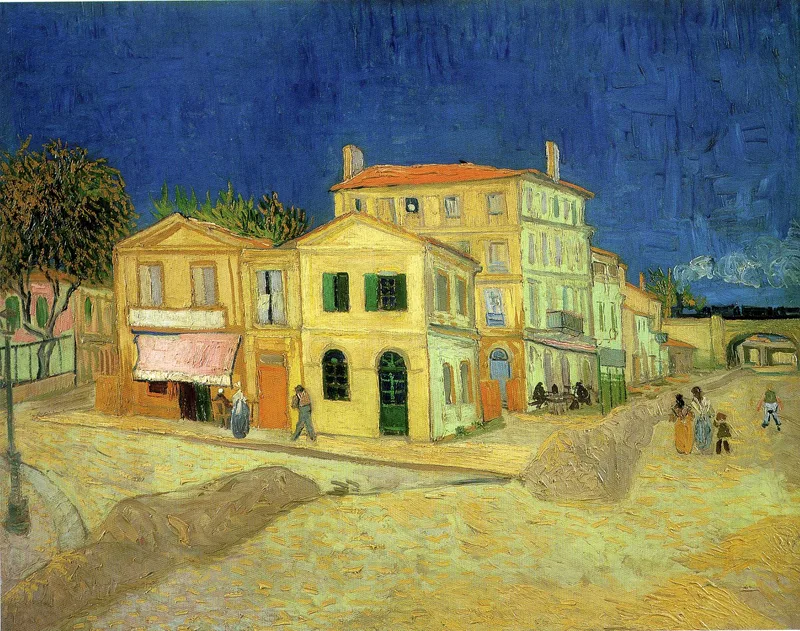
Van Gogh painted his bedroom in the Yellow House, which he had rented in May 1888 on the Place Lamartine in Arles. [6][9] On 16 October 1888 he wrote Theo the color list for you: the walls pale violet, the floor red tiles, the bed and chairs fresh butter yellow, the sheet and pillows lemon green, the blanket scarlet, the dressing table orange and the basin blue. [7] He also left out the shadows on purpose, so the room would look like a Japanese print. [6]
Step 1. Draw the room with the back wall at its odd angle. It is not a mistake, because the corner really was skewed, and the loose perspective was deliberate. [6]
Step 2. Paint each area in one flat tint from the letter's color list.
Step 3. Leave out shadows and cast shadows. Everything is flat, plain color.
Step 4. Mix a violet for the walls and doors. Today they look blue, but research shows they were originally purple, and the colors have changed over the years. [6] See why in our guides to why Irises changed color and why the Sunflowers are fading.


Hand-painted in oilFrom $350See sizes
“The shadows and cast shadows are removed; it’s coloured in flat, plain tints like Japanese prints.”
7. Self-Portrait with Grey Felt Hat (1887)
This is the one for brushstroke practice. Van Gogh placed short stripes of paint in different directions, and where they follow the outline of his head they form a kind of halo. [8] He set complementary colors side by side with long brushstrokes: blue and orange in the background, red and green in the beard and eyes. [8] Look closer at the grey felt hat portrait.
Step 1. Practice the background on a scrap board until your strokes have the same length and rhythm. Don't blend them.
Step 2. Block in the face and hat, then paint blue and orange stripes around the head.
Step 3. Put red against green in the beard and eyes, and let the colors strengthen each other.
Step 4. Compare it with his black-hat self-portrait from winter 1886 to 1887, painted over a nude study from Cormon's studio, to see how far his strokes changed in a year. [12] Mix a violet for the faded strokes: the red pigment faded, so purple now looks blue. [8]
Hand-painted in oilFrom $350See sizes
Hand-painted in oilFrom $350See sizes
Which Van Gogh paintings are harder than they look?
The Starry Night is the one most beginners want to copy first, but its swirling sky, cypress and village each need a different kind of stroke. Night scenes like Café Terrace at Night add artificial light and tricky perspective. Make them your fourth or fifth copy. Our guide to Van Gogh's night paintings looks at that group, and his letters often describe the colors he used. If you plan to share or sell your copy, read whether Van Gogh's art is in the public domain first.
Questions and answers
What is the easiest Van Gogh painting to copy?
Sprig of Flowering Almond in a Glass. It is only 24.5 by 19.5 cm and has one object, a plain background and a single red dividing line. [1]
How can I learn to paint like Van Gogh?
Written and fact-checked by the Vincent van Gogh Paintings editorial desk12 sourcesUpdated
Sources
- Van Gogh Museum collection: Sprig of Flowering Almond in a Glass (s0184V1962)Accessed
- Van Gogh Museum collection: Butterflies and Poppies (s0188V1962)Accessed
- Van Gogh Museum collection: Wheatfield with Partridge (s0197V1962)Accessed
- Van Gogh Museum collection: Almond Blossom (s0176V1962)Accessed
- Van Gogh Museum collection: Sunflowers (s0031V1962)Accessed
- Van Gogh Museum collection: The Bedroom (s0047V1962)Accessed
- Vincent van Gogh, The Letters: letter 705, to Theo van Gogh, Arles, 16 October 1888Accessed
- Van Gogh Museum collection: Self-Portrait with Grey Felt Hat (s0016V1962)Accessed
- Van Gogh Museum collection: The Yellow House (The Street) (s0032V1962)Accessed
- Van Gogh Museum collection: Garden with Butterflies (s0110V1962)Accessed
- National Gallery, London: Sunflowers (NG3863)Accessed
- Van Gogh Museum collection: Self-Portrait with Felt Hat (s0162V1962)Accessed
Hand-painted oil reproductions
Paintings in this guide
- Blossoming Almond Branch in a GlassVincent van GoghFrom$350
- Poppies and ButterfliesVincent van GoghFrom$350
 Branches with Almond BlossomVincent van GoghFrom$350
- Two White ButterfliesVincent van GoghFrom$350
- Wheat Field with a LarkVincent van GoghFrom$350
- Still Life - Vase with Fifteen SunflowersVincent van GoghFrom$350
- The Yellow HouseVincent van GoghFrom$350
- Self Portrait with Felt HatVincent van GoghFrom$350
- Self-Portrait with Dark Felt HatVincent van GoghFrom$350