Guide
What Van Gogh Wrote About Flowers in His Letters
His own words about poppies, sunflowers, irises and almond blossom, quoted from his letters and matched to the paintings.
Van Gogh said flowers taught him color: in 1887 he wrote that he had “painted almost nothing but flowers to accustom myself to a colour other than grey,” and in 1889 he claimed the sunflower as his own. [3][6] Here are his best lines about flowers, with dates, next to the flower paintings they belong to.
What are his best lines about flowers?
Here are his key lines about flowers at a glance, each checked against the scholarly edition of his letters. The sections below tell the story behind them.
| Quote | Letter | Date and place |
|---|---|---|
| “it’s good to love flowers and pine branches and ivy and hedges of hawthorn” [1] | 109, to Theo | 23 March 1877, Dordrecht |
| “Trying to render intense COLOUR and not a grey harmony.” [2] | 569, to Horace Mann Livens | September or October 1886, Paris |
| “Nothing but large Sunflowers.” [4] | 666, to Theo | 21 or 22 August 1888, Arles |
| “as if they themselves were flowers” [5] | 686, to Theo | 23 or 24 September 1888, Arles |
| “I have the sunflower, in a way.” [6] | 741, to Theo | 22 January 1889, Arles |
| “life happens above all in the garden” [7] | 776, to Theo | about 23 May 1889, Saint-Rémy |
| “branches covered in blossoms” [8] | 856, to Willemien | 19 February 1890, Saint-Rémy |
Quotations from the English translation in Vincent van Gogh, The Letters (Van Gogh Museum and Huygens ING). [1][2][4][5][6][7][8]
Where does “it’s good to love flowers” come from?
It comes from a letter to Theo written in Dordrecht on 23 March 1877, after the brothers had spent a good day together in Amsterdam. Later he and his uncle Cor went to the flower market, which the editors place on the Singel, and Vincent added: “it’s good to love flowers and pine branches and ivy and hedges of hawthorn, we have seen them from the very beginning.” [1]
Why did he paint so many flowers in Paris?
For color. Writing in English to the painter Horace Mann Livens in 1886, he said he had lacked money for models and had instead “made a series of colour studies in painting simply flowers, red poppies, blue corn flowers and myosotys.” [2] The editors note that the exact canvases cannot be identified, so read it as a general picture of his flower studies of 1886 in Paris. [2]
A year later he summed it up for his sister Willemien: “Last year I painted almost nothing but flowers to accustom myself to a colour other than grey, that’s to say pink, soft or bright green, light blue, violet, yellow, orange, fine red.” [3] The Van Gogh Museum adds a practical reason: flower still lifes also sold well. [10]

What did he say about his Sunflowers?
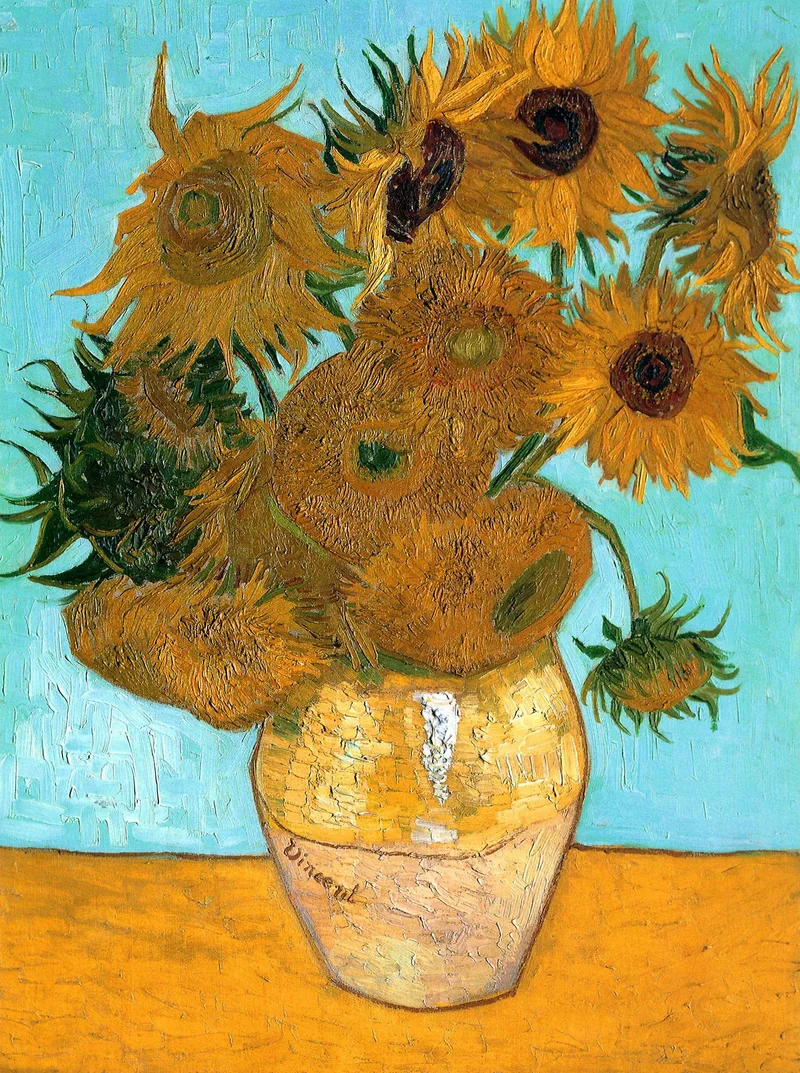
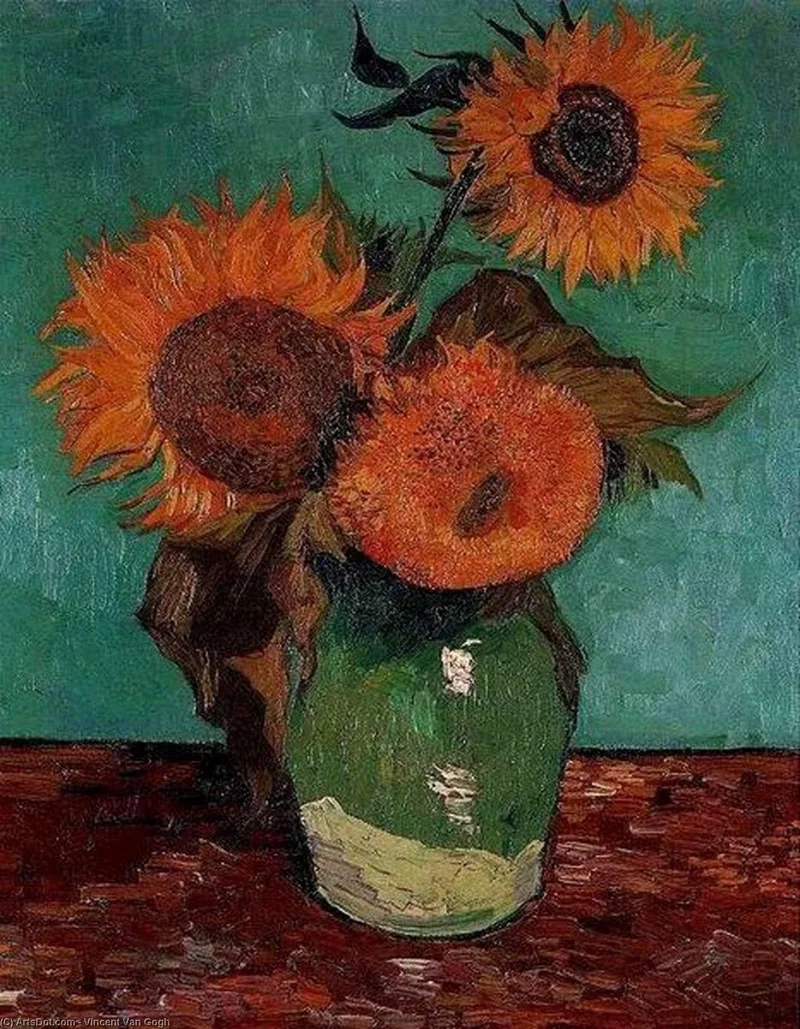
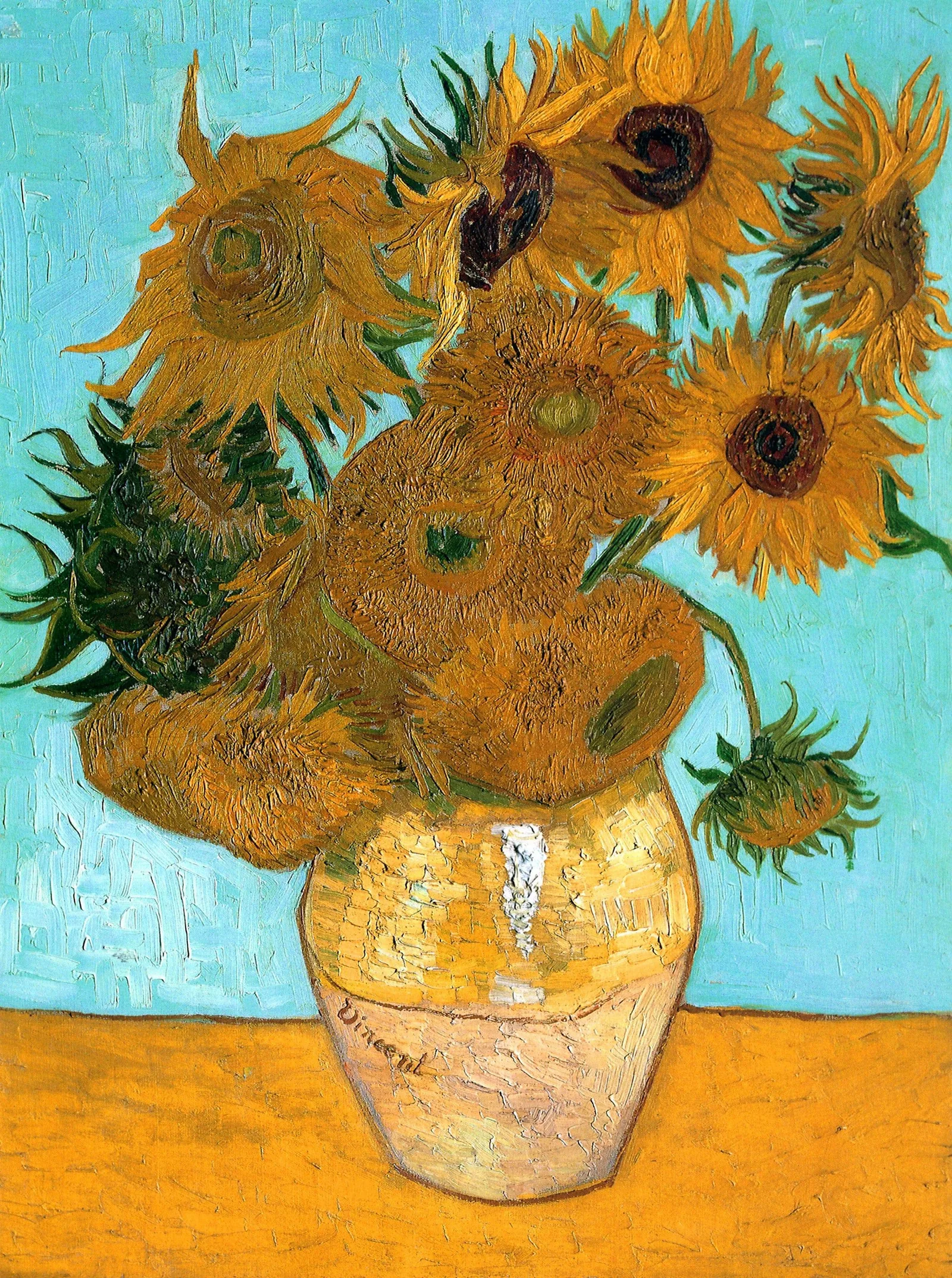
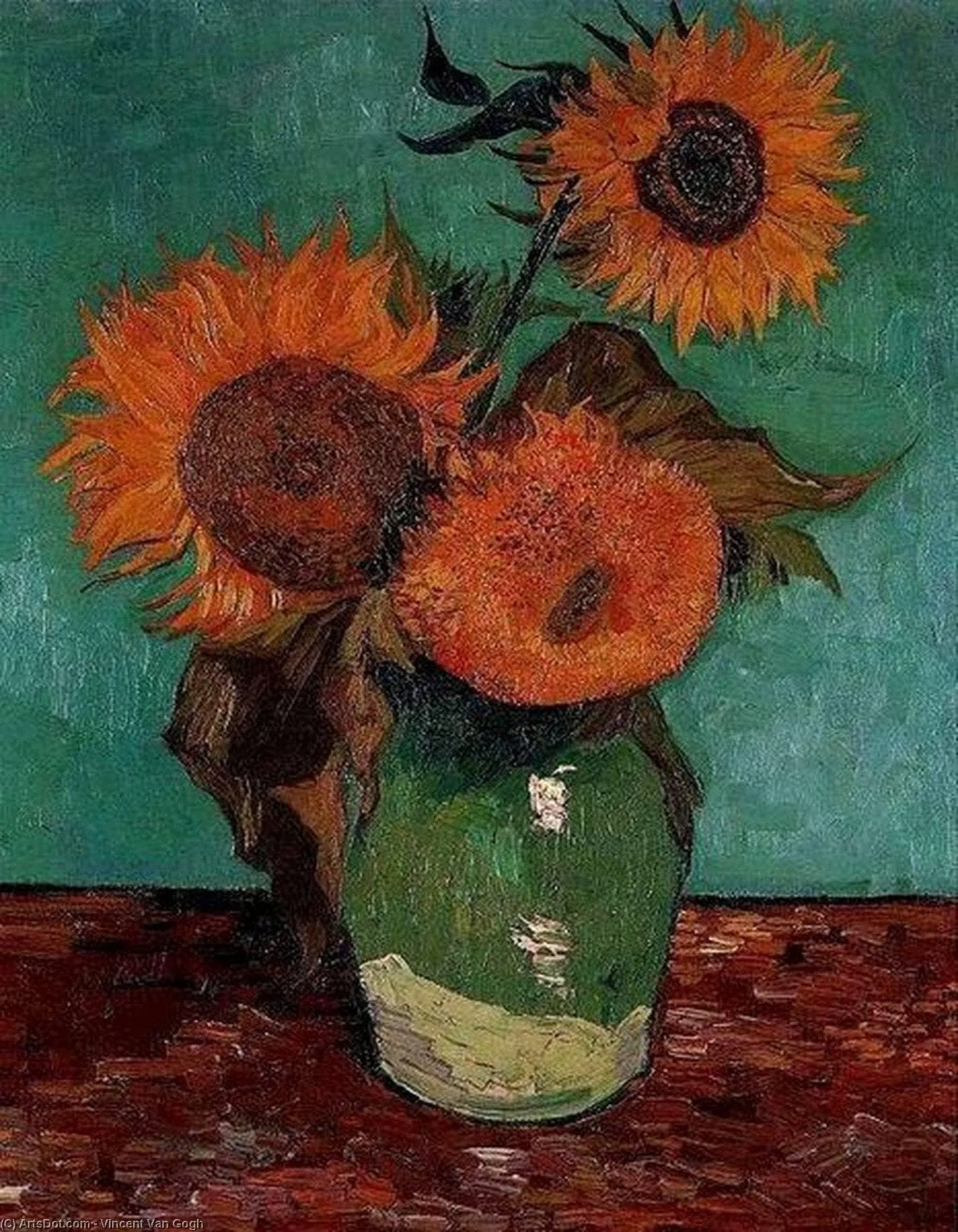
In Arles, the tone turns to delight. In August 1888 he told Theo he was painting “with the gusto of a Marseillais eating bouillabaisse,” and planned a decoration for the studio he hoped to share with Gauguin: “Nothing but large Sunflowers.” [4] He imagined a dozen or so panels, “a symphony in blue and yellow,” and listed canvases such as three large flowers in a green vase and twelve flowers and buds in a yellow vase. [4]
In January 1889 he defended the work and its worth. Painting them took “an individual’s whole and entire energy and attention,” and it was “a type of painting that changes its aspect a little, which grows in richness the more you look at it.” [6] The editors identify the two canvases he meant as F 456 and F 454, which hung in Gauguin’s room in the Yellow House. [6] Our guide to the Sunflowers versions explains which is where.
A year later he looked back with a darker phrase, calling his paintings “almost a cry of anguish while symbolizing gratitude in the rustic sunflower.” [8]
Hand-painted in oilFrom $350See sizes
“You know that Jeannin has the peony, Quost has the hollyhock, but I have the sunflower, in a way.”
What did Japanese art teach him about flowers?
In September 1888 he described the Japanese artist as a wise man who “studies a single blade of grass,” and said that blade of grass leads him to draw all the plants, then the seasons, landscapes, animals and the human figure. [5] Then came one of his loveliest lines: “isn’t it almost a new religion that these Japanese teach us, who are so simple and live in nature as if they themselves were flowers?” [5] The idea runs through his Japanese-inspired work.
What did he say about the asylum garden?
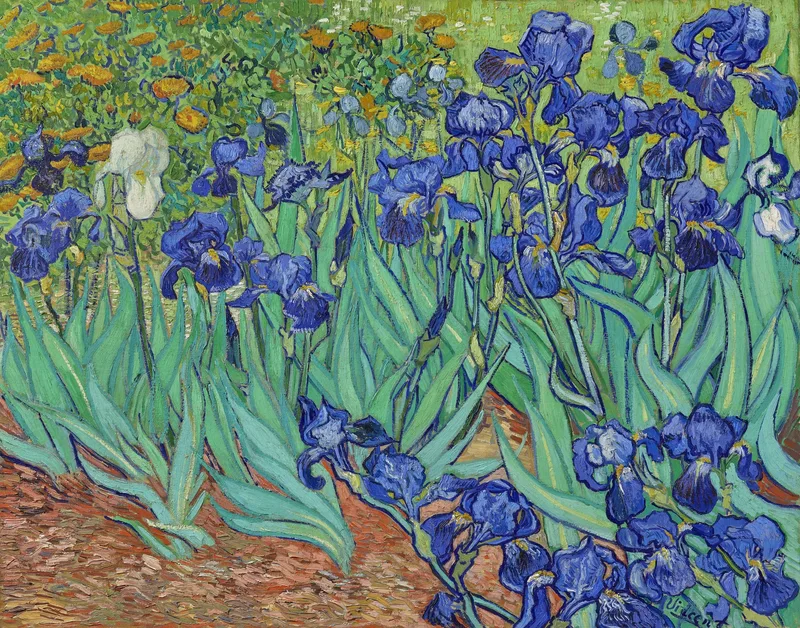
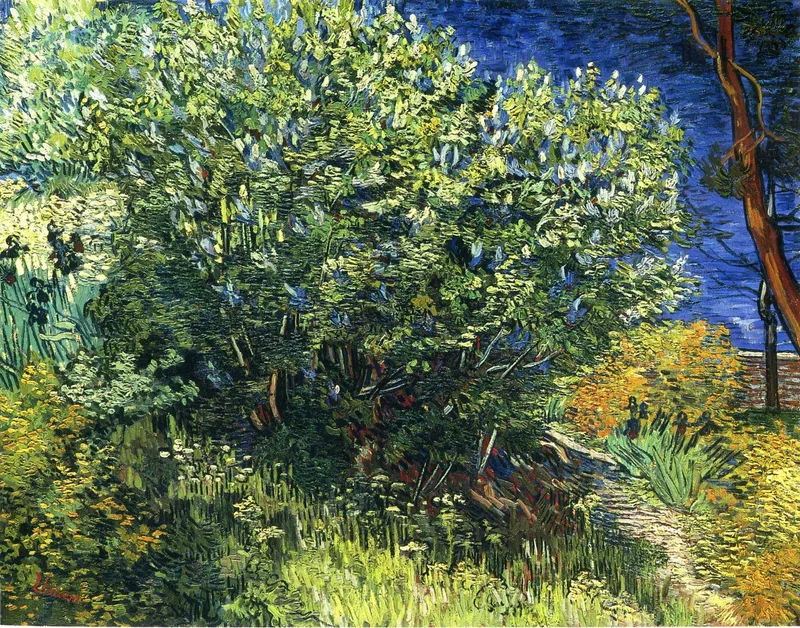
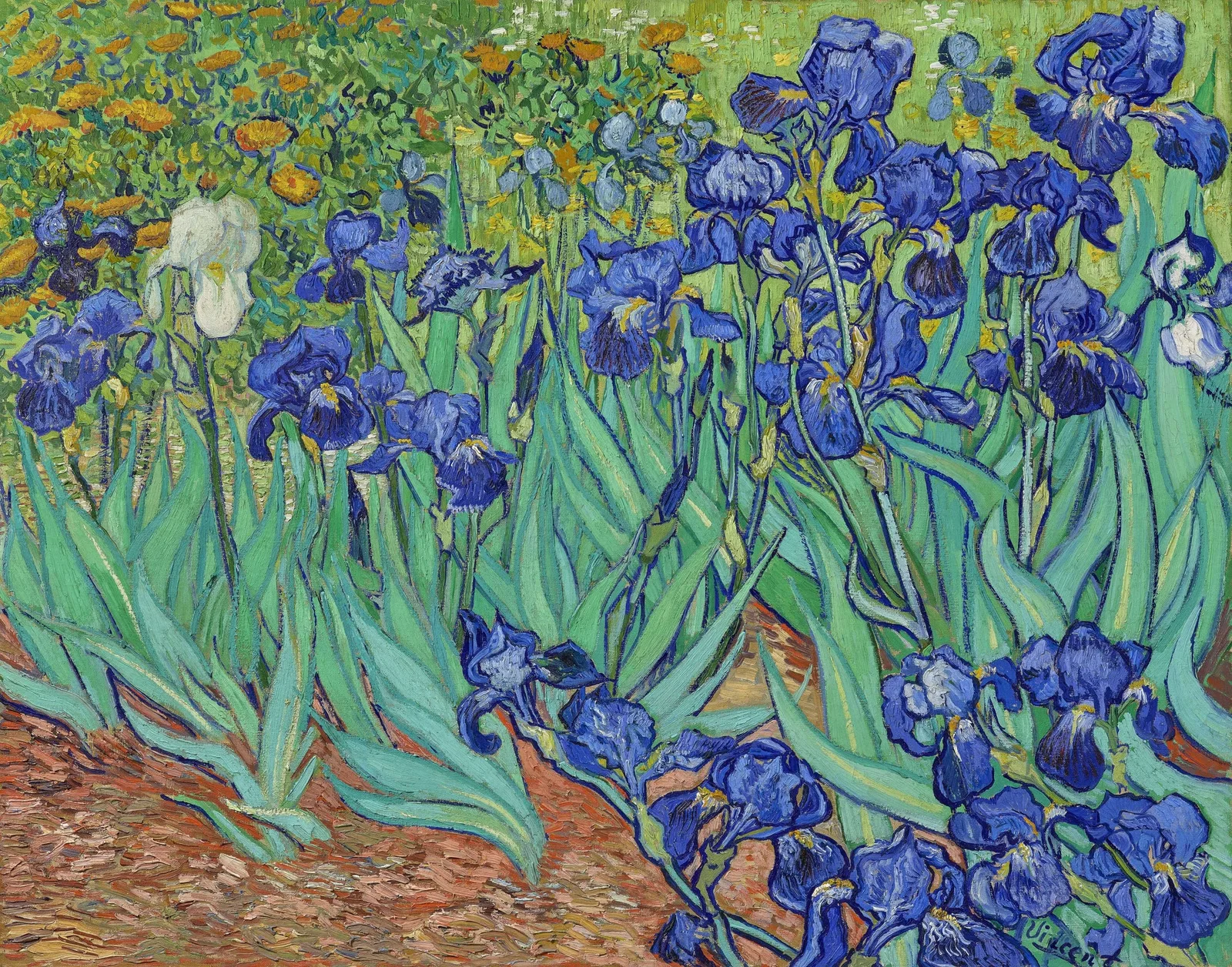
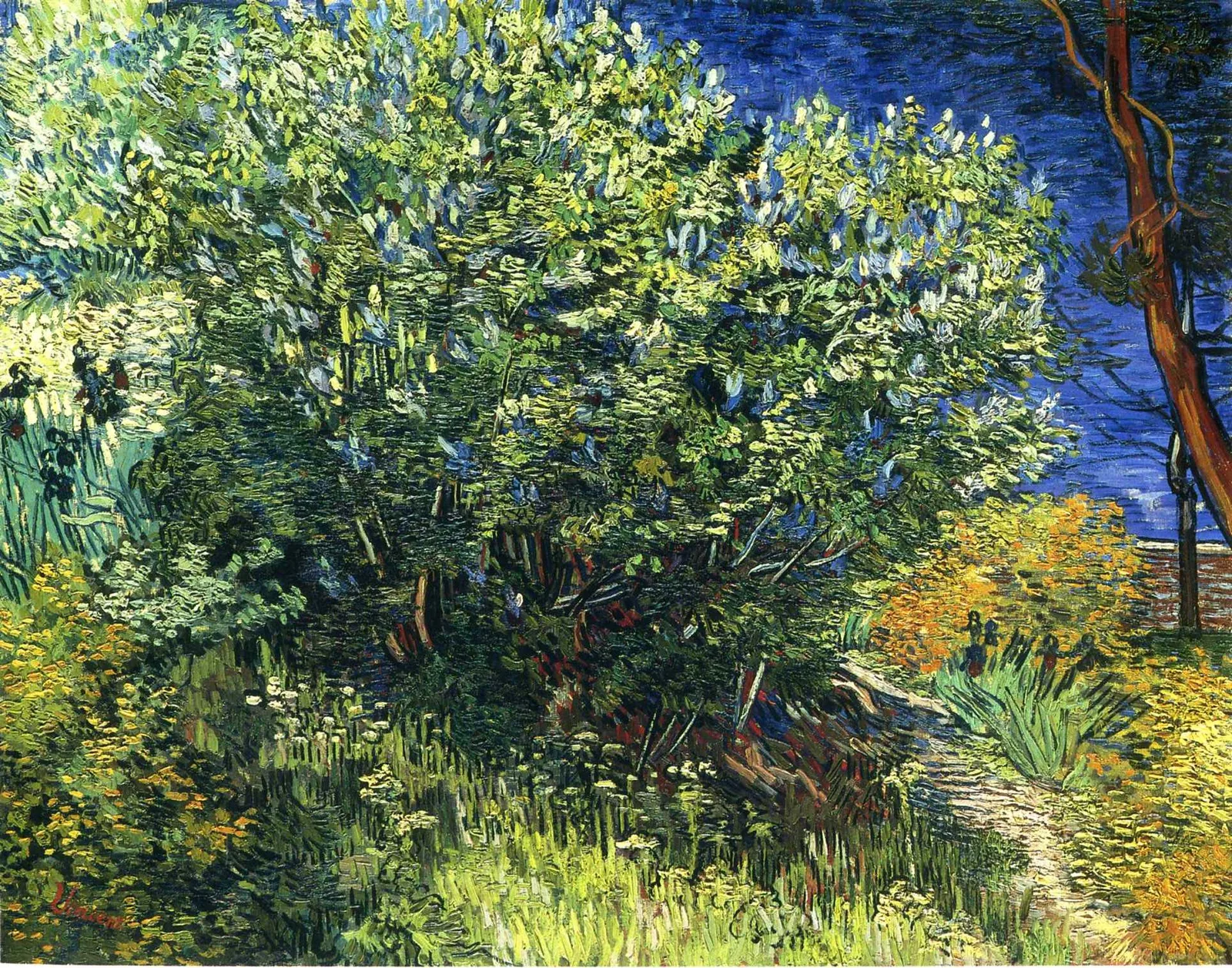
At the asylum in Saint-Rémy, the garden became his subject. Around 23 May 1889 he wrote that the “neglected garden planted with tall pines” had given him enough work that he had not yet gone outside. [7] Then, to reassure Theo: “When I send you the 4 canvases of the garden I have on the go you’ll see that, considering that life happens above all in the garden, it isn’t so sad.” [7]
The editors’ list of the four includes Irises and Lilacs. [7]
Hand-painted in oilFrom $350See sizes
What did he write about Almond Blossom?
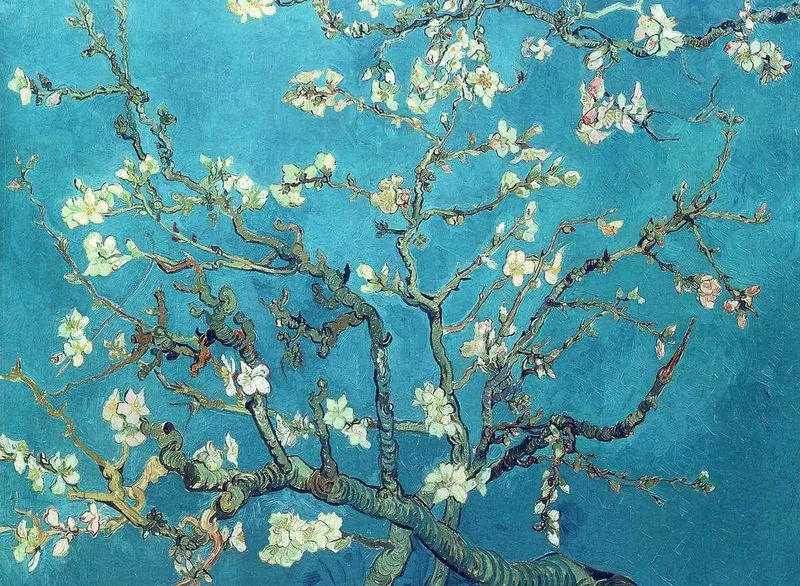
The almond blossom began as a family gift. On 19 February 1890 he told Willemien that, for Theo and Jo’s newborn son, he had started “a large sky-blue canvas against which branches covered in blossoms stand out.” [8] The edition identifies it as Almond blossom (F 671), now in the Van Gogh Museum in Amsterdam. [8] You can see Almond Blossom in detail on its page.

Did he draw water lilies too?
Yes, in pen and ink. At the end of June 1881, in Etten, he told Theo: "While he was painting I made a pen drawing of another spot in the marsh where many water lilies grow." [9] The edition's note says he made two drawings of that spot, and one is Marsh with Water Lilies (F 845) and the other is Marsh (F 846). [9] Monet's famous series is a separate story, told in did Van Gogh paint water lilies.
Across those years, flowers stood in his letters for color, for work, for a subject of his own and for gratitude. To read more, start with how to read Van Gogh’s letters, or see what his paintings mean in his own words. [3][6][8]

Questions and answers
What was Vincent van Gogh's favorite flower?
What flowers has Van Gogh painted?
Written and fact-checked by the Vincent van Gogh Paintings editorial desk10 sourcesUpdated
Sources
- Vincent van Gogh, The Letters: letter 109 to Theo, Dordrecht, 23 March 1877Accessed
- Vincent van Gogh, The Letters: letter 569 to Horace Mann Livens, Paris, September or October 1886Accessed
- Vincent van Gogh, The Letters: letter 574 to Willemien van Gogh, Paris, late October 1887Accessed
- Vincent van Gogh, The Letters: letter 666 to Theo, Arles, 21 or 22 August 1888Accessed
- Vincent van Gogh, The Letters: letter 686 to Theo, Arles, 23 or 24 September 1888Accessed
- Vincent van Gogh, The Letters: letter 741 to Theo, Arles, 22 January 1889Accessed
- Vincent van Gogh, The Letters: letter 776 to Theo, Saint-Rémy, on or about 23 May 1889Accessed
- Vincent van Gogh, The Letters: letter 856 to Willemien van Gogh, Saint-Rémy, 19 February 1890Accessed
- Vincent van Gogh, The Letters: letter 168 to Theo, Etten, end of June 1881Accessed
- Van Gogh Museum: What You Need to Know About Van Gogh’s SunflowersAccessed
Hand-painted oil reproductions