Guide
Did Van Gogh Paint Water Lilies? The Monet Mix-Up Explained
The famous water lilies are Monet’s, but Van Gogh did draw some. Here is why the two names get tangled.

Not as far as his letters show: the famous Water Lilies are Claude Monet’s, and the only water lilies Van Gogh describes making are in a pen drawing of a Dutch marsh from 1881. [1][4][5] One of his drawings of that marsh is now in Richmond, Virginia. [3][4] If you were picturing blue flowers by water, you may mean his irises, among Van Gogh’s flower paintings. [7][8]
So did Van Gogh ever paint water lilies?
His letters mention none. In the scholarly edition, a search for “lilies” finds water lilies in the text of only two, both from 1881. One describes his own pen drawing of a marsh; the other praises a water-lily drawing by the artist Weissenbruch. [5]
Neither describes a painting by Van Gogh. So the answer his letters give is a drawing, not a painting, and the picture most people have in mind belongs to someone else. [4][5]
Who painted the famous Water Lilies?
Claude Monet. The Musée de l’Orangerie in Paris says that from the end of the 1890s until his death in 1926 he primarily devoted himself to the Water Lilies cycle. He offered panels to the French state the day after the Armistice of 11 November 1918, and they were installed at the Orangerie in 1927, a few months after his death, in two elliptical rooms he conceived. [1]
The pond was his own. The Cleveland Museum of Art, which owns a wide Water Lilies (Agapanthus) of about 1915 to 1926, explains that Monet spent the last 30 years of his life painting the garden he designed at his home in Giverny, and that he painted around 250 water lily compositions. [2]
Other museums own single canvases from the same long project. The Art Institute of Chicago has a Water Lilies dated 1906 and a larger Water Lily Pond from 1917 to 1919. [9][10]


What water lilies did Van Gogh draw?
At the end of June 1881, writing from Etten in the Netherlands, Van Gogh told Theo about outings with the painter Rappard to the Passievaart, “a huge marsh.” Then he added: “While he was painting I made a pen drawing of another spot in the marsh where many water lilies grow.” [4]
The edition’s note says he made two drawings of that spot, Marsh with water lilies (F 845) and Marsh (F 846). [4] The first now belongs to the Virginia Museum of Fine Arts, in the Collection of Mr. and Mrs. Paul Mellon. It is pen and India ink on paper over a graphite underdrawing, and the museum says Van Gogh “uses a series of repetitive marks and cross-hatching to suggest the effects of a gentle breeze on the marshy landscape near the Dutch village of Etten.” [3]
The second drawing, below, runs the same hatched marks over open water and a low horizon. Both are studies of a place rather than pictures of a flower.

The Monet mix-up explained
The two painters did overlap. In Paris in the autumn of 1886, Van Gogh told the English painter Horace Mann Livens that he had “much admired certain Impressionist pictures,” naming a landscape by Claude Monet. The editors add that his brother Theo handled Monet’s work from 1885 onward. [6] What Van Gogh never saw were the water lilies, because the cycle began only at the end of the 1890s. [1]
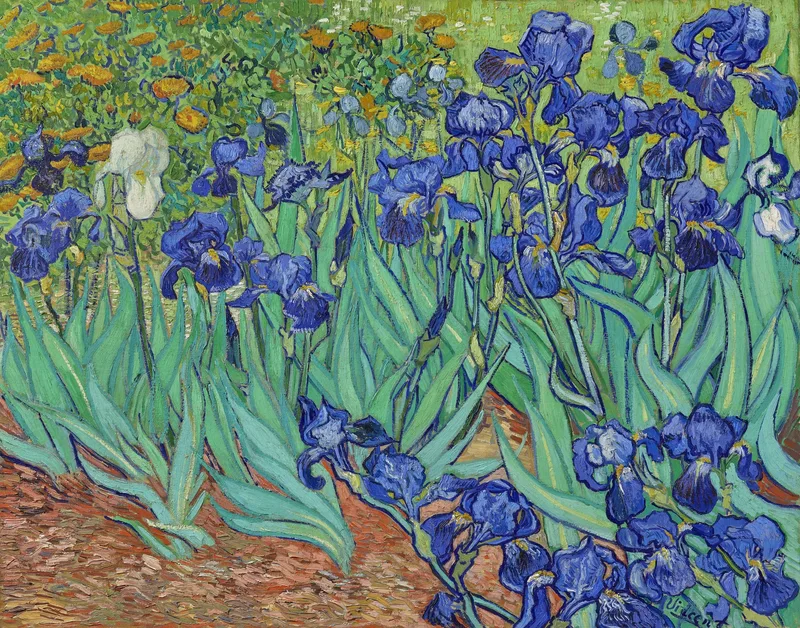
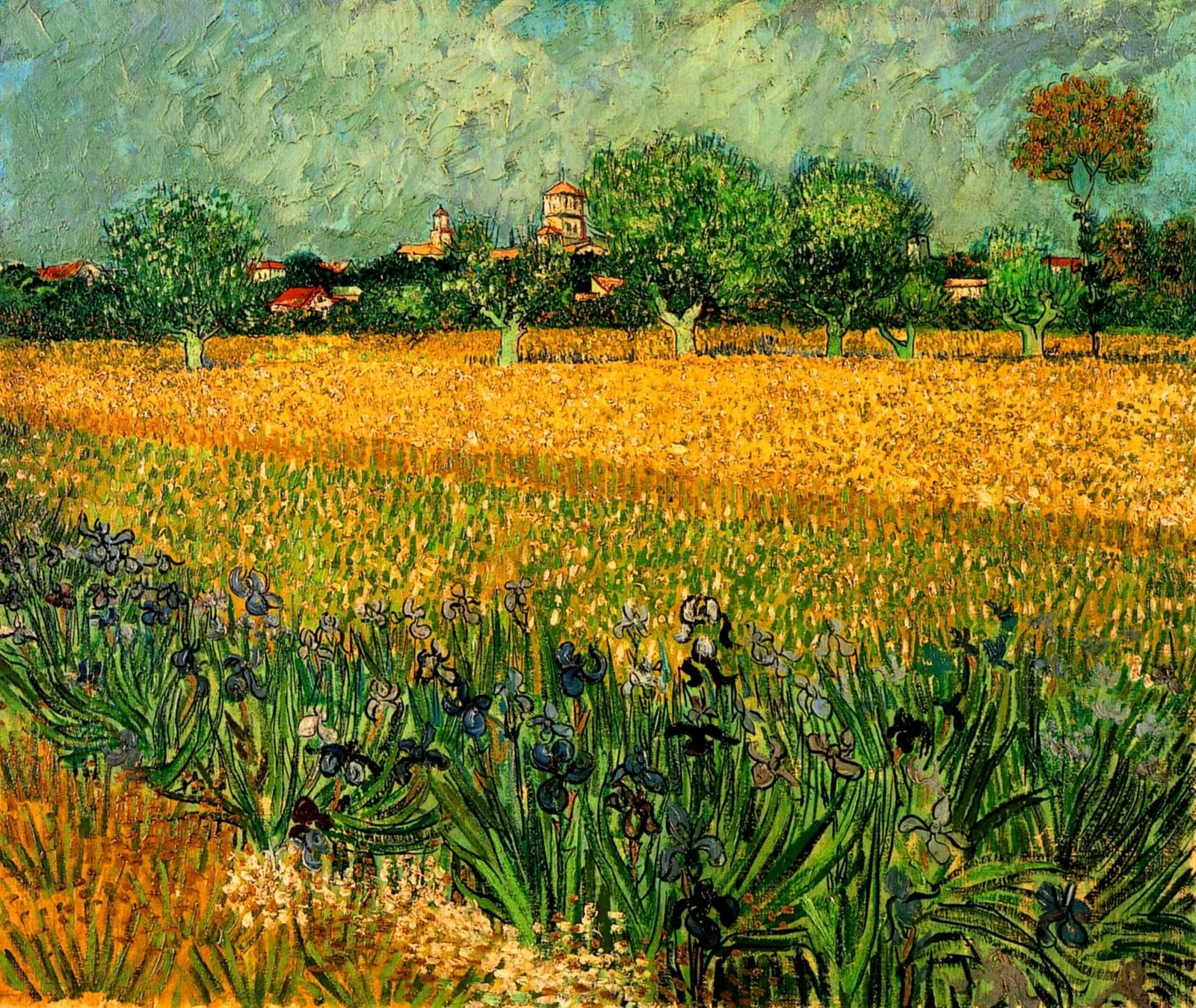
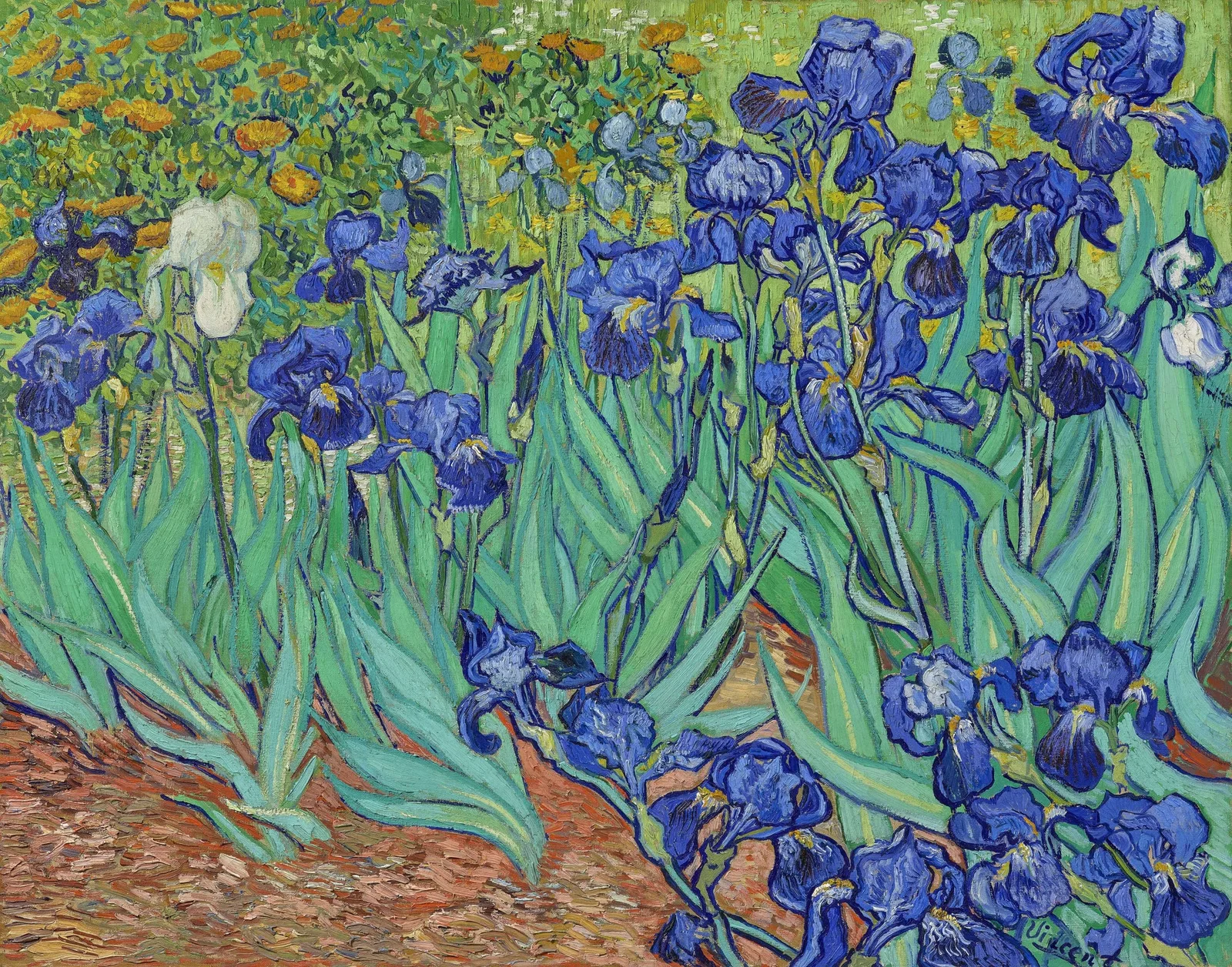
The rest is association. Both are remembered for flowers and bold color, and Van Gogh’s irises, painted along a ditch near Arles and in an asylum garden, share the cool blues of Monet’s ponds. [7][8] That is the whole mix-up: no shared picture, just two painters of flowers and color who sit side by side in memory. Put both names in one search box and the pictures that come back are usually Monet’s. For other painters often compared with him, see artists like Van Gogh.
Which Van Gogh paintings come closest?
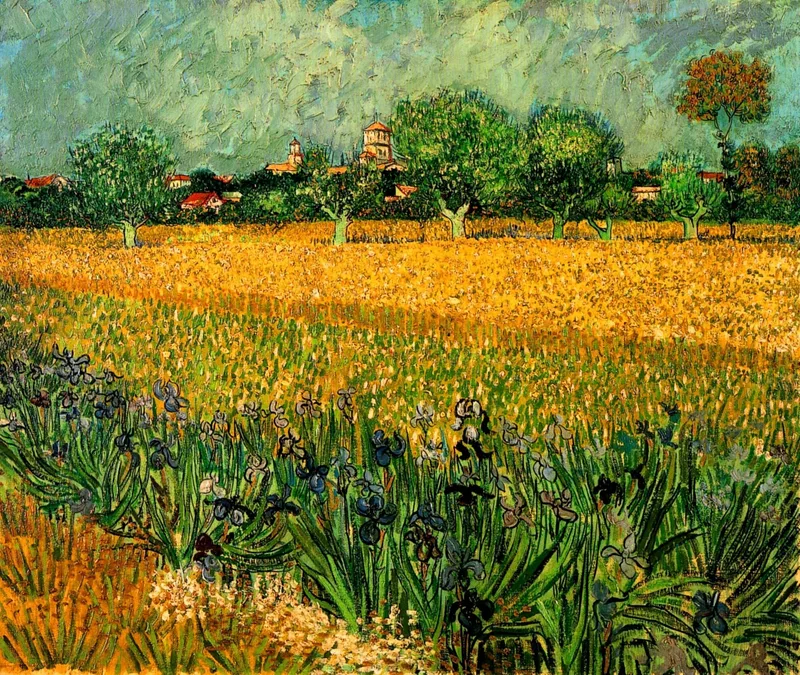
Start with irises by water. On 12 May 1888 in Arles he described a new study with “a ditch with iris plants with green leaves, with purple flowers, the town in the background.” [7] The letter’s note identifies it as View of Arles with irises in the foreground. [7] A year later, in the asylum at Saint-Rémy, he painted Irises, now in the J. Paul Getty Museum. [8] Their colors have shifted over time, as explained in why Van Gogh’s Irises changed color.
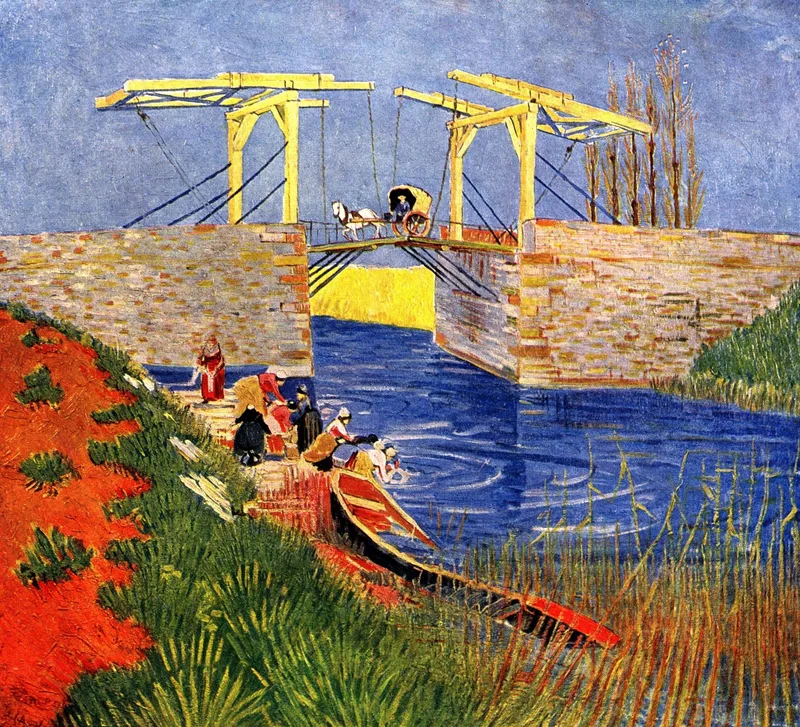
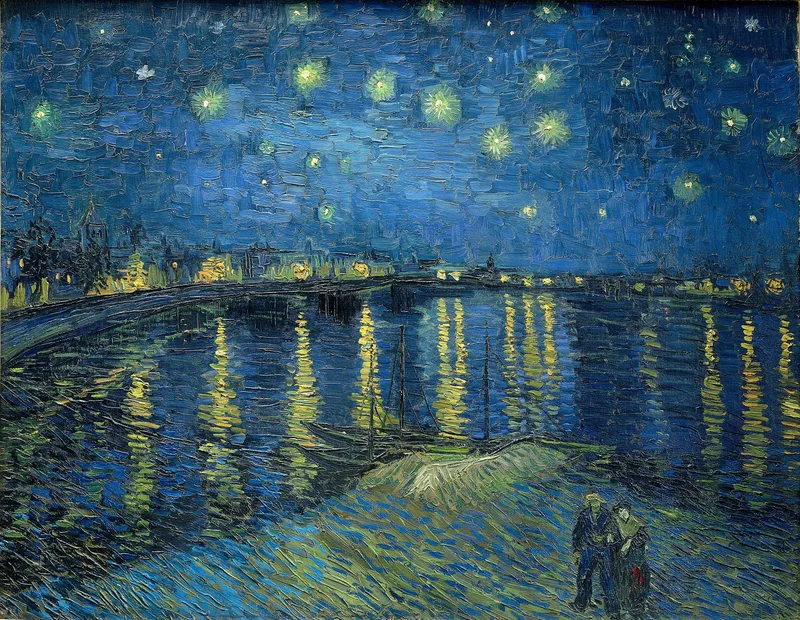
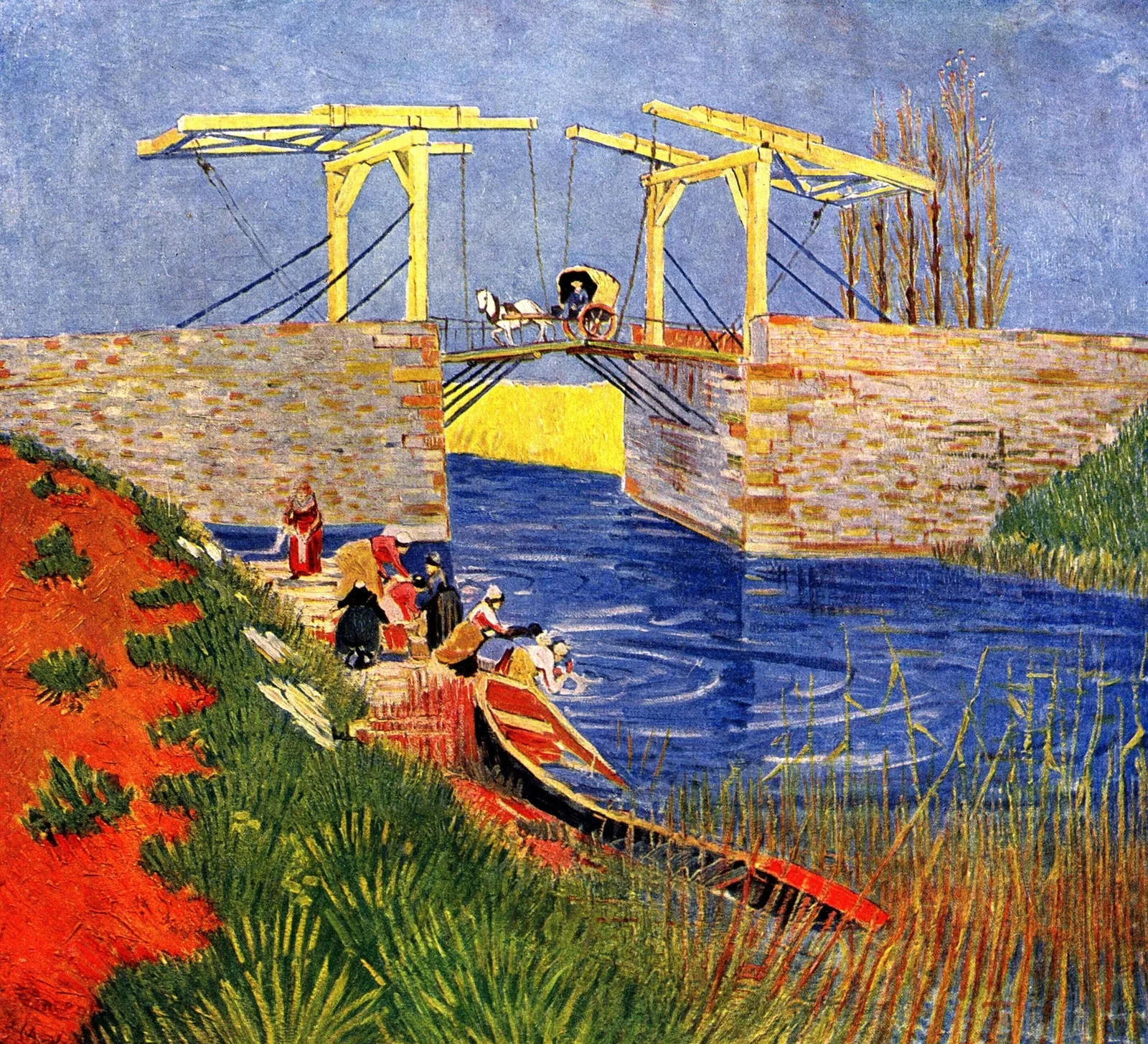
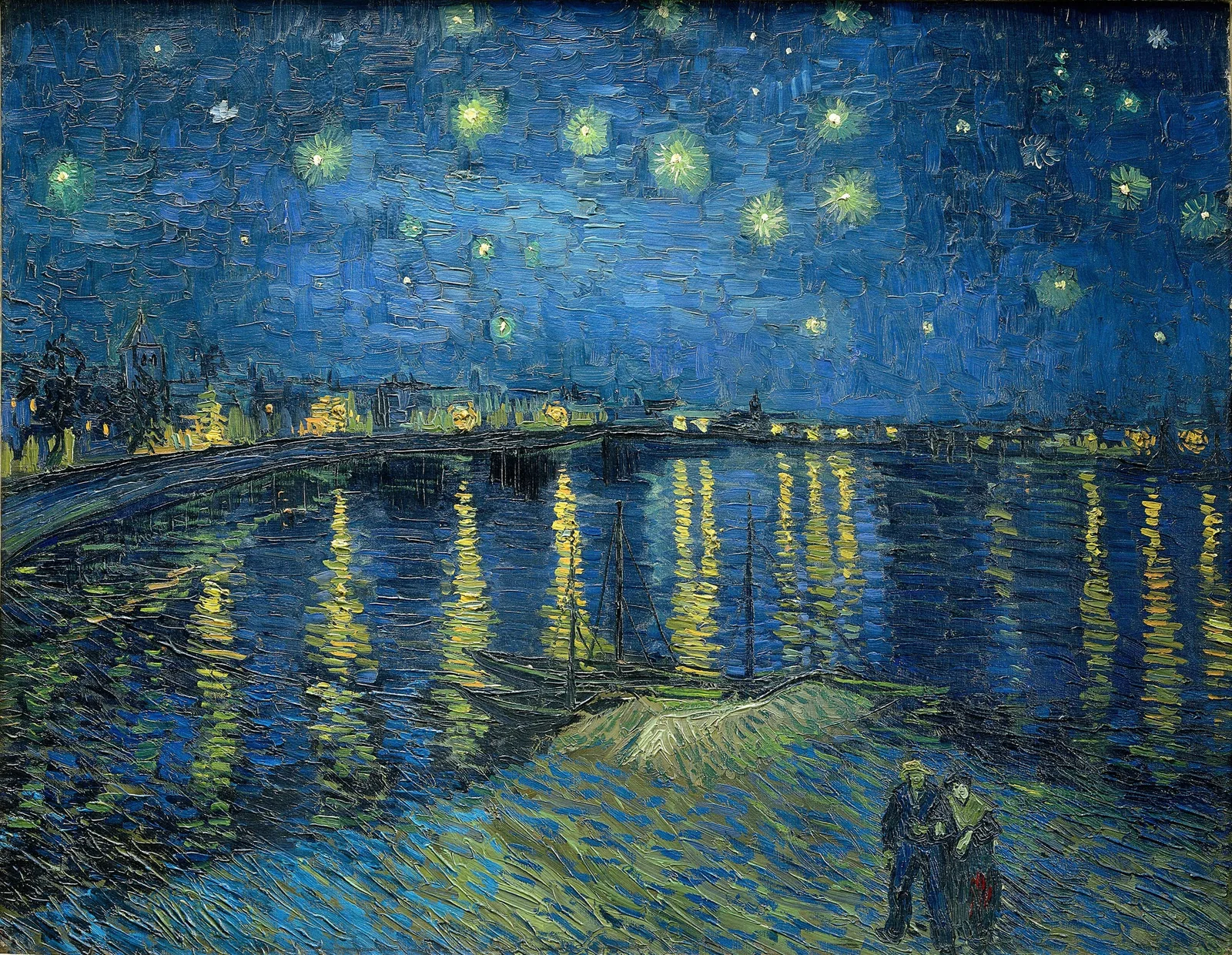
For water itself, look to rivers and canals: the Langlois Bridge with women washing or Starry Night Over the Rhône, both from his time in Arles. His river views after dark are gathered in Van Gogh’s night paintings.
Hand-painted in oilFrom $350See sizes
Hand-painted in oilFrom $350See sizes
Hand-painted in oilFrom $350See sizes
Questions and answers
Where is the famous Water Lilies painting?
Who painted all the water lilies?
How many water lily paintings did Monet make?
Written and fact-checked by the Vincent van Gogh Paintings editorial desk10 sourcesUpdated
Sources
- Musée de l’Orangerie: The Water Lilies by Claude MonetAccessed
- Cleveland Museum of Art: Claude Monet, Water Lilies (Agapanthus), c. 1915–26, 1960.81Accessed
- Virginia Museum of Fine Arts: Experimental Lines (Marsh with Water Lilies, Etten, 1881, 85.777)Accessed
- Vincent van Gogh, The Letters: letter 168 to Theo, Etten, end of June 1881, with note 6Accessed
- Vincent van Gogh, The Letters: search results for “lilies”Accessed
- Vincent van Gogh, The Letters: letter 569 to Horace Mann Livens, Paris, September or October 1886, with note 3Accessed
- Vincent van Gogh, The Letters: letter 609 to Theo, Arles, 12 May 1888Accessed
- J. Paul Getty Museum: Irises, 1889, 90.PA.20Accessed
- Art Institute of Chicago: Claude Monet, Water Lilies, 1906 (1933.1157)Accessed
- Art Institute of Chicago: Claude Monet, Water Lily Pond, 1917–19Accessed
Hand-painted oil reproductions