
Guide
Gauguin's 1888 Portrait of Van Gogh Painting Sunflowers
The picture Gauguin made of his friend at work, the sunflowers on it, and what Vincent made of it


Paul Gauguin painted Vincent van Gogh Painting Sunflowers in Arles in December 1888; the oil on canvas, 73 by 91 cm, belongs to the Van Gogh Museum in Amsterdam. [1] It shows the man behind Van Gogh's paintings at his easel before a vase of sunflowers, a scene Gauguin did not paint from life, because the flowers had long finished blooming. [1]
The painting at a glance
Gauguin made the picture in Arles, during the nine weeks he spent living and working with Van Gogh in the Yellow House. [1][3] Gauguin gave it to Theo, and it stayed with the family until Theo's son transferred the collection to the Vincent van Gogh Foundation in 1962. [1] The museum's record lists it as on view as of October 2026. [1]
| Fact | Detail | Source |
|---|---|---|
| Artist | Paul Gauguin (1848–1903) | [1] |
| Date and place | Arles, December 1888 | [1][2] |
| Medium | Oil on canvas | [1] |
| Size | 73 x 91 cm | [1] |
| Museum | Van Gogh Museum, Amsterdam (Vincent van Gogh Foundation) | [1] |
| Object number | s0225V1962 | [1] |
| Catalog number | W326 / W296 | [2] |
| First owner | Theo van Gogh, a gift from Gauguin | [1] |
Facts from the Van Gogh Museum's collection record [1]; the catalog number of Gauguin's work as given in the letters edition [2].
What the painting shows
Gauguin sets Vincent at the right, seen from the side, brush raised toward a vase of sunflowers at the left. In the background, the editors of the letters point out, is one of Gauguin's own landscapes, The blue trees. [2]
It was not painted from the motif. It was December, and the blooming season was long over, though around that time Van Gogh did make a copy of one of his own sunflower still lifes. [1] Gauguin preferred to work from imagination and Van Gogh from nature; they often debated it, and the picture alludes to their discussions. [1]
The sunflowers Gauguin put on the canvas
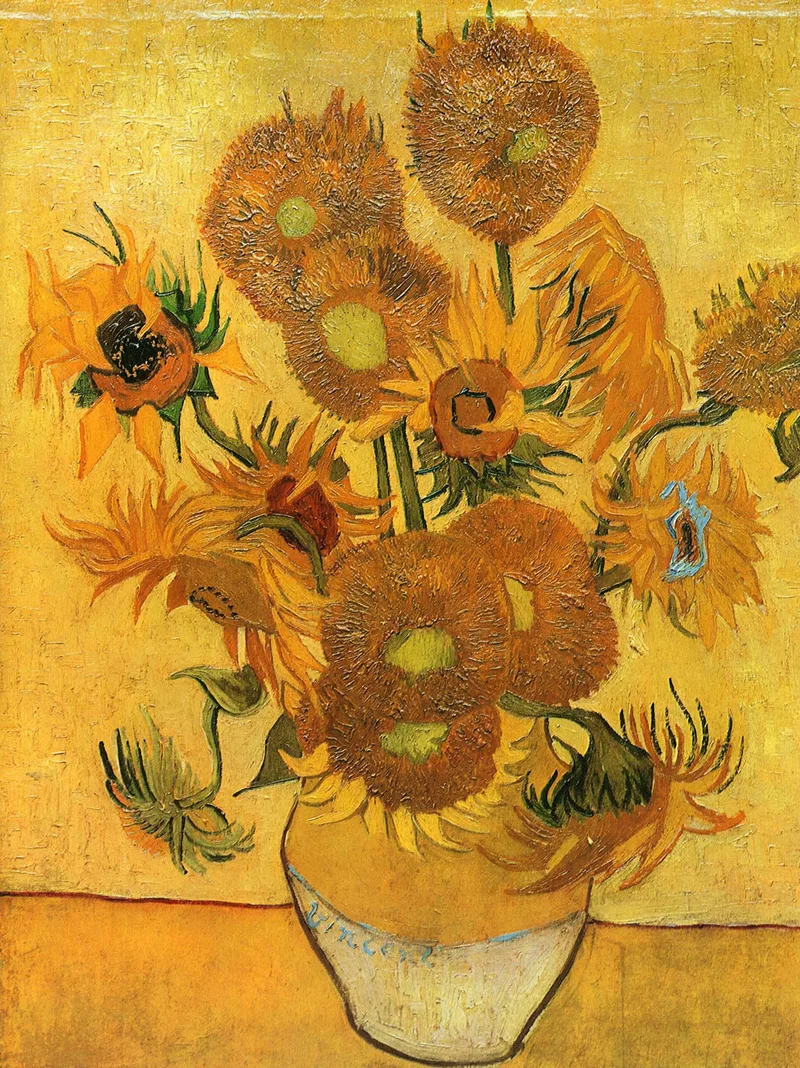
Van Gogh painted his sunflowers in Arles to decorate his house before Gauguin's visit. [11] He hung the first two in Gauguin's room, and Gauguin thought them “completely Vincent.” [10] The one in Gauguin's picture is Vincent's own subject, seen through the eyes of the friend who admired it.
In Avant et Après, his 1903 manuscript, Gauguin even claims that he was responsible for the Sunflowers. Martin Bailey of The Art Newspaper answers that Van Gogh painted his Arles Sunflowers in August 1888, two months before Gauguin arrived. [3] Bailey also reads Gauguin's phrase “soleils sur soleils en plein soleil” as “sunflowers on sunflowers in full sun,” a reference to the still life of fifteen sunflowers now in London. [3] The Sunflowers versions guide compares all of them.

.jpg)
Two painters in the Yellow House
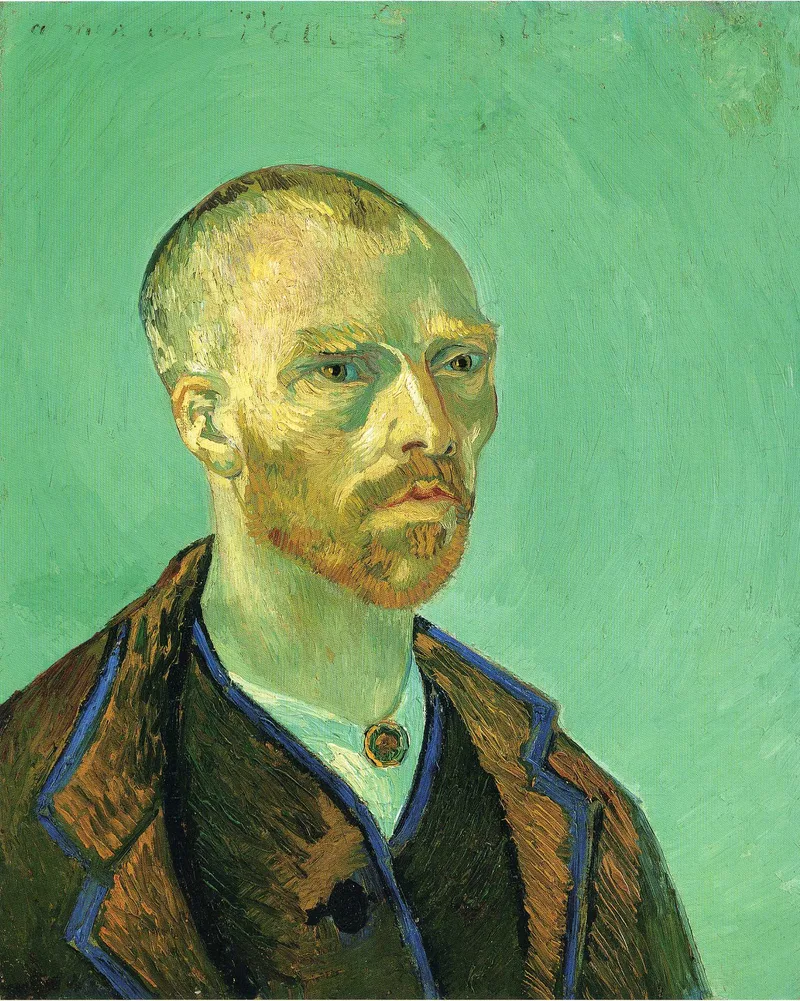
Van Gogh knew that Japanese printmakers often exchanged their work, so he suggested that Gauguin and Émile Bernard swap self-portraits. [9] In October 1888 he and Gauguin did the same. In his Self-Portrait Dedicated to Paul Gauguin, Van Gogh cast himself as a monk, a bonze, a humble disciple. Gauguin painted himself as an outlaw, Jean Valjean from Les Misérables, and Vincent was disappointed by the torment he saw in it. [6]
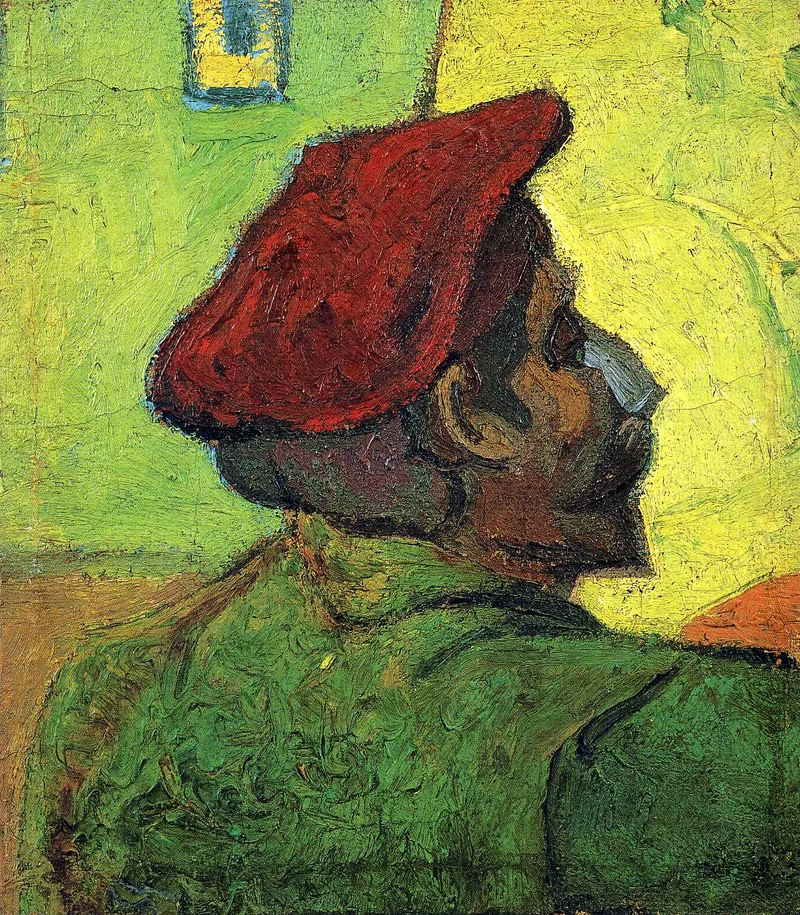
Gauguin arrived in Arles on 23 October 1888. For the next two months, the Art Institute of Chicago writes, the artists lived, ate and worked together, in an intensity Van Gogh called “excessively electric.” [7] Van Gogh painted Gauguin in turn. His small Portrait of Gauguin, from December 1888, is oil on jute on panel, 38.2 by 33.8 cm, made in their studio on cloth Gauguin had bought for the two of them; the coarse weave made painting difficult, so Van Gogh laid the paint on thickly in a strong red and green contrast. [4]
Hand-painted in oilFrom $350See sizes


What they painted side by side in Arles
To test their theories, the two painted identical motifs side by side. At the Alyscamps, the old Roman cemetery, Van Gogh worked fast and made what he called “a study of the whole avenue, entirely yellow,” while Gauguin took longer and made a more abstract picture of three Arlésiennes, ironically “the three graces.” [7] Later they both portrayed the café proprietress: Gauguin in his Night Café, Van Gogh in The Arlésienne (Madame Ginoux). [7] Gauguin counseled that “art is an abstraction,” and preferred to work from memory. [7]
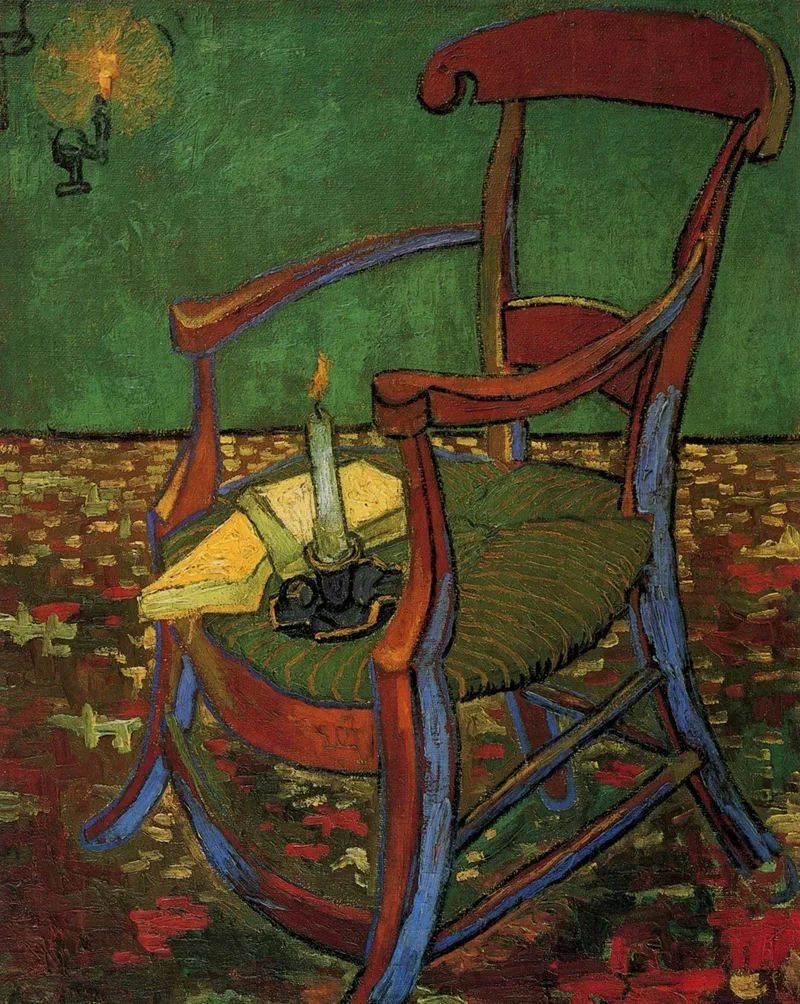
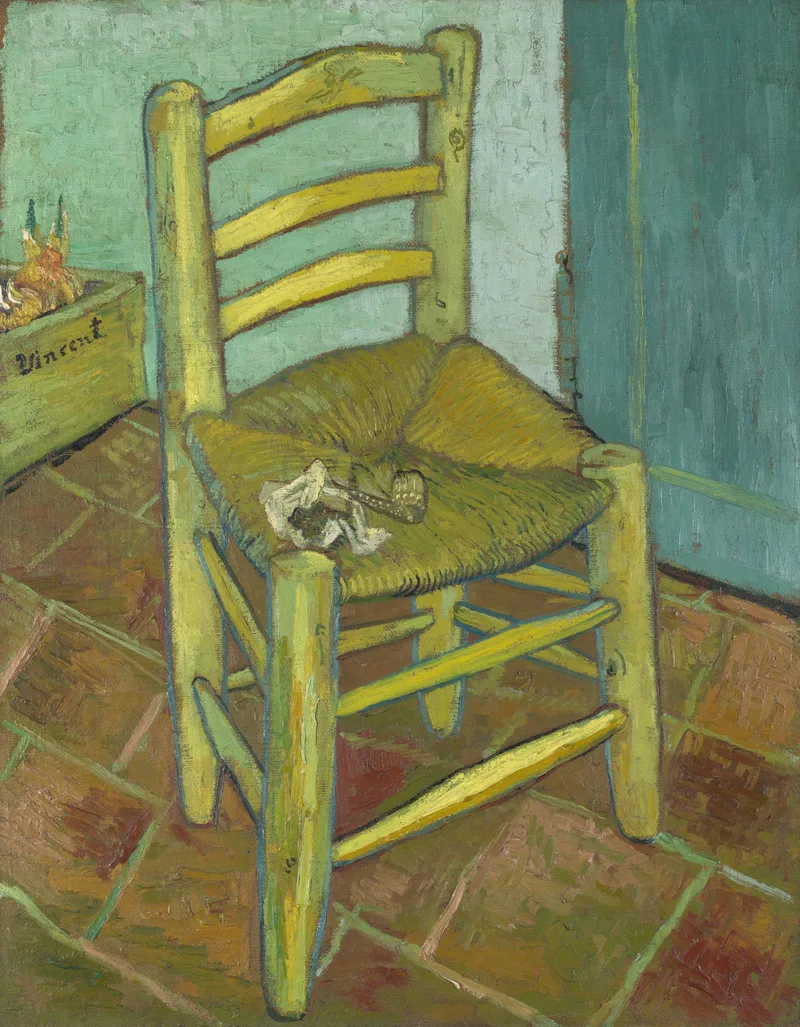
Van Gogh painted their differences too. Gauguin's Chair of November 1888, 90.5 by 72.7 cm, is a “portrait” of the absent friend, with modern novels and a burning candle for his character. [8] It has a daytime pendant: Van Gogh's own simple chair in bright yellow and blue. The two paintings, the museum says, represent the different personalities of the two artists. [8] They were meant to hang together, with one chair turned to the right and the other to the left. [12]
Hand-painted in oilFrom $350See sizes
What Van Gogh said about the portrait
While Gauguin was at work, around 1 December 1888, Vincent told Theo: “He's working on a portrait of me which I don't count as one of his undertakings that don't come to anything.” [2] Gauguin's own version, written in 1903, is that when the picture was finished Vincent told him: “It is certainly me, but me gone mad.” [3]
Vincent's own verdict came nine months later, from the asylum at Saint-Rémy, in a letter of 10 September 1889. [5] In the same letter he said he still hoped to paint Gauguin's portrait, and told himself that the two of them might one day work together again. [5] “Charged with electricity” sounds like the “excessively electric” weeks the Art Institute describes. [7]
“Have you seen that portrait he did of me painting sunflowers? My face has lit up after all a lot since, but it was indeed me, extremely tired and charged with electricity as I was then.”
What came next
A few days after Gauguin finished his portrait of Vincent, Van Gogh suffered a mental health crisis during which he cut off his ear. [1] Gauguin later claimed that Vincent rushed at him with an open razor that evening. [3] What happened is told in why Van Gogh cut off his ear. For how he saw himself afterward, see Van Gogh's self-portraits.
Questions and answers
Where is Gauguin's painting of Van Gogh?
In the Van Gogh Museum in Amsterdam, which lists it as on view as of October 2026. It belongs to the Vincent van Gogh Foundation, object number s0225V1962. [1]
Did Gauguin paint Van Gogh from life?
Not the scene it shows. It was December and the flowers had long finished blooming, the Van Gogh Museum notes, and Gauguin preferred to work from imagination rather than from nature. [1]
How long did Gauguin live with Van Gogh in Arles?
Written and fact-checked by the Vincent van Gogh Paintings editorial desk12 sourcesUpdated
Sources
- Van Gogh Museum: Paul Gauguin, Vincent van Gogh Painting Sunflowers (s0225V1962)Accessed
- Vincent van Gogh, The Letters: letter 723, to Theo van Gogh, Arles, on or about 1 December 1888Accessed
- The Art Newspaper (Martin Bailey): Gauguin claims credit for Van Gogh's Sunflowers, the revelations of a rediscovered manuscript (25 September 2020)Accessed
- Van Gogh Museum: Vincent van Gogh, Portrait of Gauguin (s0257V1962)Accessed
- Vincent van Gogh, The Letters: letter 801, to Theo van Gogh, Saint-Rémy-de-Provence, 10 September 1889Accessed
- Art Institute of Chicago: Van Gogh and Gauguin, The Studio of the South (Brittany and Arles)Accessed
- Art Institute of Chicago: Van Gogh and Gauguin, The Studio of the South (Studio of the South 1888)Accessed
- Van Gogh Museum: Vincent van Gogh, Gauguin's Chair (s0048V1962)Accessed
- Van Gogh Museum: Paul Gauguin, Self-Portrait with Portrait of Emile Bernard (Les misérables) (s0224V1962)Accessed
- Van Gogh Museum: Vincent van Gogh, Sunflowers (s0031V1962)Accessed
- National Gallery, London: Sunflowers (NG3863)Accessed
- National Gallery, London: Van Gogh's Chair (NG3862)Accessed
Hand-painted oil reproductions